One in Five Gaza Newborns Needs Intensive Care
The 30-Second Skim7 points
- What happenedGaza's health system is buckling under a surge in premature births driven by war-induced malnutrition, displacement, and stress, leaving a single neonatal unit to serve all of central Gaza with dwindling supplies.
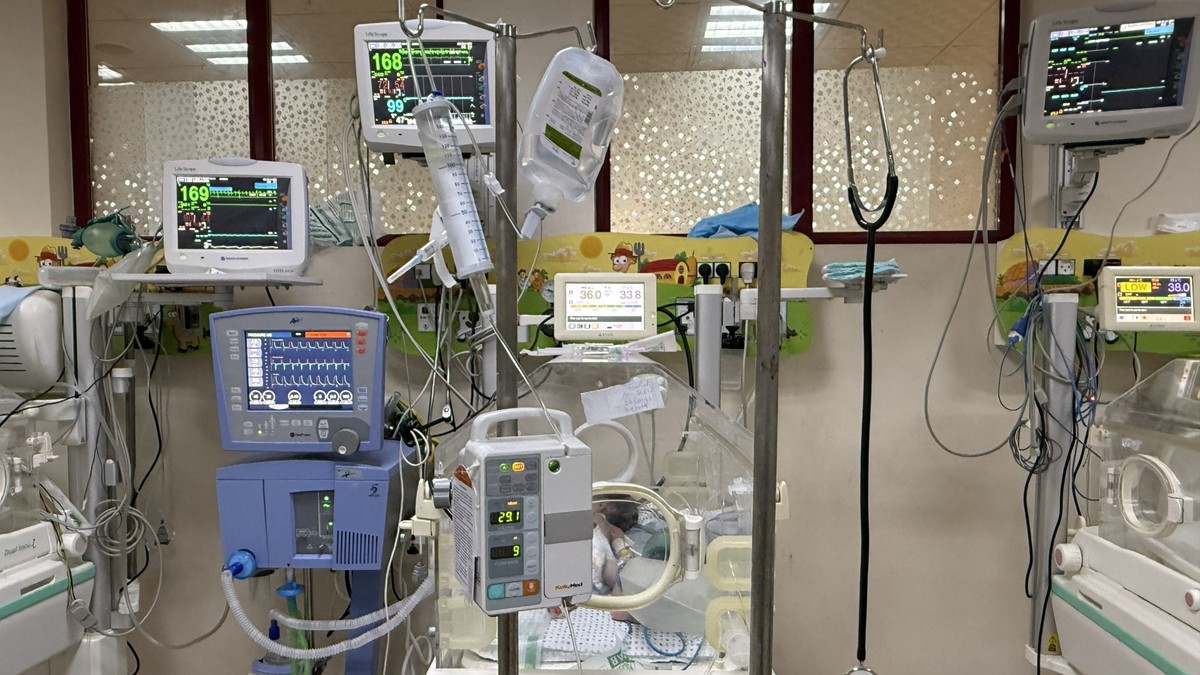
- Key facts & numbersNoor Salem, 30, is watching her premature son Yazan Al-Khalidi fight for survival in the NICU at Al-Aqsa Martyrs Hospital in Deir el-Balah, after losing her first baby during Gaza's 2025 famine. UNICEF reports one in every five newborns in Gaza now requires intensive neonatal or thermal care, a crisis it attributes to maternal malnutrition, prolonged psychological stress, and collapsing prenatal services. Al-Aqsa Martyrs Hospital is the only facility with a neonatal unit in all of central Gaza, where doctors face shortages of incubators, ventilators, medications, and recurring power and fuel cuts.
- What happens nextThe image that stays with you: a mother who already buried one baby to famine now watches another through glass — in the only NICU for an entire region.
- Noor Salem, 30, is watching her premature son Yazan Al-Khalidi fight for survival in the NICU at Al-Aqsa Martyrs Hospital in Deir el-Balah, after losing her first baby during Gaza's 2025 famine.
- UNICEF reports one in every five newborns in Gaza now requires intensive neonatal or thermal care, a crisis it attributes to maternal malnutrition, prolonged psychological stress, and collapsing prenatal services.
- Al-Aqsa Martyrs Hospital is the only facility with a neonatal unit in all of central Gaza, where doctors face shortages of incubators, ventilators, medications, and recurring power and fuel cuts.
- Dr. Afnan Abu Hasaballah, an obstetrician working with UNRWA and Al-Awda Health Hospital in Nuseirat refugee camp, said repeated displacement, lack of food and clean water, and limited prenatal care have all raised premature birth risk.
Why It Matters
With one NICU serving all of central Gaza and one in five newborns requiring intensive care, the breakdown of maternal and infant health infrastructure threatens an entire generation with elevated mortality and developmental harm. The scarcity of formula and follow-up care means the crisis does not end at hospital discharge but follows every displaced family home.
Sources Cited
Related Coverage
The day’s news in one short email, every morning.
Free. One email a day. Unsubscribe in one click.