Perseverance Finds Complex Carbon at Mars 'Leopard
The 30-Second Skim7 points
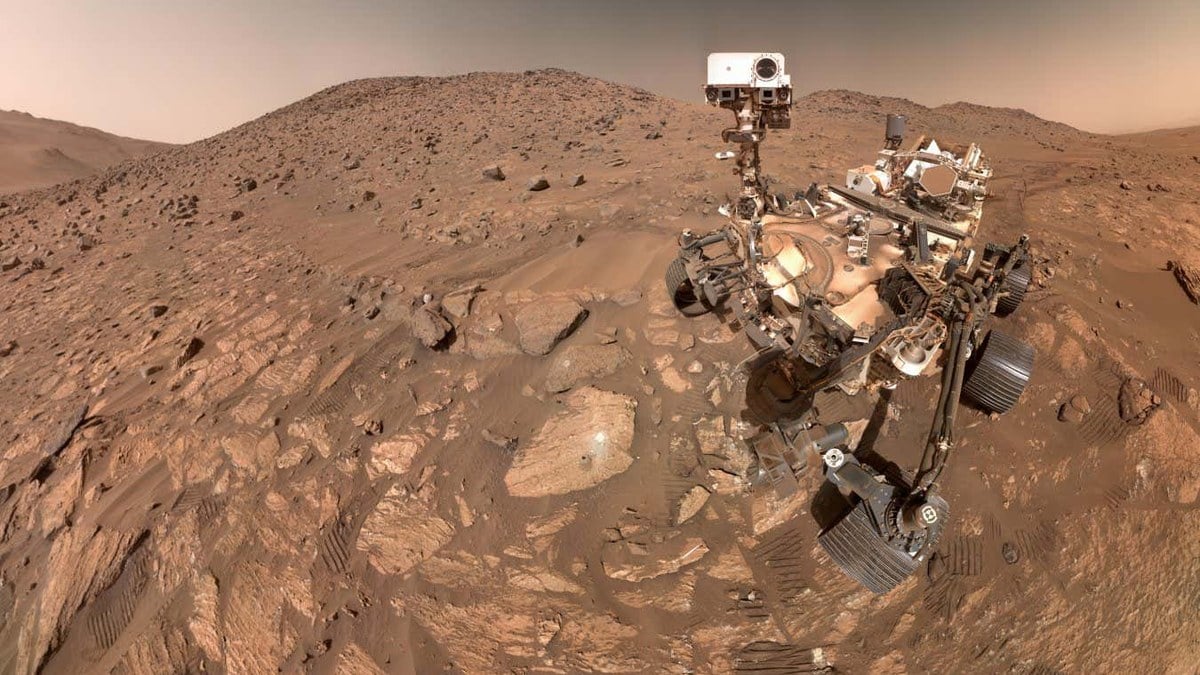
- What happenedNASA's Perseverance rover has identified large, complex carbon-containing molecules on Martian rocks that previously displayed possible signs of ancient microbial life, though scientists stress the compounds alone cannot confirm a biological origin.
- Key facts & numbersNASA's Perseverance rover used its SHERLOC instrument—a UV laser spectroscopy tool—to detect macromolecular carbon on rocks in the Bright Angel formation of Jezero crater, the same outcrop where it photographed unusual spotted patterns called "leopard spots" and "poppy seeds" in 2024 Lead author Ashley Murphy of the Planetary Science Institute noted that on Earth, macromolecular carbon is often found in extremely old rocks and, in some cases, is the only organic evidence of past microbial life The carbon compounds were associated with carbonate and sulphate minerals that typically form in water-rich environments, bolstering the case that Jezero crater once hosted a lake—a key ingredient for life
- What happens nextHeadline says "signs of ancient life" but read paragraph 6: scientists literally say the carbon could be from meteorites and you need rocks back on Earth to know. The real surprise is buried—carbon is EVERYWHERE in those mudstones but nowhere else in the crater. That's the actual news.
- NASA's Perseverance rover used its SHERLOC instrument—a UV laser spectroscopy tool—to detect macromolecular carbon on rocks in the Bright Angel formation of Jezero crater, the same outcrop where it photographed unusual spotted patterns called "leopard spots" and "poppy seeds" in 2024
- Lead author Ashley Murphy of the Planetary Science Institute noted that on Earth, macromolecular carbon is often found in extremely old rocks and, in some cases, is the only organic evidence of past microbial life
- The carbon compounds were associated with carbonate and sulphate minerals that typically form in water-rich environments, bolstering the case that Jezero crater once hosted a lake—a key ingredient for life
- Scientists including Lewis Dartnell (University of Westminster) and Sean McMahon (University of Edinburgh) cautioned that these carbon molecules also appear in meteorites and lifeless environments, and that definitive answers would require returning samples to Earth for analysis
Why It Matters
The detection confirms that complex organic molecules can survive intact on Mars's surface for billions of years, a prerequisite for any future sample-return mission hoping to find preserved biosignatures. For NASA, this validates Jezero crater as a priority target and strengthens the scientific case for the multi-billion-dollar Mars Sample Return campaign, though researchers say lab analysis on Earth—not rover instruments alone—is the only way to settle the biological question.
Sources Cited
Related Coverage
Ask SkimNews
The day’s news in one short email, every morning.
Free. One email a day. Unsubscribe in one click.