Record El Niño Risks Algal Takeover of Great Barrier Reef
The 30-Second Skim7 points
- What happenedScientists warn a record El Niño combined with already-elevated ocean temperatures could push parts of the Great Barrier Reef past a tipping point into a seaweed-dominated state, after 2024 saw bleaching across the entire reef.
- Key facts & numbersDavid Schoeman at the University of the Sunshine Coast warned that six bleaching events in the past decade have hit even during La Niña years, and parts of the reef risk flipping to an algal-dominated system — a tipping point that is 'very difficult' to reverse once reached. Neal Cantin at the Australian Institute of Marine Science said 2024 bleaching hit 60% of corals across roughly 40% of the reef, with 70–90% coral mortality in many areas — including Swains Reefs, 150km offshore, which had previously been considered a safe buffer zone. Daniel Harrison at Southern Cross University is leading marine cloud brightening research, but trials are unlikely before 2028, leaving the reef without the tool this summer despite promising early results brightening clouds by several hundred percent in droplet density.
- What happens nextThe reef's two safety nets — La Niña cooling AND offshore buffers — both failed in 2024. The fix everyone is hoping for? Won't deploy until 2028.
- David Schoeman at the University of the Sunshine Coast warned that six bleaching events in the past decade have hit even during La Niña years, and parts of the reef risk flipping to an algal-dominated system — a tipping point that is 'very difficult' to reverse once reached.
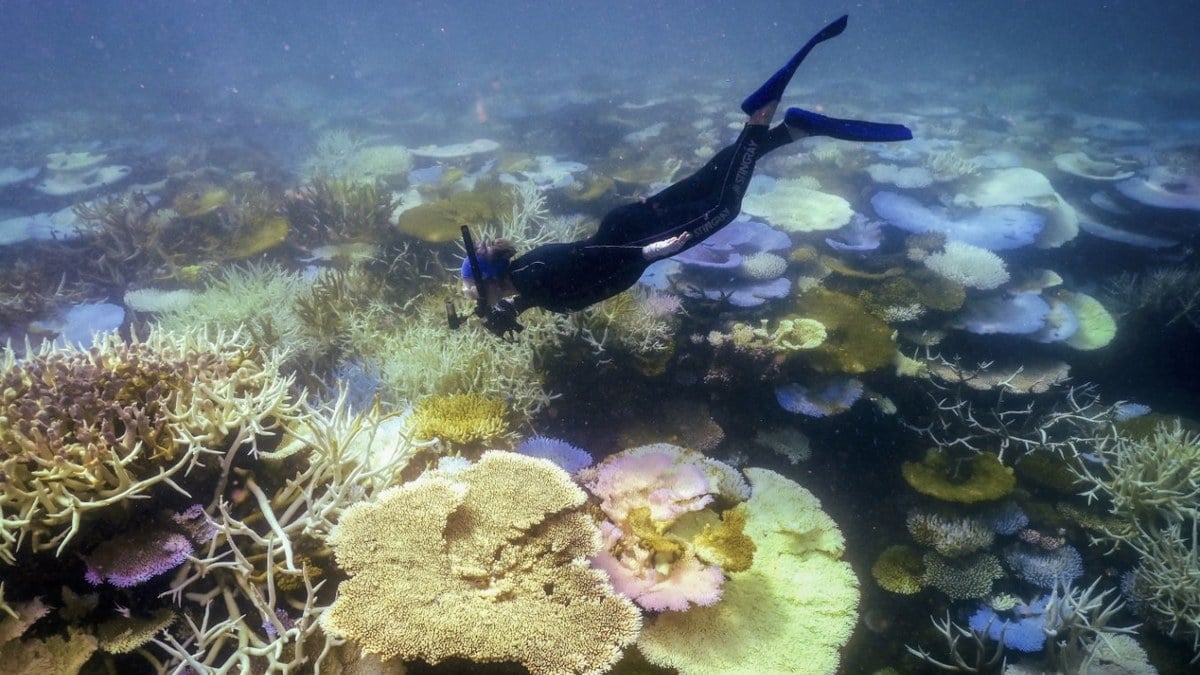
- Neal Cantin at the Australian Institute of Marine Science said 2024 bleaching hit 60% of corals across roughly 40% of the reef, with 70–90% coral mortality in many areas — including Swains Reefs, 150km offshore, which had previously been considered a safe buffer zone.
- Daniel Harrison at Southern Cross University is leading marine cloud brightening research, but trials are unlikely before 2028, leaving the reef without the tool this summer despite promising early results brightening clouds by several hundred percent in droplet density.
- Harrison cited research showing an 80% reduction in sulphate aerosols from shipping in the region adds 0.15°C to sea-surface temperatures, linking shipping-emission cuts to elevated reef-bleaching risk.
Why It Matters
La Niña years and offshore buffer zones like Swains Reefs no longer reliably cool the reef, and the most promising near-term mitigation tool (marine cloud brightening) won't deploy before 2028. With El Niño not peaking until November and 2024 having killed up to 90% of corals in many areas, scientists face a bleaching summer with no deployed intervention ready.
Sources Cited
Related Coverage
Ask SkimNews
The day’s news in one short email, every morning.
Free. One email a day. Unsubscribe in one click.