Human brains grew via neutral evolution, not selection
The 30-Second Skim
- What happened: A new analysis of 87 hominin skulls found that human brain enlargement over the past 2 million years was driven by neutral evolution and periodic release of constraints rather than natural selection favoring bigger brains.
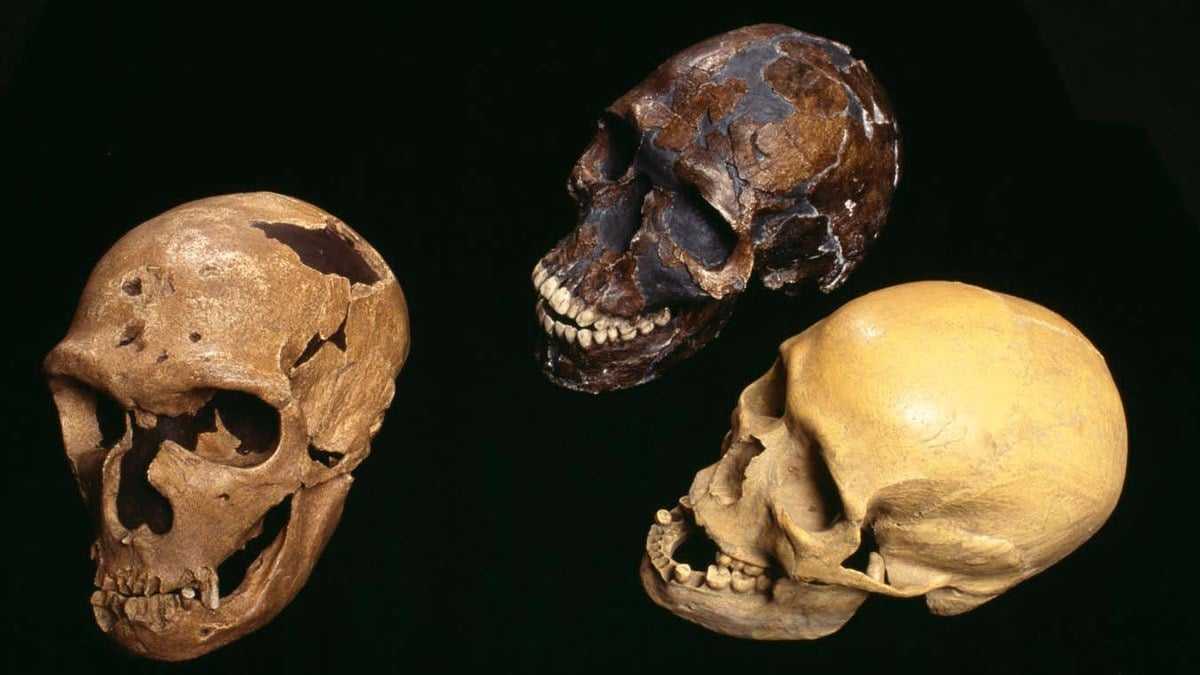
- Key facts & numbers: Katerina Harvati at the University of Tübingen and Mark Hubbe at the University of Tennessee, Knoxville analyzed 87 hominin skulls — 24 from Homo sapiens and the rest from extinct species including Neanderthals, Homo erectus, and Homo habilis — and found the best-fitting model for braincase change was neutral evolution, not selection for larger brains. The study tested six evolutionary scenarios with a mathematical model, and the changes were best explained by random mutations accumulating without offering advantages, alongside stasis — pressure keeping brains roughly the same size until constraints eased. Harvati proposes that the invention of cooking may have supplied the calorie surplus needed to fuel larger brains when those constraints were temporarily released, since raw food alone couldn't power the brain's high energy demands.
- What happens next: Headline says brains grew without natural selection — but buried deeper is the cooler finding: brains were actively constrained from changing, and only grew when that pressure lifted. Cooking may be the missing trigger.
- Katerina Harvati at the University of Tübingen and Mark Hubbe at the University of Tennessee, Knoxville analyzed 87 hominin skulls — 24 from Homo sapiens and the rest from extinct species including Neanderthals, Homo erectus, and Homo habilis — and found the best-fitting model for braincase change was neutral evolution, not selection for larger brains.
- The study tested six evolutionary scenarios with a mathematical model, and the changes were best explained by random mutations accumulating without offering advantages, alongside stasis — pressure keeping brains roughly the same size until constraints eased.
- Harvati proposes that the invention of cooking may have supplied the calorie surplus needed to fuel larger brains when those constraints were temporarily released, since raw food alone couldn't power the brain's high energy demands.
- Amélie Beaudet at the French National Centre for Scientific Research praised the mechanistic focus but cautioned the skull data captures only overall size and shape, missing internal reorganization — such as shifts in Broca's area tied to language.
Why It Matters
This reframes one of evolution's signature narratives — that natural selection steadily rewarded bigger, smarter brains — as largely passive drift punctuated by constraint releases, with cooking as a candidate trigger for those releases.
Sources Cited
- New Scientist — Human brain growth wasn't driven by natural selection
Related Coverage
Ask SkimNews