JWST bright early galaxies may be brown dwarfs
The 30-Second Skim
- What happened: A new analysis of JWST data argues that two supposedly bright, early‑universe galaxies are actually brown dwarfs within the Milky Way, casting doubt on recent claims of unexpectedly luminous primordial galaxies.
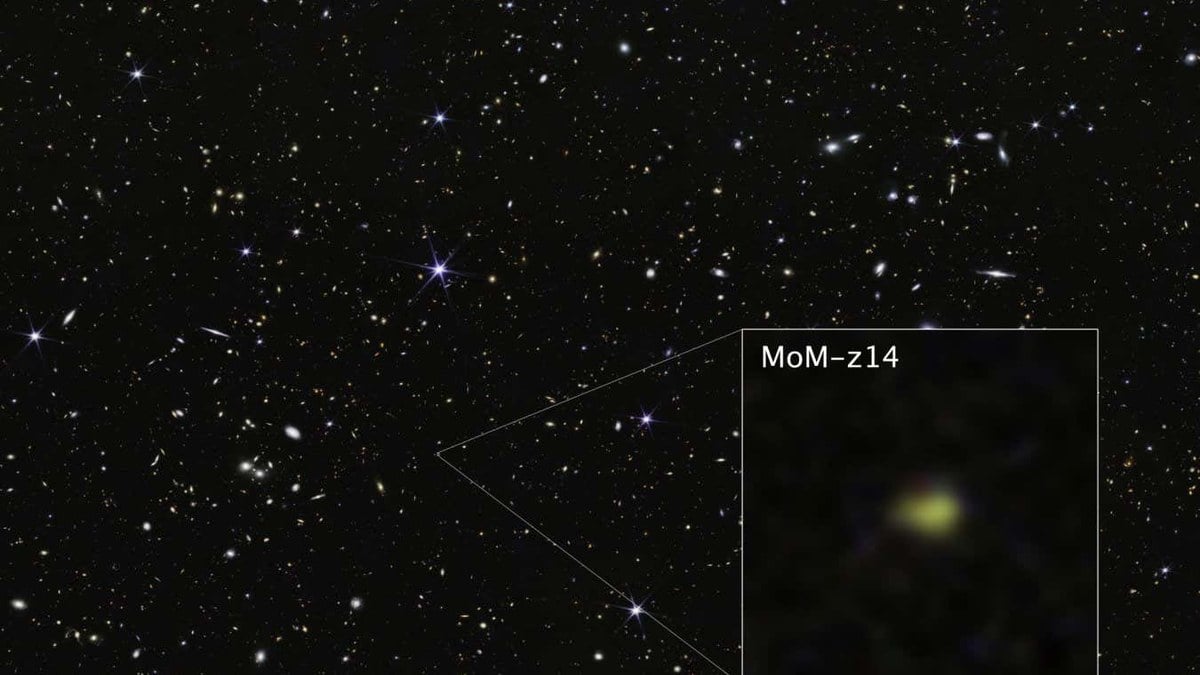
- Key facts & numbers: James Webb Space Telescope launched in December 2021 and has revealed galaxies 300 million years after the Big Bang that are brighter and richer in stars and hot gas than standard models predicted. Rohan P. Naidu led an MIT team that discovered the early‑universe galaxy MoM‑z14, calling it a “cosmic miracle” for its unexpected luminosity. Maruša Bradač and collaborators published a non‑peer‑reviewed paper in April claiming two JWST “young bright galaxies” are actually brown dwarfs within the Milky Way, not distant galaxies.
- What happens next: Most headlines hype JWST’s bright early galaxies, but the new study warns they could be nearby brown dwarfs—a detail many miss.
- James Webb Space Telescope launched in December 2021 and has revealed galaxies 300 million years after the Big Bang that are brighter and richer in stars and hot gas than standard models predicted.
- Rohan P. Naidu led an MIT team that discovered the early‑universe galaxy MoM‑z14, calling it a “cosmic miracle” for its unexpected luminosity.
- Maruša Bradač and collaborators published a non‑peer‑reviewed paper in April claiming two JWST “young bright galaxies” are actually brown dwarfs within the Milky Way, not distant galaxies.
- Vera C. Rubin Observatory will begin its ten‑year Legacy Survey of Space and Time in 2026, mapping the southern sky and imaging over five billion galaxies.
Why It Matters
Astronomers and cosmologists lose a key data point for testing early‑galaxy formation models, while the upcoming Rubin, Roman, and Euclid surveys gain urgency as they will provide the independent observations needed to confirm or refute the brown‑dwarf hypothesis for the field.
Sources Cited
Related Coverage
Ask SkimNews