UC Berkeley Maps Deep Sleep-Growth Hormone Brain Circuit
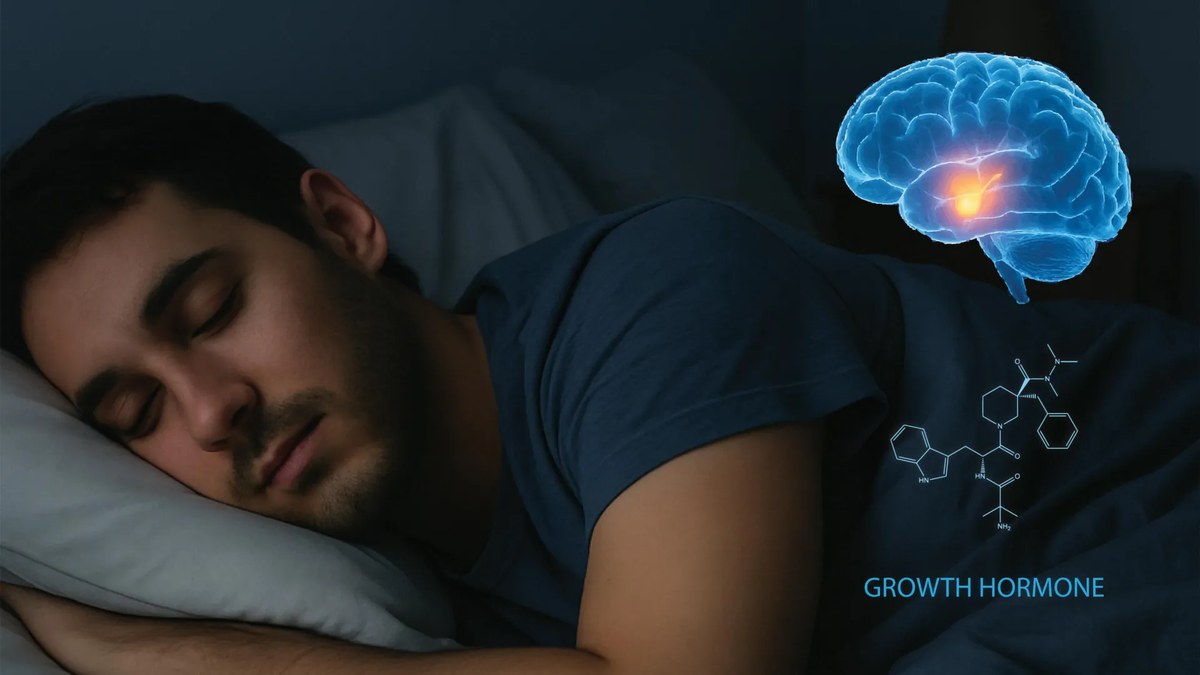
The 30-Second Skim
- What happened: UC Berkeley neuroscientists have mapped the brain circuit that ties deep sleep to growth hormone release, revealing a previously unknown feedback loop that balances hormone levels against wakefulness and could open new treatment avenues for sleep and metabolic disorders.
- Key facts & numbers: UC Berkeley researchers identified the brain circuitry linking deep sleep to growth hormone release, publishing the work in the journal Cell (2025; DOI: 10.1016/j.cell.2025.05.039). First author Xinlu Ding and colleagues directly recorded neural activity in mice by placing electrodes in their brains and stimulating hypothalamic neurons with light, the first time neural activity — not just blood hormone levels — has been observed during sleep-driven growth hormone release. Two hypothalamic neuron populations — GHRH neurons and somatostatin neurons — behave differently by sleep stage: during REM sleep both rise, driving greater growth hormone release, while in non-REM sleep somatostatin falls and GHRH rises only moderately.
- What happens next: Deep sleep isn't just recovery time — it's an active hormonal negotiation between your hypothalamus and brainstem, and Berkeley just mapped the wiring.
- UC Berkeley researchers identified the brain circuitry linking deep sleep to growth hormone release, publishing the work in the journal Cell (2025; DOI: 10.1016/j.cell.2025.05.039).
- First author Xinlu Ding and colleagues directly recorded neural activity in mice by placing electrodes in their brains and stimulating hypothalamic neurons with light, the first time neural activity — not just blood hormone levels — has been observed during sleep-driven growth hormone release.
- Two hypothalamic neuron populations — GHRH neurons and somatostatin neurons — behave differently by sleep stage: during REM sleep both rise, driving greater growth hormone release, while in non-REM sleep somatostatin falls and GHRH rises only moderately.
- Locus coeruleus in the brainstem is part of a newly described feedback loop: as growth hormone accumulates during sleep it stimulates this alertness region, but excessive locus coeruleus activity flips to promoting sleepiness, keeping the system in balance.
Why It Matters
The study gives drug developers a specific neural target — the locus coeruleus–hypothalamus feedback loop — for the first time, rather than the blunt option of hormone injections. Patients with sleep-tied metabolic disease, Alzheimer's, Parkinson's, or growth disorders become the clearest downstream beneficiaries, per the researchers' stated goal of building 'a basic circuit to work on' for future therapies.
Background & Timeline
- Editor context: A single feedback loop linking deep sleep to growth hormone release reframes sleep as a prerequisite rather than a consequence of metabolic health, meaning hormonal and metabolic therapies may quietly underperform when sleep architecture is fragmented.
Sources Cited
- Science Daily — Scientists discover the deep sleep circuit that builds muscle, burns fat, and boosts the brain
- The News International — Scientists discover deep sleep benefits that improves quality of life
- SciTechDaily — Scientists Discover Hidden Sleep Switch That Boosts Brainpower, Builds Muscle, and Burns Fat
- University of California, Berkeley — Sleep strengthens muscle and bone by boosting growth hormone levels. UC Berkeley researchers discover how.
Related Coverage
Ask SkimNews