Blanket Bans on Chinese Tech Cost US Competitiveness

Get the Geopolitics newsletter
Daily geopolitics — wars, elections, sanctions, the diplomatic moves that move markets. Free.
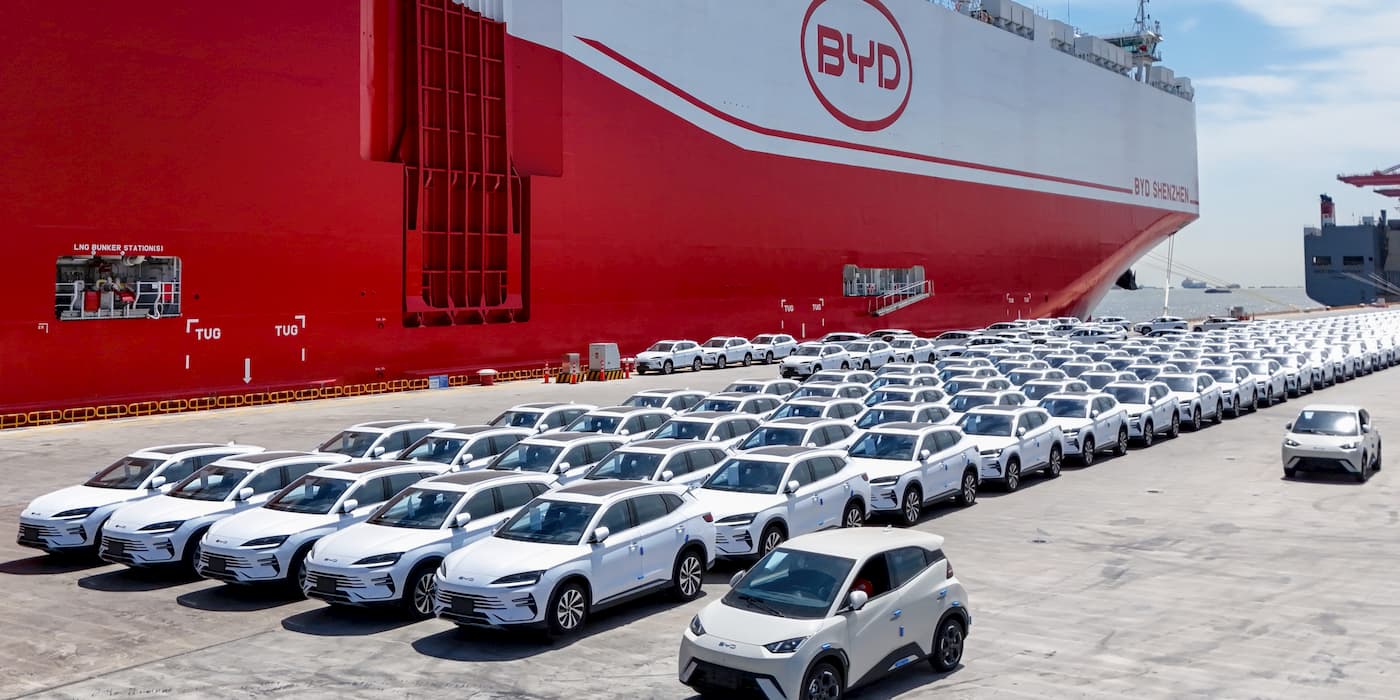
- Chinese EVs are effectively absent from the US market, blocked by 250% tariffs and national security restrictions, leaving most Americans unaware of advances in robotics, drones, and affordable electric vehicles visible from London to Santiago.
- Congress is pressuring US pharmaceutical companies to discontinue clinical trials in China over alleged PLA ties to China's R&D ecosystem and is pushing legislation to ban Chinese ownership of US farmland on food-supply and infrastructure grounds.
- Trump's vague joint "Board of Investment" with China, announced after his May summit with Xi Jinping, has produced nothing concrete, and the article characterizes leader-to-leader management of investment flows as inefficient.
- From the 1990s onward, China's government required foreign automakers and tech firms to use local supply chains, transfer technology, share management, localize data, and submit to government oversight—seeded national champions like Midea and Haier that now compete with GE globally.
- Chinese firms including Xiaomi and CATL have publicly signaled they would make significant US investments in exchange for market access, but the US has blocked such deals on security grounds, with EVs imagined as 'Trojan horses' carrying networks of sensors and data-collection capabilities.
- CFIUS and other US regulators including the FDA, Commerce's Bureau of Industry and Security, and the FCC already have the institutional sophistication to impose conditional access, but current national security agreements focus on risk mitigation, not mandated economic benefits such as workforce training, supplier diversification, or technology transfer.
Why it matters: The piece argues that without accepting Chinese investment under conditions, American firms will increasingly sell only to Americans, leaving the US as an "island of legacy firms" with reduced dynamism and weaker economic security. CFIUS's roughly 50 active national security agreements could be redesigned to require economic concessions alongside security safeguards—potentially unlocking the pent-up investment interest from Xiaomi, CATL, and other frontier Chinese firms that publicly need US market access to escape domestic overcapacity.
Ask SkimNews