China's Trade Surplus Fuels Global Friction — SkimNews

Get the Finance newsletter
Daily finance — markets, central banks, M&A, the prints that move money. Free.
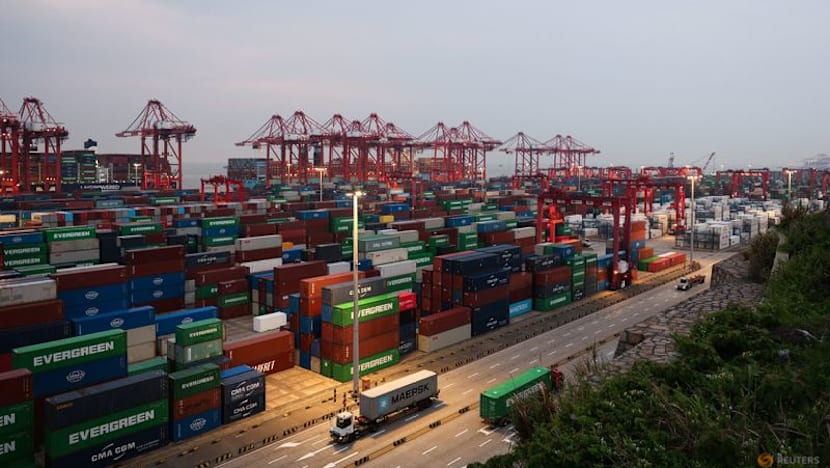
- China's massive trade surplus is characterized as "the main obstacle driving China toward friction and conflict with much of the world"
- Global Times rejected currency-manipulation claims, crediting Chinese competitiveness to "a comprehensive industrial system, sustained investment in technology, a massive market, and robust market competition"
- German Chancellor Friedrich Merz said the RMB was undervalued by as much as 30% and pointed to the 1985 Plaza Accord as a template for rebalancing trade
- The EU is weighing trade defense tools to address its deficit with China, industrial competition, and supply chain dependence, with some politicians framing the relationship as a "systemic threat"
- Michael Pettis countered that the European stance "assumes that the RMB exchange rate belongs to China, and that for the EU or anyone else to intervene in the RMB exchange rate is an act of colonial oppression"
- China's strategic posture crystallized after watching the US sideline OPEC in 1973 and Japan after the Plaza Accord, leading to Deng Xiaoping's 1992 line that "the Middle East has oil, China has rare earths"
Why it matters: The piece argues Beijing's instinct is to defend rather than lead: unlike the US, China has not articulated an alternative trade order capable of building consensus. With the EU activating trade-defense tools and Germany publicly targeting the RMB at a claimed 30% undervaluation, China risks repeating Japan's 1980s trap of export dependence without a domestic-consumption balance — only this time with rare-earth processing, not capital goods, as the leverage point.
Ask SkimNews