Samsung, SK Hynix Slide Up to 7.6% After Samsung's Record Profit Triggers Global Chip Selloff — SkimNews
Get the Finance newsletter
Daily finance — markets, central banks, M&A, the prints that move money. Free.
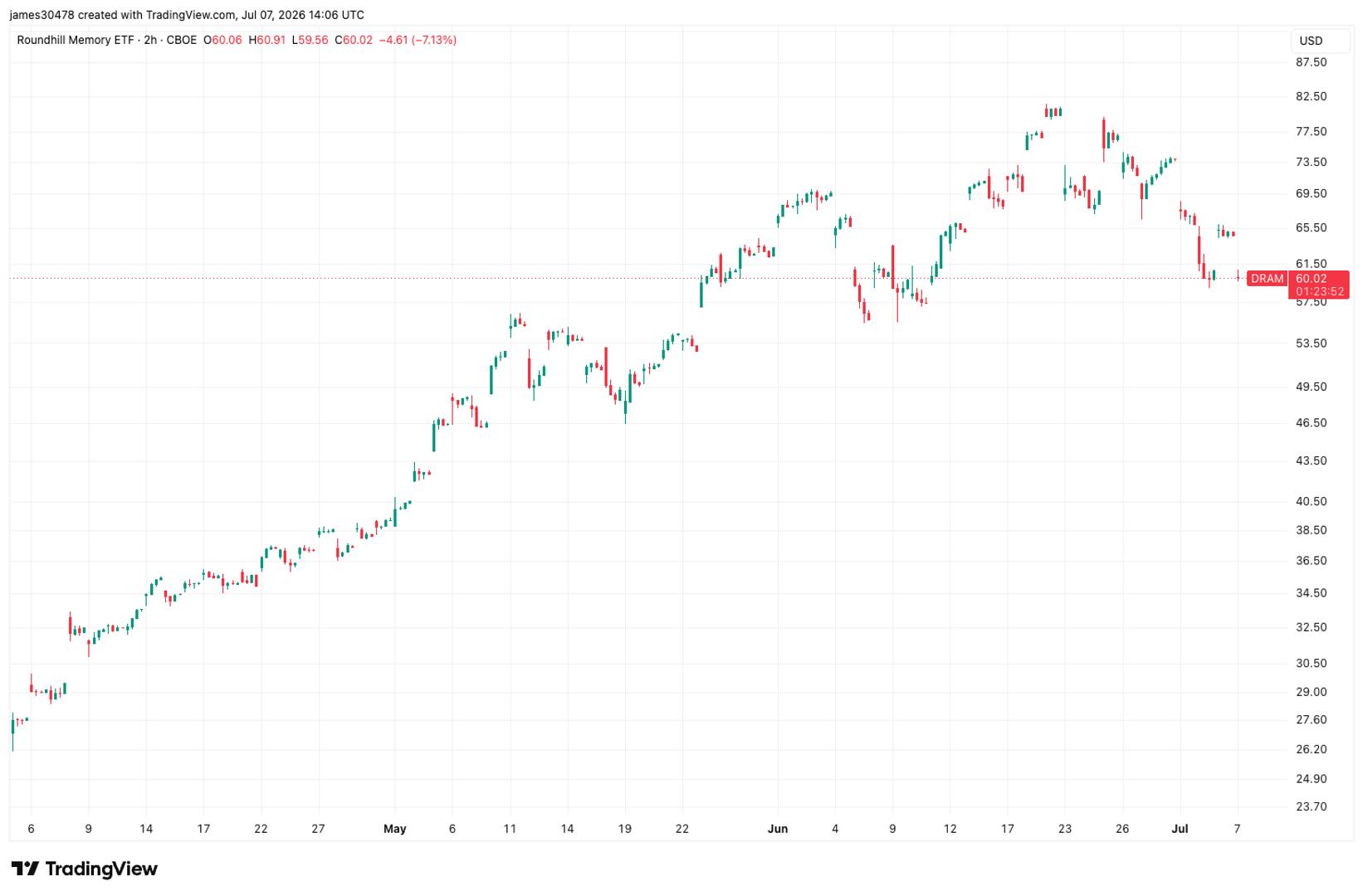
- Samsung Electronics and SK Hynix reversed intraday gains to fall as much as 7.6% and 5.2% respectively in Seoul afternoon trade on July 8, after earlier opening in the red to track an overnight US semiconductor selloff (Intel -9.7%, Micron -4.7%, AMD -6.5%, Philadelphia Semiconductor Index -4.7%).
- Samsung's Tuesday preliminary estimate of a 19-fold jump in Q2 operating profit failed to satisfy investors despite robust AI memory chip demand, causing Samsung shares to tumble 6.9% that day and fueling a broader AI-investment retreat that spread to Wall Street.
- Kiwoom Securities analyst Park Yuak cut his Samsung target price by about 9% to 390,000 won ($257.15), citing rising component costs pushing up PC and smartphone prices and making customers more cautious about additional memory purchases.
- JPMorgan stated that memory prices remain the key earnings driver in H2, with supply continuing to lag demand despite growing customer resistance; NAND conventional chip pricing could outperform expectations on strong US hyperscaler demand.
- Analysts expect memory chip supply to remain tight through Q3, but investors are increasingly focused on whether the pace of memory price increases will slow in H2, clouding the outlook for further earnings growth.
- SK Hynix's planned $28 billion US ADR listing, which was oversubscribed according to a separate source, failed to lift the stock — its bookbuild was set to close Wednesday.
Why it matters: The paradox of Samsung's 19-fold profit surge triggering a global selloff shows investors have moved beyond celebrating AI-fueled earnings to pricing in whether the rate of memory price increases can sustain — a question with direct read-across to the pricing power of Nvidia's entire GPU supply chain, since Samsung and SK Hynix supply the HBM memory co-packaged with AI accelerators.
Ask SkimNews