Samsung Record Earnings Can't Stop KOSPI's 5% Plunge — SkimNews
Get the Finance newsletter
Daily finance — markets, central banks, M&A, the prints that move money. Free.
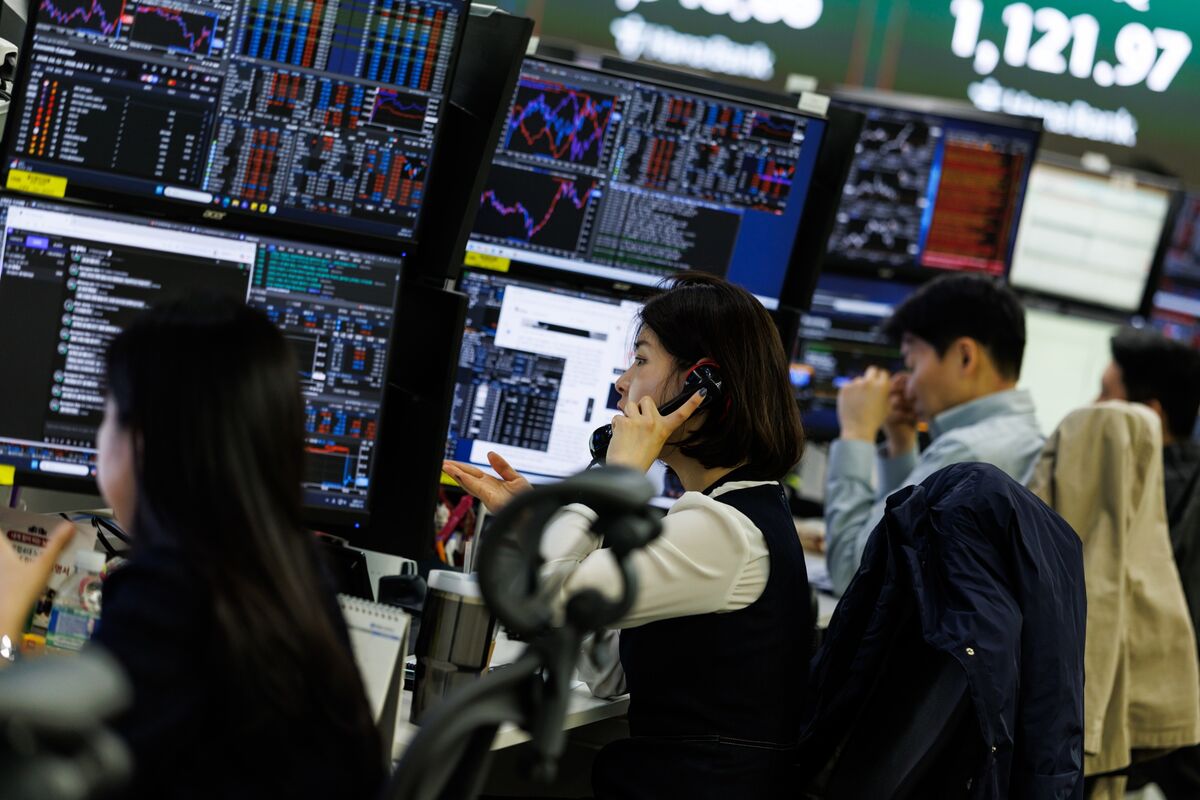
- KOSPI fell as much as 8.1% during Tuesday's session, triggering a temporary market-wide circuit breaker before paring losses to roughly 5.7% lower, with semiconductor stocks driving the rout.
- Samsung Electronics reported record quarterly operating profit driven by AI-server memory-chip demand, yet its shares dropped about 8%, dragging the broader index down and illustrating the gap between fundamentals and positioning.
- SK Hynix shares declined approximately 9% after the company formally launched the marketing process for its planned U.S. listing on Monday, adding a secondary catalyst to the Korean chip selloff.
- Selling spread across Asia's chip supply chain: Japan's Nikkei 225 fell nearly 2%, Murata Manufacturing dropped 9%, Taiwan's TSMC reversed earlier gains to fall 0.8%, MediaTek lost 2.3%, and Foxconn slipped 2.1% despite stronger-than-expected June and Q2 revenue.
- Brent crude prices climbed after reports Iran fired missiles toward commercial vessels transiting the Strait of Hormuz, layering geopolitical risk onto an already fragile risk-on mood.
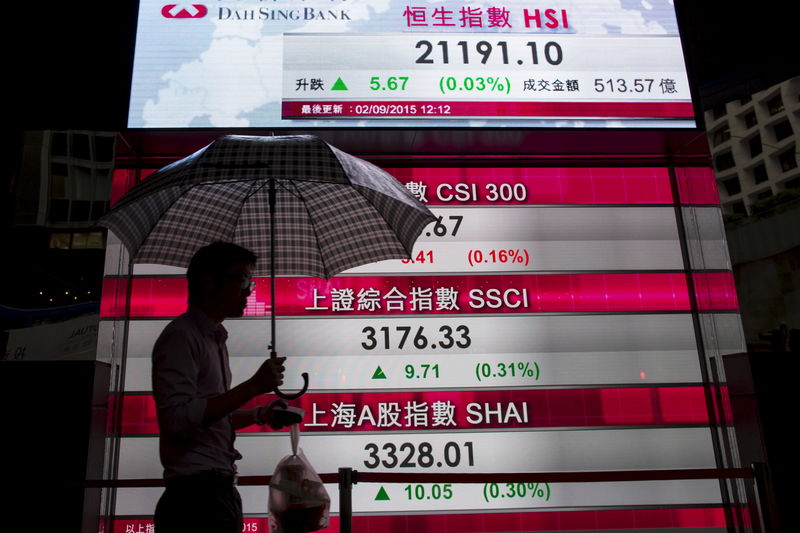
- Markets diverged elsewhere in Asia — India's Nifty 50 rose 0.4%, Singapore gained nearly 1%, and Indonesia added 0.5%, while mainland Chinese equities weakened with the CSI 300 down 1.3% and Shanghai Composite off 1.6%.
- Investors now pivot to macro catalysts: Wednesday's Fed minutes, the RBNZ policy decision (markets broadly expect a 25bp hike), plus CPI prints from the Philippines, Taiwan, and China, and Bank Negara Malaysia's Thursday decision.
Why it matters: Samsung's paradox — record earnings met with an 8% stock slide — shows investors are now pricing memory-demand deceleration rather than celebrating current profits. The KOSPI circuit breaker reveals Korean positioning was stretched enough that even blockbuster results couldn't anchor the bid, and the contagion into Murata, TSMC, and MediaTek confirms the rotation is regional, not single-stock.
Ask SkimNews