How much agrivoltaic shading is enough
Why it matters: Understanding optimal agrivoltaic shading can boost tomato yields and energy generation in semi-arid regions like Murcia, Spain.
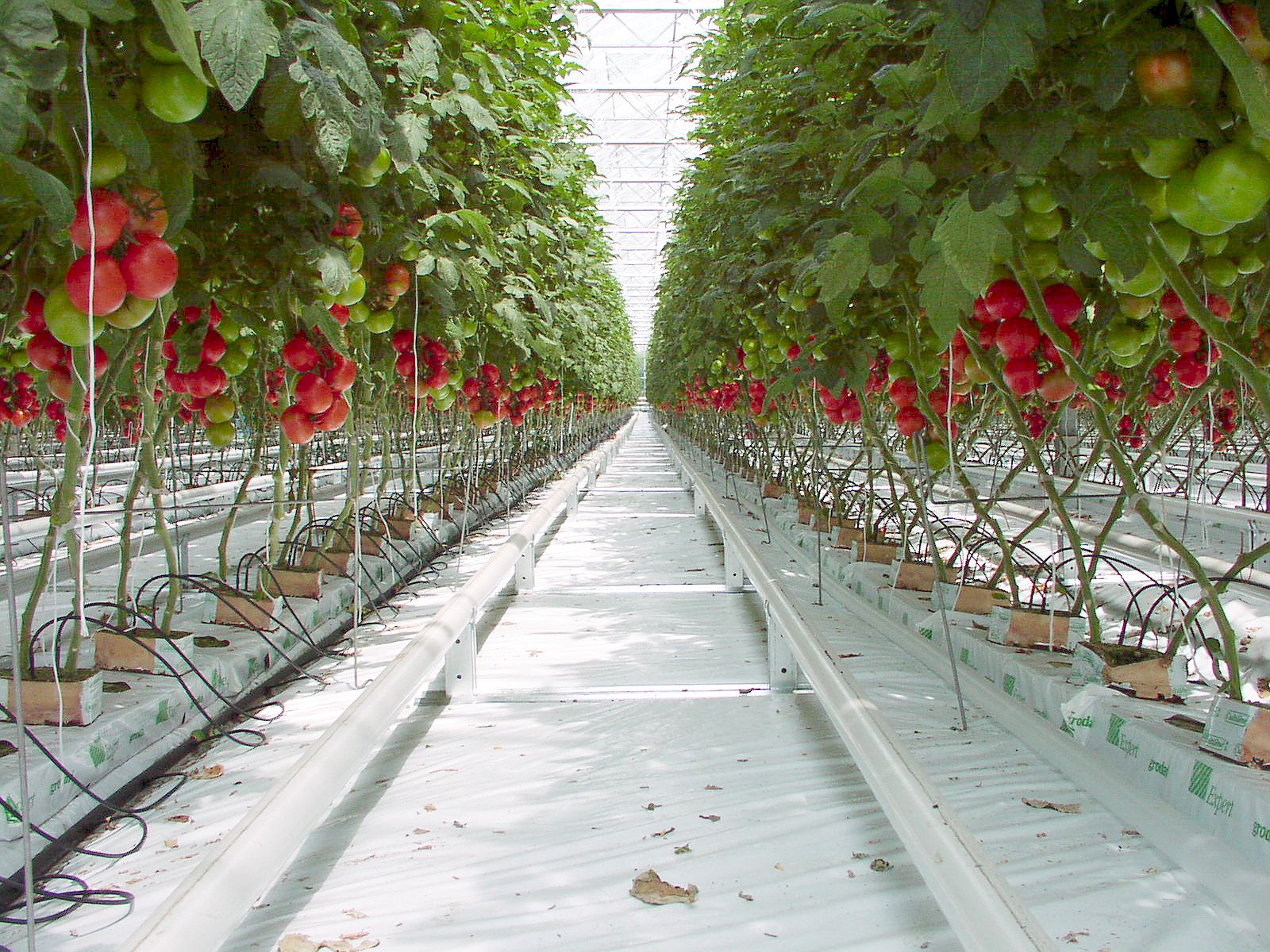
- Spain’s Murcian Institute for Agricultural and Environmental Research and Development (IMIDA) led research to assess the impact of agrivoltaic system designs on tomato crops, focusing on optimal shading for plant benefit.
- Four independent greenhouses were used for a robust assessment, including a control, a shading-net treatment, a semi-transparent monocrystalline silicon (PV-Si) greenhouse, and a cadmium telluride thin-film (PV-TF) greenhouse.
- PV-Si technology generated significantly more energy, with an average daily output of 3.92 kWh in winter-spring and 4.07 kWh in spring-summer, compared to PV-TF's 2.58 kWh and 2.79 kWh, respectively.
- Daily Light Integral (DLI), crucial for plant growth, was higher in the PV-Si greenhouse (18.1 mol m⁻² in winter-spring) than in the PV-TF greenhouse (10.8 mol m⁻²), with only the control and PV-Si greenhouses maintaining DLI values above the minimum threshold for optimal crop development during the winter-spring cycle.
Researchers in Spain are evaluating how different semi-transparent solar panel designs impact tomato crop yields and energy generation in agrivoltaic systems, aiming to find the optimal shading level for plant growth while maximizing electricity output. Their study compares monocrystalline silicon and cadmium telluride thin-film greenhouses against traditional control and shading-net setups across two growing seasons in Murcia's semi-arid climate.