French, South Korean leaders say they'll work together on Strait of Hormuz
Why it matters: One-fifth of the world's oil supply, passing through the Strait of Hormuz, faces continued disruption, impacting global energy markets.
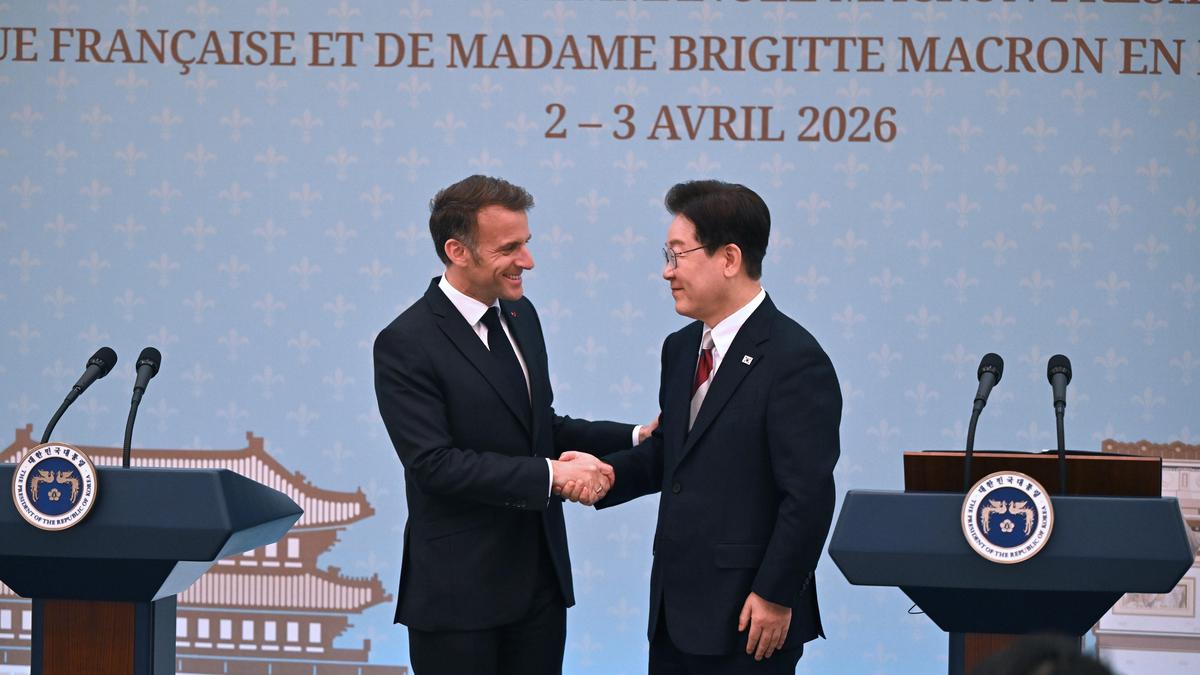
- French President Emmanuel Macron and South Korean President Lee Jae Myung agreed to work together to reopen the Strait of Hormuz and ease global economic uncertainties, emphasizing cooperation in technology, energy, and critical minerals.
- U.S. President Donald Trump criticized allies for not supporting the U.S. and Israeli war against Iran, suggesting countries like South Korea, Japan, and China, which rely heavily on the Strait, should secure it themselves.
- Macron views a military operation to reopen the Strait as unrealistic, while South Korean officials are in contact with Washington and are not considering paying Iran transit fees.
- Over 40 countries have launched a coalition to secure the Strait of Hormuz, according to euronews.com, indicating a broader international effort beyond the Franco-South Korean initiative.
- The UN Security Council has delayed a vote on authorizing force to protect shipping in the Strait of Hormuz, as reported by The Hindu, highlighting ongoing international debate and lack of consensus on military intervention.
- The U.K. is set to host talks on securing the Strait of Hormuz, per NYT World, suggesting another diplomatic avenue for resolving the crisis.
French President Emmanuel Macron and South Korean President Lee Jae Myung have pledged to collaborate on reopening the Strait of Hormuz and de-escalating West Asian tensions, a move that contrasts with U.S. President Donald Trump's calls for allies like South Korea and Japan to take sole responsibility for securing the vital waterway. This bilateral effort comes as over 40 countries launch a broader coalition to secure the Strait, while the UN Security Council delays a vote on authorizing force.