IAF Conducts Rotor Clap III To Test Helicopter Drone Defense

Get the Geopolitics newsletter
Daily geopolitics — wars, elections, sanctions, the diplomatic moves that move markets. Free.
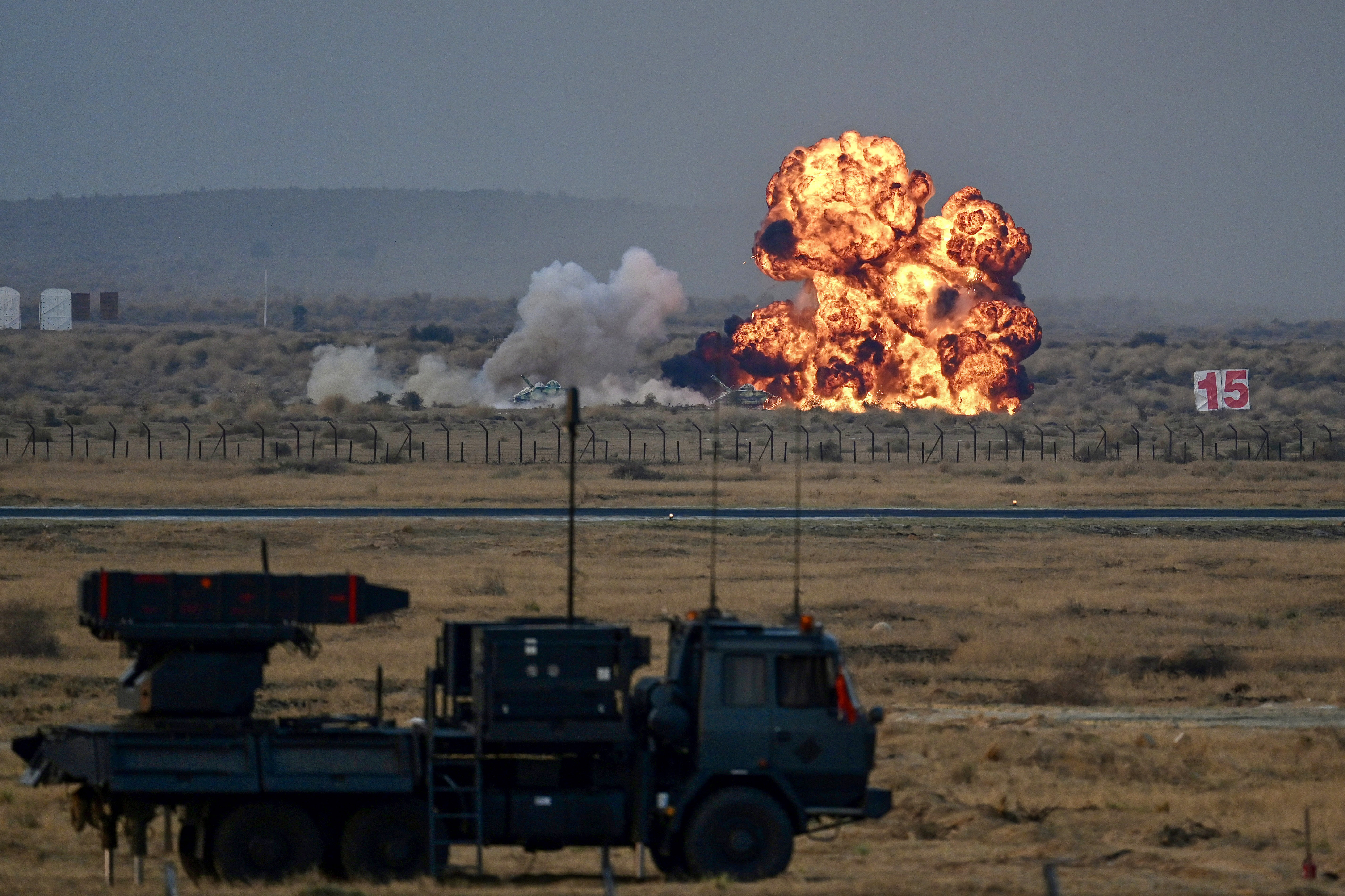
- Indian Air Force concluded Exercise Rotor Clap III on August 2 at the Pokhran firing range in Rajasthan, a week-long drill validating tactics for shooting down low-flying loitering munitions and drones to address gaps exposed during Operation Sindoor.
- The exercise deployed Apache, Prachand, Rudra, Mi-25/35P, and Mi-17V5 helicopters from Jodhpur-based units, signaling that rotary platforms could form the airborne leg of Mission Sudarshan Chakra's aerial defense shield.
- Mission Sudarshan Chakra's scope has expanded beyond ground-based air defense to include helicopter-based drone interdiction — cheaper than missile interceptors but more expensive than ground-based guns or jammers, per the source.
- India's helicopter fleet is scaling up: 15 Prachands currently serve (10 IAF, 5 Army), with 156 additional units (66 IAF, 90 Army) to be delivered by 2032 via HAL's production partnership with Adani Defense and BEML; 28 advanced Apaches are also in service.
- An Israeli Air Force Apache shot down six drones in minutes during the 2025 12-day Iran-Israel war, and given India's strategic partnership with Israel — including Israeli support during the Kargil War — the source suggests the IAF may have sought Israeli assistance for Rotor Clap III.
- Pakistan is advised to induct loitering munitions exceeding Mach 0.5, deploy long-range electro-optical sensors to close India's low-level radar exploitation gap, and run joint Army-Air Force exercises to maintain tactical-level conventional deterrence.
Why it matters: The exercise signals a doctrinal shift: India is using cost-effective rotary platforms for drone defense rather than expensive missile interceptors, with a fleet expansion of 156 Prachands by 2032. For Pakistan, whose drones penetrated deep into Indian territory during Operation Sindoor, the closing of that gap raises the cost of any future aerial incursion and forces Islamabad to invest in faster munitions and electro-optical sensors.
Ask SkimNews