IAF Expands Sudarshan Chakra to Helicopter Drone Strikes

Get the Geopolitics newsletter
Daily geopolitics — wars, elections, sanctions, the diplomatic moves that move markets. Free.
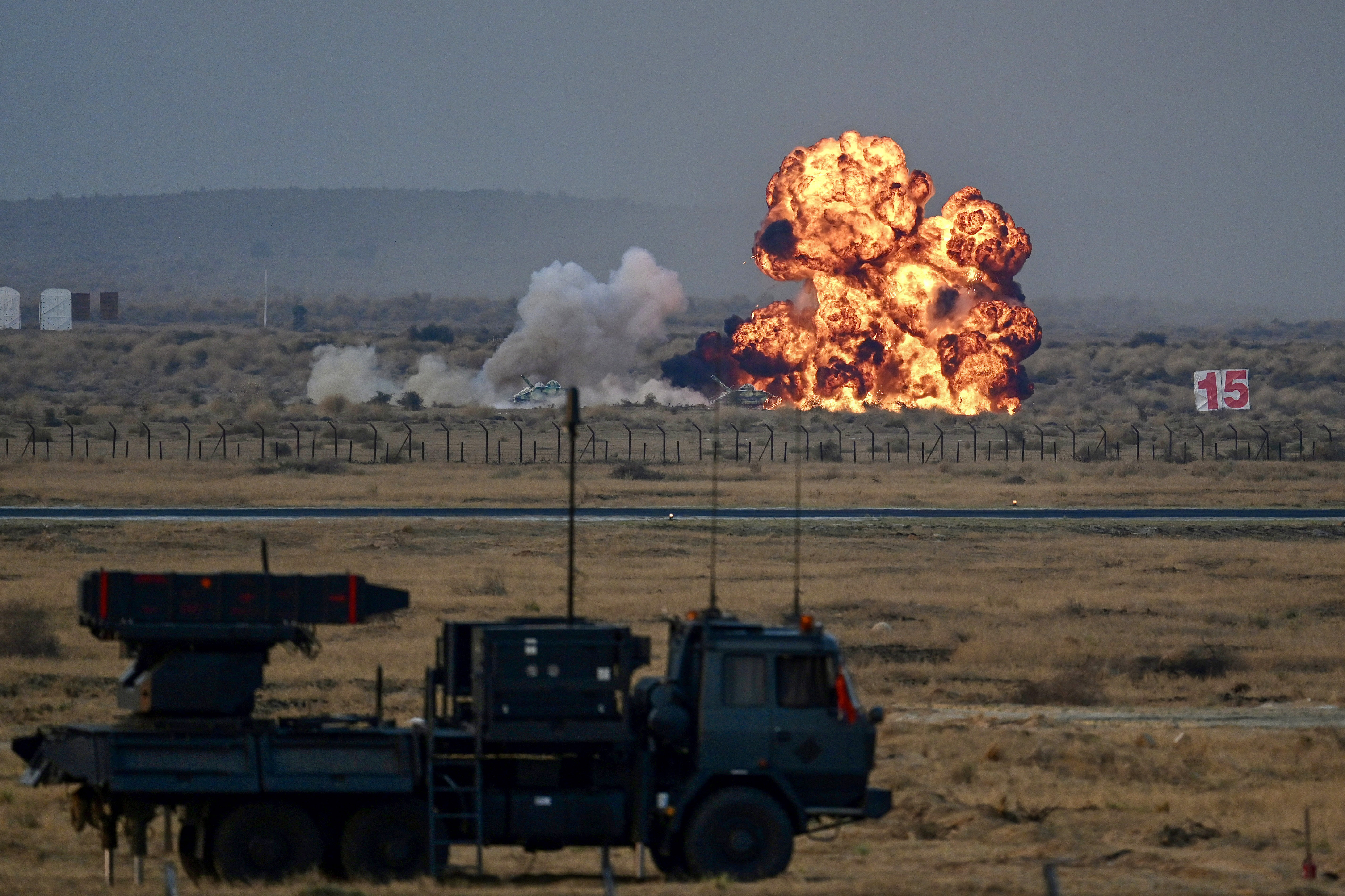
- IAF concluded Exercise Rotor Clap III on August 2 at the Pokhran firing range in Rajasthan, validating tactics for shooting down low-flying drones and loitering munitions — a response to gaps exposed during Operation Sindoor in May 2025.
- Exercise Rotor Clap III deployed Apache, Prachand, Mi-25/35P, Rudra, and Mi-17V5 helicopters from forward bases in Rajasthan under IAF South Western Air Command, with Prachands at Jodhpur since 2022 and Apaches with the 451 Army Aviation Squadron.
- Mission Sudarshan Chakra now extends beyond ground-based air defense to include helicopter-based drone interdiction — framed as cheaper than missile interceptors but costlier than jammers or guns.
- HAL is scaling Prachand production through partnerships with Adani Defense Systems and BEML, with 156 additional helicopters (66 IAF, 90 Army) scheduled for delivery by 2032; current fleets include 15 Prachands, 28 Apaches, and 75+ Rudras.
- India's IAF may have drawn on Israeli Air Force expertise after an Israeli Apache shot down six drones in minutes during the 2025 Iran-Israel war, with the article citing longstanding IAF-IAF cooperation dating to the Kargil War.
- Pakistan is advised to counter with three measures: high-speed loitering munitions exceeding Mach 0.5, long-range electro-optical sensors to close the low-level radar gap, and joint Army-Air Force exercises to preserve tactical-level conventional deterrence.
Why it matters: The exercise marks a doctrinal shift toward layered, helicopter-based drone interception tailored specifically to Pakistan's drone incursions during Operation Sindoor. With 156 Prachands due by 2032 and Apaches already in service, India is operationalizing a cheaper alternative to missile interceptors — compressing the timeline on which Pakistan's drone and loitering-munition tactics must evolve.
Ask SkimNews