Trump's Iran War Serves China-Russia 'MAWA' Agenda — SkimNews

Get the Geopolitics newsletter
Daily geopolitics — wars, elections, sanctions, the diplomatic moves that move markets. Free.
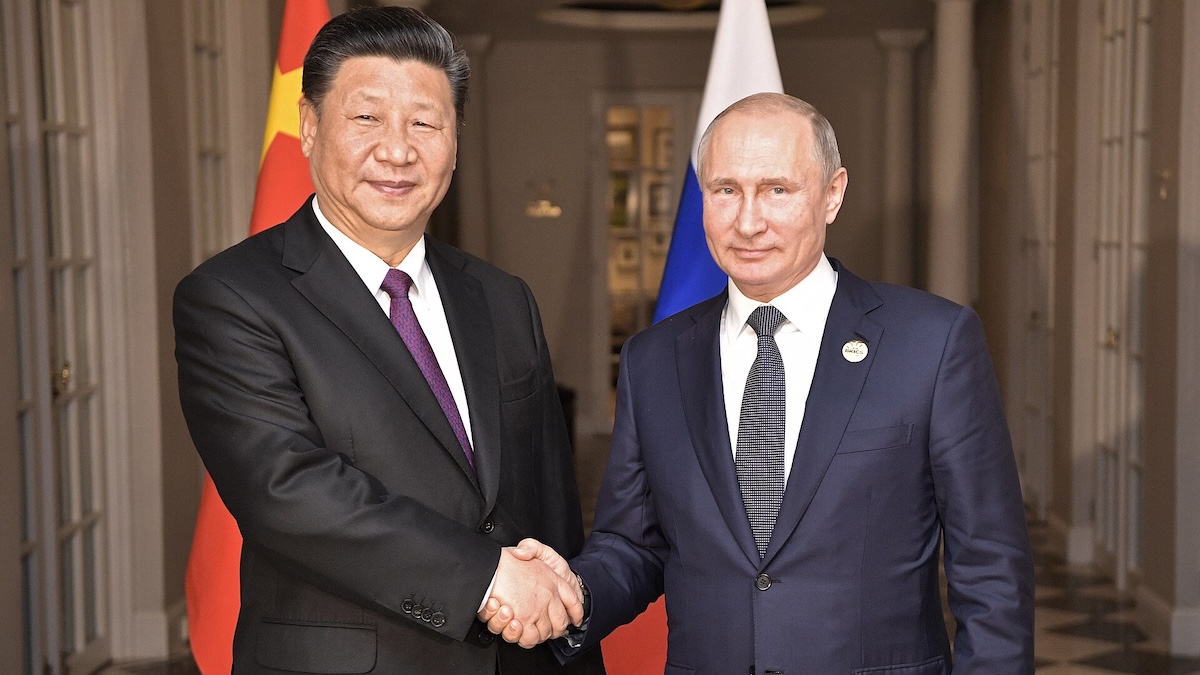
- Bill Emmott frames Trump's Iran war as fulfilling a hypothetical "MAWA — Make America Weak Again" agenda for the China-Russia strategic partnership, arguing both superpowers are gaining as America weakens.
- China benefits as Trump becomes a weaker trade partner; Xi's threat of a critical-minerals export embargo already forced Trump to retreat from 145% tariffs, and a rescheduled Beijing summit on May 14-15 would see Trump arrive "as a supplicant."
- Russia gains from a more than 50% rise in crude oil prices since the Iran war began, bolstering public finances and extending its Ukraine war capacity; Transatlantic Iran divisions could also reduce US weapons shipments to Ukraine.
- Japan has begun its first public discussion of acquiring nuclear weapons since the 1945 atomic bombings of Hiroshima and Nagasaki 81 years ago, reflecting doubts about the US nuclear umbrella under Trump.
- Japan's energy planning is paralyzed by oil-shock uncertainty, with wind and solar at roughly 13% of supply (mostly solar) versus Europe's 40-50%, thanks to resistance from big business.
- Japanese officials told Emmott that China will not invade or blockade Taiwan despite weakened US deterrence, citing China's economic troubles, the Ukraine/Iran failures, and Xi Jinping's anti-corruption purge of senior PLA generals.
- Russia's Ukraine war has produced over one million casualties (dead and wounded) in four years for tiny territorial gains, Emmott writes, with a possible NATO withdrawal by Trump — unlikely due to Congressional resistance — still a long-held Putin aim.
Why it matters: Japan's first nuclear-weapons discussion in 81 years and Europe's parallel debate reflect a concrete shift: allies no longer trust the US umbrella to hold. With 50%+ oil-price spikes, the China-Russia 'MAWA' dynamic is actively reshaping allies' defense budgets and energy plans, even as Trump may visit Beijing May 14-15 from a weakened position.
Ask SkimNews