RAND: US Navy Can't Repair Damaged Ships in Pacific War — SkimNews

Get the Geopolitics newsletter
Daily geopolitics — wars, elections, sanctions, the diplomatic moves that move markets. Free.
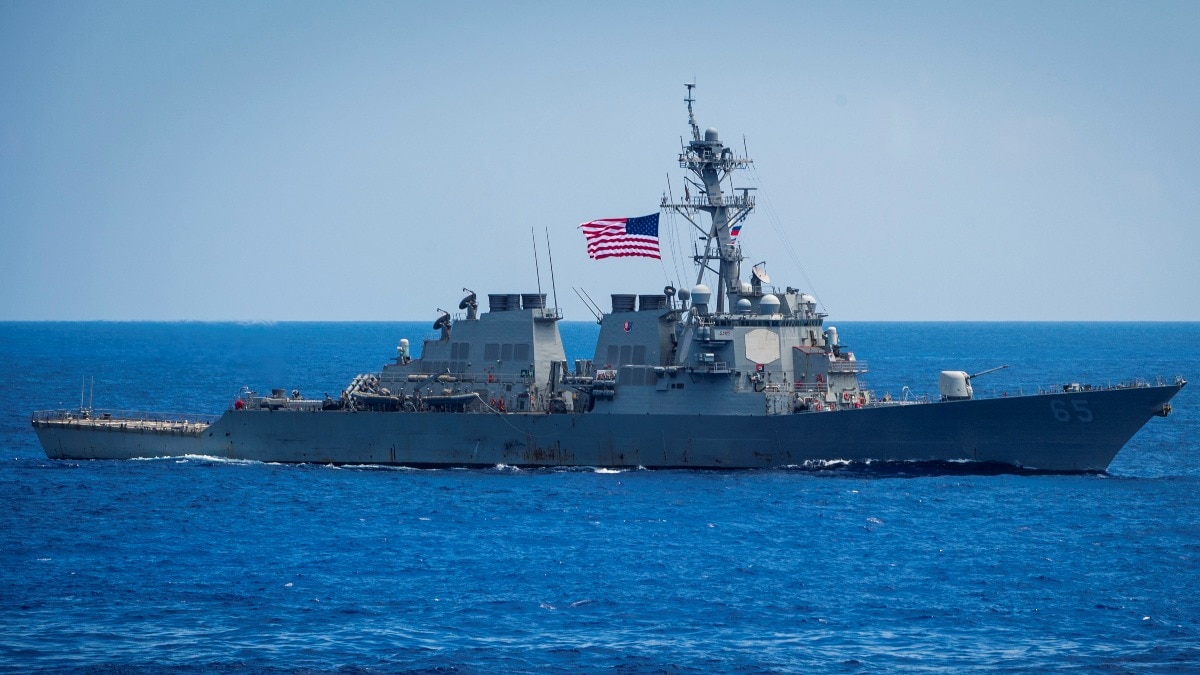
- RAND conducted a wargaming exercise revealing that US Navy Arleigh Burke-class destroyers cannot be effectively repaired in a hostile Indo-Pacific environment due to insufficient organic repair capabilities and rigid peacetime regulations
- US Navy lacks an established wartime repair doctrine and faces fragmented command authority over maintenance, according to a 2021 GAO report cited in the analysis
- Michael Hogan notes in a May 2025 CIMSEC article that post-Cold War downsizing reduced the US Navy’s auxiliary fleet to just three ocean-going tugs, two rescue ships, and two submarine tenders, undermining battle damage response
- The War Zone reported a leaked US Navy intelligence slide showing China has 23.25 million gross tons of shipbuilding capacity, 232 times that of the US, highlighting a stark industrial imbalance
- Arjun Vohra writes that the US operates only eight military shipyards today, compared to its World War II industrial base, with modern destroyers taking 5–7 years to build, limiting wartime surge options
- People’s Liberation Army Navy (PLAN) is adopting a hybrid maintenance model that combines hull replacement with comprehensive overhauls of advanced combatants, contrasting with the US Navy’s repair bottlenecks
- William Arnest argues in a March 2025 Proceedings article that the US Navy must shift from peacetime efficiency to a wartime force regeneration framework using mobile repair units and a tiered triage system
Why it matters: The US Navy risks losing operational advantage in a prolonged conflict with China because its current repair infrastructure cannot return damaged warships to service quickly, while China’s superior shipbuilding capacity and evolving maintenance strategy enable faster force regeneration—this imbalance could determine the outcome of a Taiwan contingency.
Ask SkimNews