Goldman Bans Employees from Prediction Market Trades on Bank Events

Get the Finance newsletter
Daily finance — markets, central banks, M&A, the prints that move money. Free.
- Goldman Sachs has banned employees from trading prediction market contracts related to bank-specific events, elections, financial markets, macroeconomic data, and geopolitics, according to people familiar with the matter.
- In May, the CFTC and DOJ charged Michele Spagnuolo, a Google employee, with using material nonpublic information to trade on Polymarket contracts about Google's browser "Year in Search" lists, allegedly netting roughly $1.2 million under the handle "AlphaRaccoon."
- CNBC contacted 50 publicly traded and privately held companies — only three had prediction market trading policies, two said they were reviewing them, 36 did not respond, and seven declined to comment.
- JPMorgan Chase confirmed employees are urged to proceed with caution on prediction markets, especially financial-sector contracts; Morgan Stanley disclosed policies in its code of conduct; Bank of America is rolling out policy updates outlining prohibited activities.
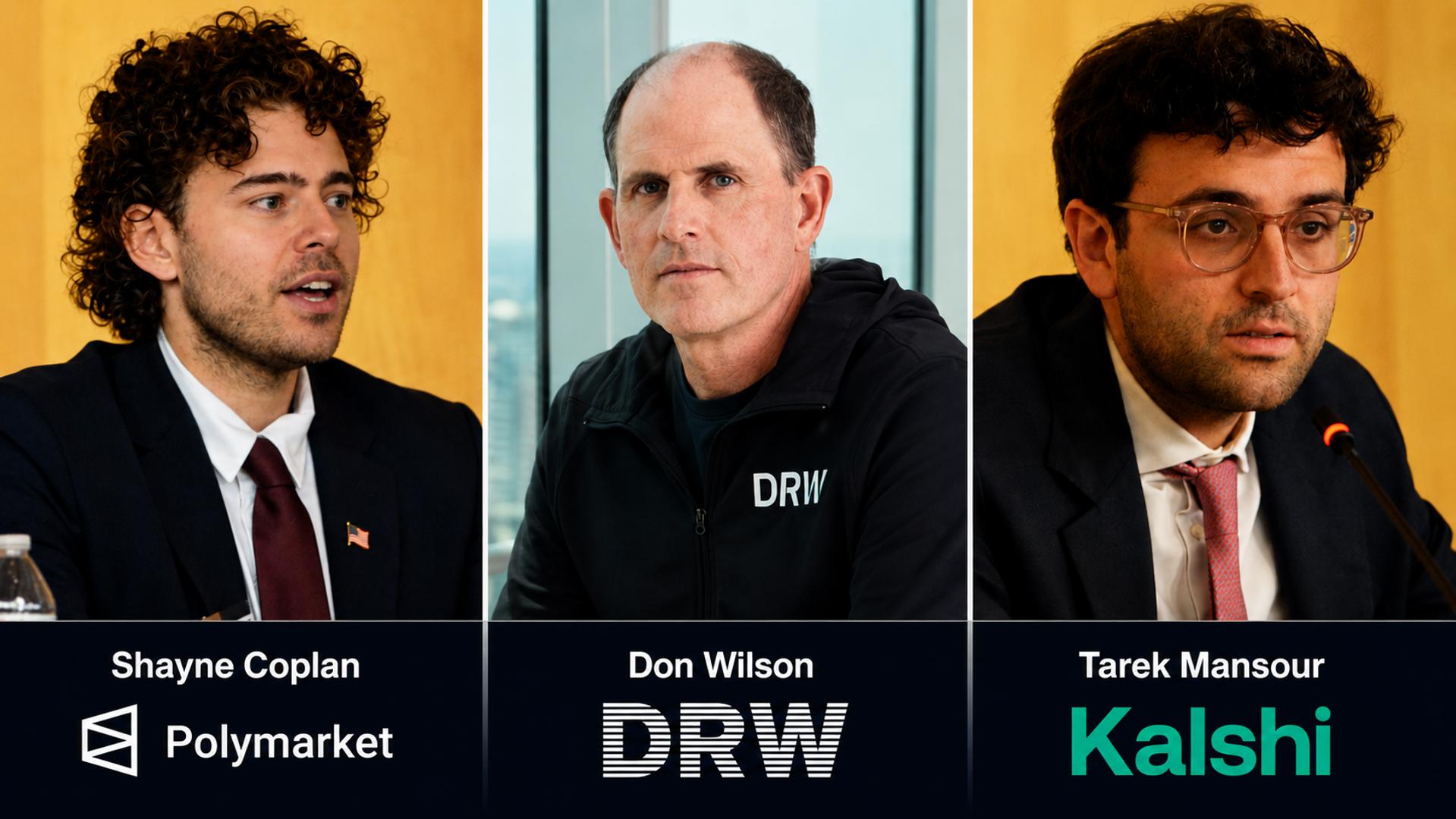
- Kalshi announced employment verification tools in June and partnerships with StarCompliance and Solidus Labs, while Polymarket told CNBC it works with Chainalysis and Palantir to monitor suspicious activity.
- Legal experts at Pillsbury, Washington and Lee, and Michelman & Robinson said companies benefit from explicitly naming prediction markets in insider trading policies because broad directives are hard to enforce against the sheer variety of event contracts.
Why it matters: With only 3 of 50 surveyed companies having formal prediction market trading policies and 36 silent on the question, most firms face undefined insider-trading liability on platforms with thousands of event contracts covering headcount, product launches, and macro data. Banks with large compliance shops are moving fastest — Goldman, JPMorgan, and Morgan Stanley already have guardrails — but the CFTC called its enforcement playbook a "blank canvas," meaning courts, not policies, will set the early liability tests.