Lily Allen's West End Girl hits arenas — SkimNews

Get the Culture newsletter
Daily culture — film, music, books, the trends and ideas worth your attention. Free.
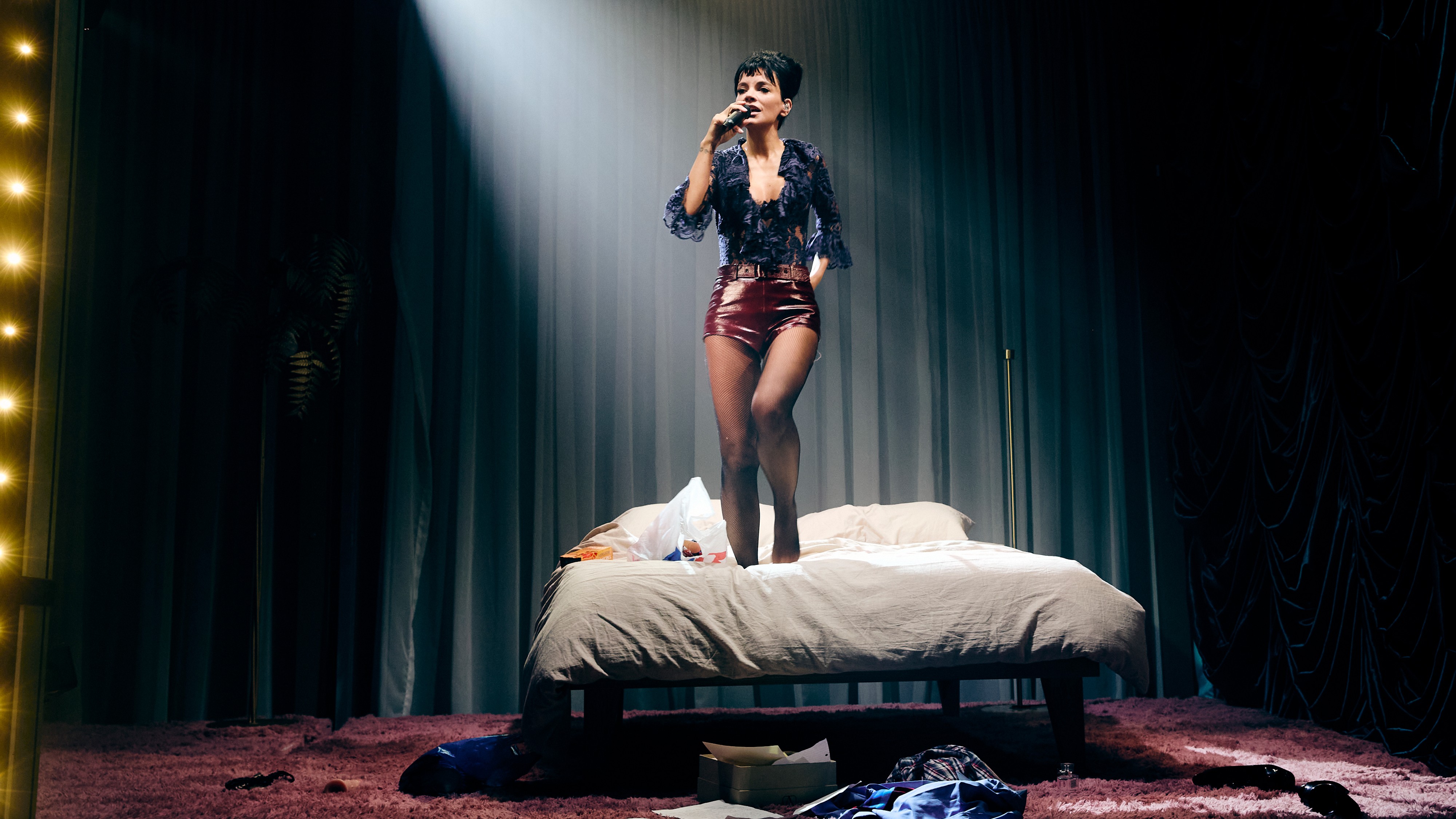
- Lily Allen is touring an arena-scaled version of the West End Girl show she took into theatres last year, performing the acclaimed album that the source says 'at least partly dramatises the real-life breakdown of her four-year marriage' to Stranger Things actor David Harbour.
- The show opens with the Dallas Minor Trio playing instrumental versions of Allen's older hits including The Fear and Fuck You ('very much'), warming up the crowd before the 41-year-old takes the stage in a bow-finished dress for an hour-long solo second act.
- Allen performs over backing tracks (occasionally Auto-Tuned) — a format the theatre version faced criticism for, though the source argues the solitary staging 'perfectly plays into the isolation in the songs' as they trace an alleged open marriage arrangement, self-doubt, and the discovery of texts ('Who the fuck is Madeline?').
- The performance blends high camp with raw emotion, with Allen re-enacting a breakdown during Relapse and finding curious sex toys in Pussy Palace, before the album's later shift into 60s balladry and big pop numbers lets her turn the tables — balloons falling on Fruityloop's 'It's not me, it's you!'
- The arena version works, the source concludes, because 'they're such fantastic songs and Allen brilliantly inhabits them as if she's undergoing both exorcism and catharsis,' positioning the show as 'a discourse on power in relationships and perhaps even the emptiness of some celebrity.'
- The staging includes a theatrical phone call in the title track that leaves Allen tearful, and Relapse's 'startlingly' re-enacted breakdown drawing on either 'raw emotion or terrific acting skills.'
Why it matters: Allen has taken a confessional 12-track breakup album from a theatre run into arenas — what the reviewer calls 'an unusual arena show' — built entirely around her solo performance over backing tracks. The gamble succeeds or fails on whether Allen can sell the songs' emotional isolation at scale, and the reviewer judges that 'they're such fantastic songs' carried by her acting make it land as both personal catharsis and a wider discourse on power in celebrity relationships.
Ask SkimNews