China shows snazzy clip of DF-17 missile on state TV in show of force — SkimNews
Get the Geopolitics newsletter
Daily geopolitics — wars, elections, sanctions, the diplomatic moves that move markets. Free.
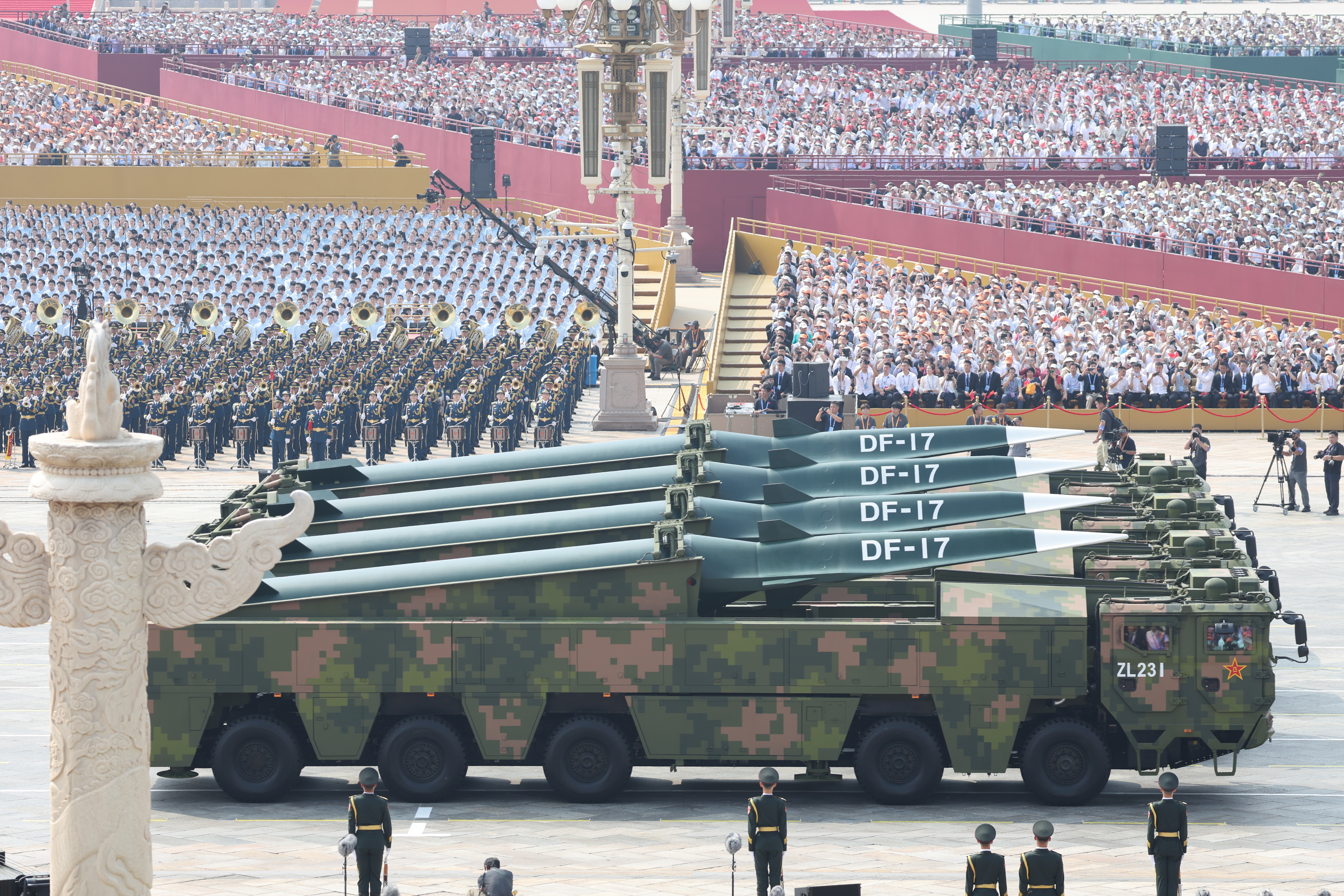
- China's CGTN aired the first official Chinese state-media footage of the DF-17 hypersonic ballistic missile in June, showcasing it as one of the PLA's "premier strategic assets" in an English-subtitled broadcast.
- The DF-17 carries a hypersonic glide vehicle that flies at lower altitudes in unpredictable directions, making it harder to defeat than traditional ballistic missiles, according to MIT's M. Taylor Fravel and Taipei analyst Alexander Huang.
- The Center for Strategic and International Studies describes the DF-17 as 11 meters long with a 1,800–2,500 km range capable of carrying conventional or nuclear warheads; the think tank says the missile has existed for at least 12 years and entered PLA service in 2019.
- The broadcast's timing coincides with the 2026 RIMPAC exercises near Hawaii and late-June U.S.-Japan drills, with Tamkang University's Chen Yi-fan reading it as a signal that the PLA can overwhelm regional missile defenses via "saturation strikes."
- CGTN's video showed coordinated salvo launches with no fixed launch sites and all-weather capability, claiming the missiles can make "ultra-precise" strikes and "penetrate advanced defense systems."
- The U.S. military is developing comparable systems including the Army's Long-Range Hypersonic Weapon, but Chen urged Washington to "accelerate the development and deployment" to establish credible mutual deterrence.
Why it matters: The DF-17's hypersonic glide vehicle can penetrate existing missile defenses — analysts told the outlet it is especially threatening to aircraft carriers and other large surface ships — and with an arsenal of 1,300 missiles and 300 launchers, the U.S. faces pressure to close its own hypersonic weapons gap to preserve deterrence credibility in the Pacific.
Ask SkimNews