Ford Launches Energy Subsidiary With 20 GWh Storage Plan
Get the Energy newsletter
Daily energy & climate — solar, EVs, oil, the policy fights and tech bets shaping the transition. Free.
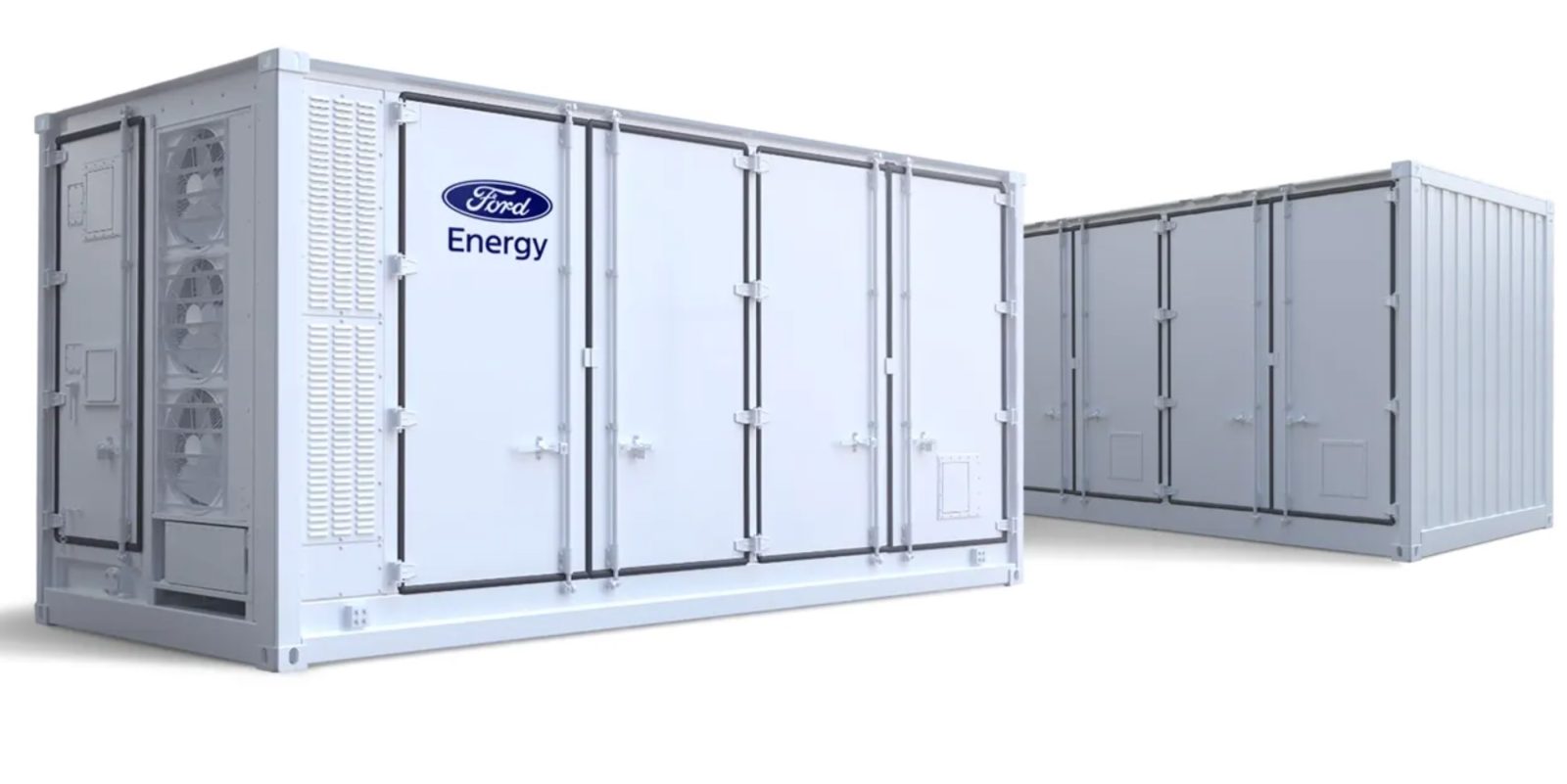
- Ford launched Ford Energy, a wholly owned subsidiary manufacturing U.S.-assembled battery energy storage systems (BESS) for utilities and industrial customers, with 20 GWh of annual capacity planned from its Kentucky gigafactory.
- Ford Energy will produce the DC block, a containerized BESS using 512 Ah LFP prismatic cells, in two configurations—FE-250 (2-hour) and FE-450 (4-hour)—each delivering 5.45 MWh and rated for extreme environments up to -35°C and 4,000 meters altitude.
- Lisa Drake, Ford Energy President, stated the team has spent a year securing supply chains, readying manufacturing sites, and aligning technology with demand for domestic energy storage, emphasizing U.S. assembly and compliance with Section 48E tax credit requirements.
- Ford is repurposing its Glendale, Kentucky facility—originally built for EV batteries under the defunct BlueOval SK joint venture—into a dedicated energy storage gigafactory after EV demand failed to absorb planned battery capacity.
- Tesla dominates the utility-scale storage market with 46.7 GWh deployed in 2025 and plans 50 GWh annual production of Megapack 3, setting a competitive benchmark as Ford enters with a 20 GWh target by late 2027.
- U.S. utility-scale battery storage additions are projected to reach 24 GW in 2026, nearly double 2025’s 15 GW, driven by AI data center growth, which may account for 83% of behind-the-meter commercial storage by 2030.
Why it matters: Ford’s pivot from idle EV battery capacity to grid storage taps into a rapidly expanding market where demand outpaces supply, leveraging existing infrastructure to avoid sunk costs. With Tesla already scaling Megapack production, Ford’s 2027 delivery timeline risks lagging behind, but its U.S.-assembled systems could win utility contracts sensitive to domestic content rules.