Israel-Lebanon deal may entrench stalemate rather than end war, analysts say
Get the Geopolitics newsletter
Daily geopolitics — wars, elections, sanctions, the diplomatic moves that move markets. Free.
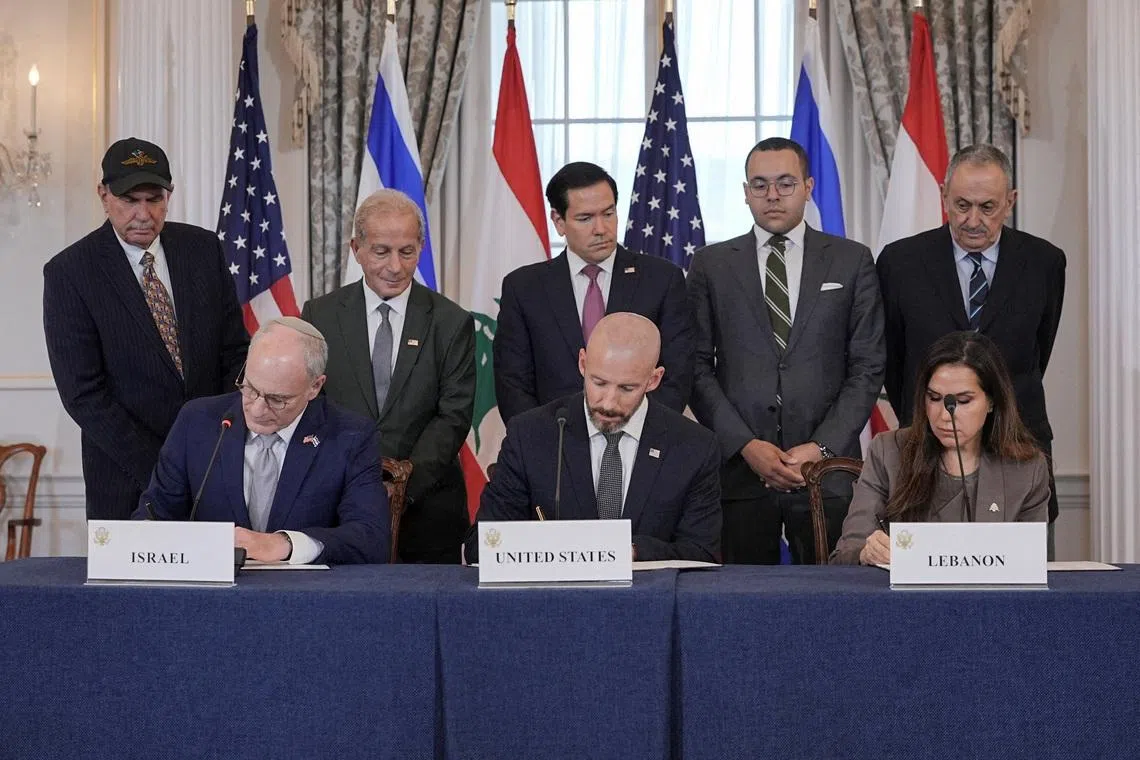
- Israel and Lebanon signed a Washington framework deal tying Israel's southern Lebanon withdrawal to Hezbollah's verified disarmament—a condition Hezbollah has flatly rejected and no Lebanese government can enforce.
- Hezbollah chief Naim Qassem declared the deal "null and void" and a "surrender," while Parliament Speaker Nabih Berri called it an "agreement of dictates" and said it would not be implemented.
- Netanyahu said Israeli troops will hold an 8 to 10 km-deep buffer zone in southern Lebanon until Hezbollah is disarmed, and LSE analyst Fawaz Gerges called the terms a political "gift" to Israel.
- Danny Citrinowicz, a former Israeli military intelligence officer, said Hezbollah dismantlement "would never happen" and the deal legitimizes an open-ended Israeli military presence.
- Analyst Michael Young warned the deal could push Lebanon toward civil conflict or a Shi'ite insurrection, and Hezbollah lawmaker Hassan Fadlallah echoed the fear of "internal conflict."
- Israel's military campaign against Hezbollah has killed about 4,000 people in Lebanon and displaced roughly one million, a human toll the deal's critics say it will not resolve.
Why it matters: The deal gives Israel a political 'gift,' according to LSE analyst Fawaz Gerges, by legitimizing an open-ended military presence in a buffer zone 8 to 10 km deep in southern Lebanon. With Hezbollah refusing to disarm and Lebanon's army unable to enforce it, analysts warn the roughly 4,000 dead and one million displaced face civil conflict, not peace.