Gold Falls 24%, Silver Crashes 47% from January Highs — SkimNews

Get the Finance newsletter
Daily finance — markets, central banks, M&A, the prints that move money. Free.
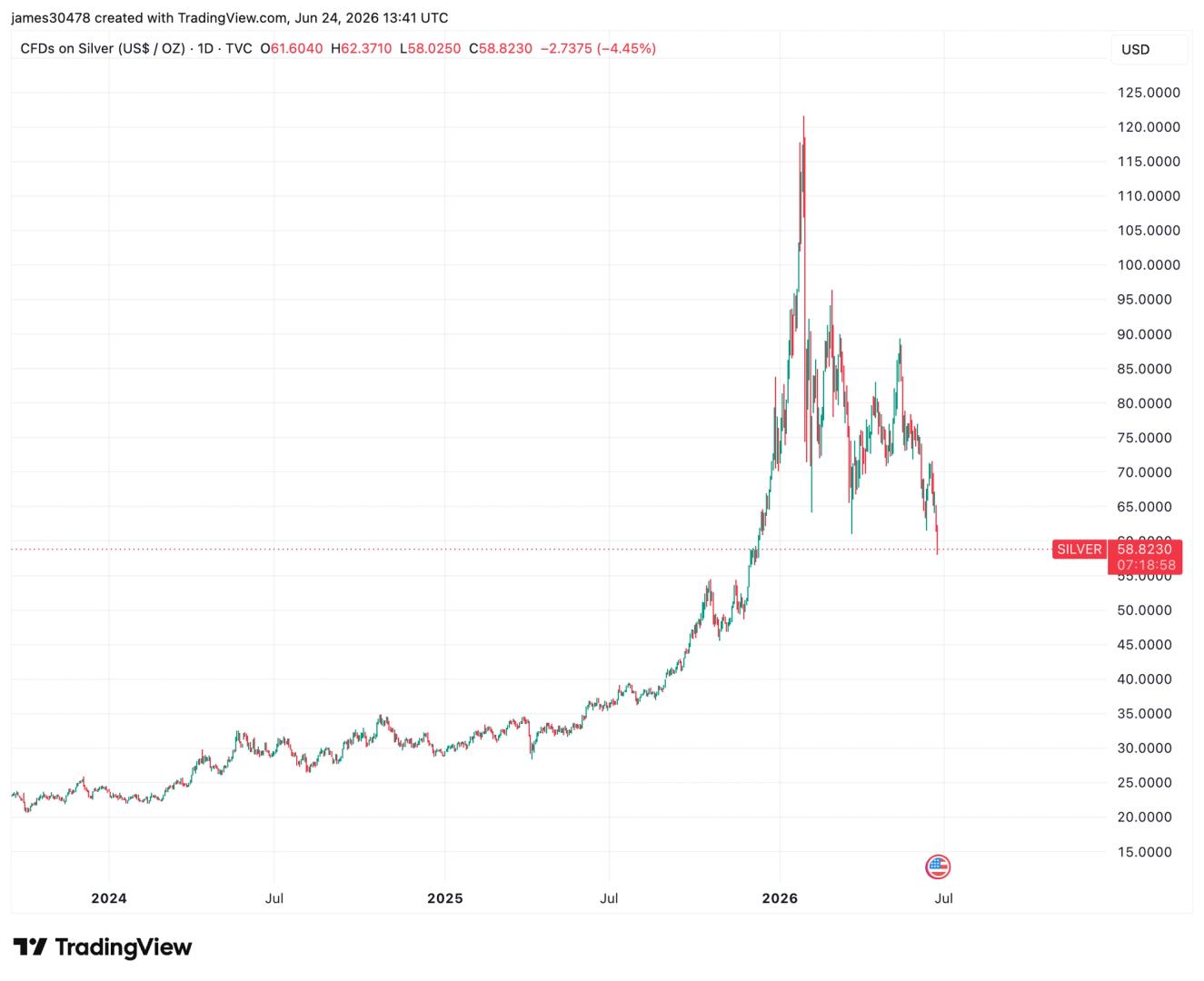
- Gold and silver have plunged from January 2025 peaks — gold down roughly 24% in US dollars (from $5,405/oz on Jan 29 to $4,001.80 on June 25), while silver has fallen around 47%, per Mint's market analysis.
- World Gold Council reported record $89 billion in gold ETF inflows worldwide in 2025, the largest on record, helping power an unprecedented rally alongside heavy central bank buying that pushed India's gold above ₹1,00,000 per 10 grams by July 2025.
- Surendra Mehta of the India Bullion and Jewellers Association attributes the recent decline to three factors: expected US Federal Reserve interest rate hikes, a stronger US dollar, and central banks slowing their pace of gold acquisition.
- ICICI Prudential's Manish Banthia warned that silver's downturn is sharper and more volatile than gold's due to greater retail euphoria, noting his Multi-Asset Fund had begun booking silver profits and winding down holdings before prices peaked.
- Retail investors like Rohit Talwar of Ahmedabad discovered that physical silver bars became difficult to sell even at nearly double the purchase price, as local jewelers cited extreme market volatility and refused to buy them back.
- JP Morgan predicted in May 2025 that gold would climb to $6,000/oz by 2029, while other analysts projected $7,000-$12,000/oz — targets that now look distant after gold peaked at $5,405 and fell below $4,002.
- SahajMoney founder Abhishek Kumar recommends limiting gold to 5-10% of a portfolio, arguing that "the asset allocation mix is the savior" for individual investors who don't need to hold physical metal.
Why it matters: Retail and financial investors who piled into precious metals during last year's euphoric rally now sit on losses of 24-47%, with Indian silver holders like Ahmedabad's Rohit Talwar discovering that physical bullion can be hard to liquidate even at a profit. Advisers like Kumar cap gold at 5-10% of a portfolio — chasing parabolic moves always burns speculators who confuse hype with discipline.
Ask SkimNews