LNG Won’t Shield Hawaiʻi From the Next Energy Crisis
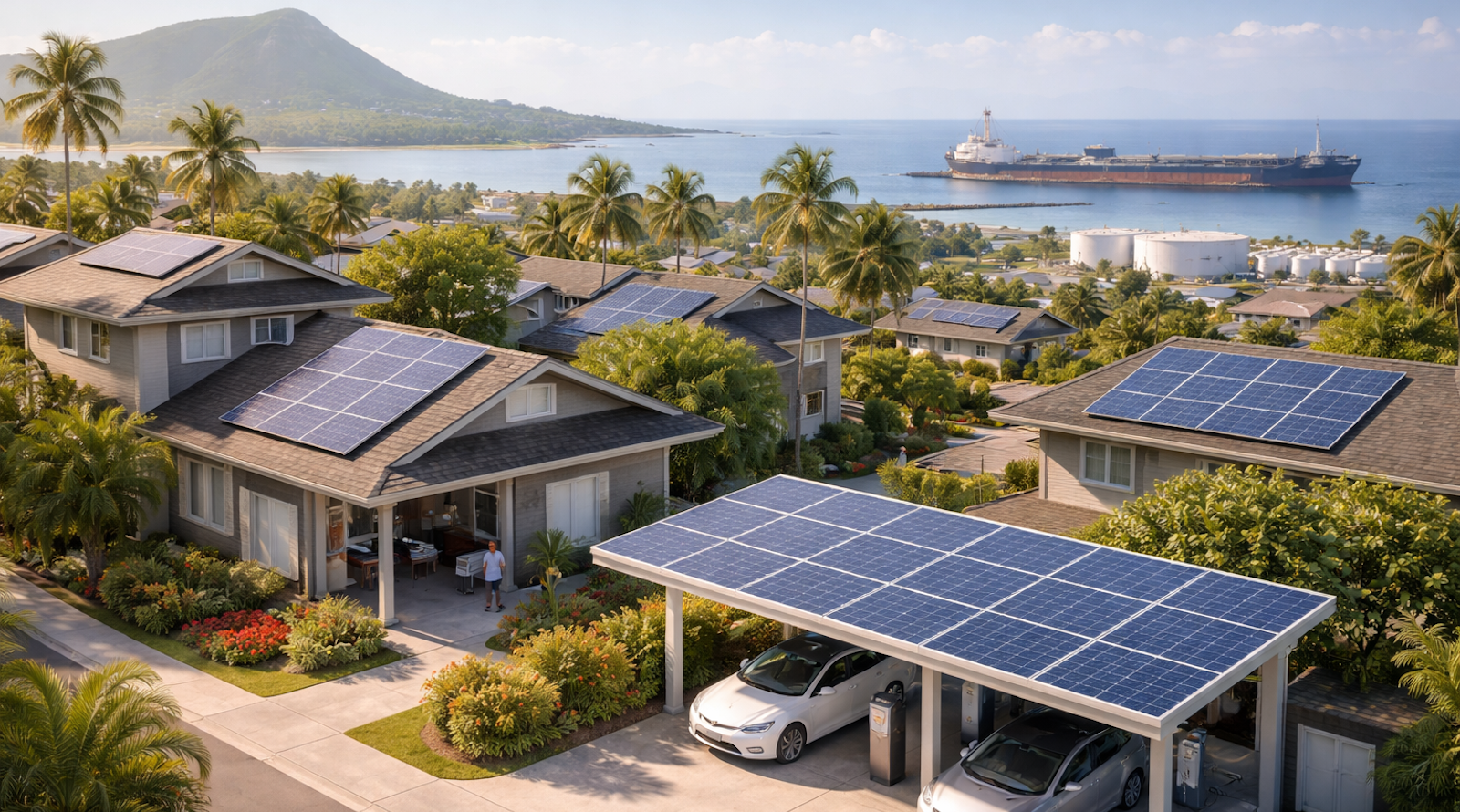
Why it matters: Hawaiʻi's energy future hinges on a flawed LNG plan that ignores global fuel volatility.
- HSEO's January 2025 alternative fuels study argued an interim LNG transition could reduce costs and emissions while supporting reliability, projecting a net present value of $150 million and levelized savings of $10.2/MWh.
- Governor Green's office and JERA built on this logic, with JERA proposing a $2 billion investment for a 500 MW gas-fired plant and offshore LNG import infrastructure to address Oʻahu’s affordability, sustainability, and reliability.
- Critics contend that the HSEO study's methodology is flawed, as it excludes fuel-price volatility and does not reflect crisis-era fuel economics, making the long-term benefits of LNG less secure than advertised.
- The International Energy Agency highlights the increasing frequency of sharp oil price increases since 1973, underscoring the need for models that account for such volatility, which the HSEO study explicitly excluded.
Hawaiʻi's proposed interim transition to LNG, championed by HSEO and Governor Green's office with a JERA investment, is being questioned for its ability to truly shield the state from future energy crises. While initially presented as a cost-saving and reliable solution compared to oil, critics argue the underlying studies fail to account for real-world fuel price volatility and the lessons learned from recent global energy shocks.