Manila, Beijing resume talks on South China Sea, energy security
Why it matters: Resumed talks signal a complex geopolitical tightrope walk between conflict and critical energy cooperation.
- Manila and Beijing resumed high-level talks on the South China Sea, energy security, and broader bilateral relations, marking the first such meeting since January 2025 under a 2017 mechanism.
- The Philippines firmly reiterated its principled positions on the South China Sea, raising concerns about incidents threatening Filipino personnel and fishermen, and emphasizing international law.
- Both sides discussed initial exchanges on oil and gas cooperation, renewable energy, agriculture, trade, and potential people-to-people initiatives like visa-free travel, aiming to shore up confidence at sea.
- President Ferdinand Marcos Jr. declared a state of national energy emergency, citing Middle East conflict disruptions and prompting efforts to diversify fuel imports, including from China.
- Chinese Vice Foreign Minister Sun Weidong called for "concrete actions" from the Philippines to improve ties, contrasting with Manila's focus on adherence to international law and diplomacy.
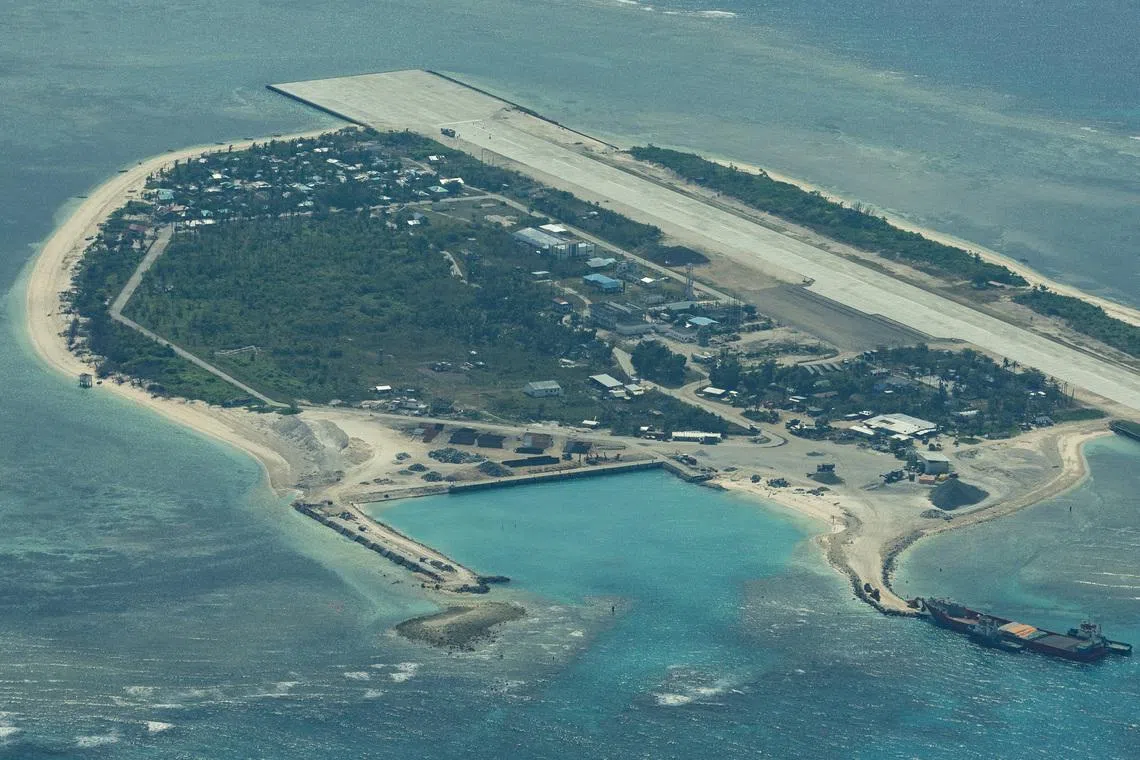
- Recent maritime confrontations have heightened tensions, with Manila accusing Beijing of "dangerous maneuvers" and water cannon use, despite a 2016 international arbitral ruling invalidating China's claims.
The Philippines and China have resumed high-level talks on the disputed South China Sea, exploring energy cooperation and addressing broader bilateral relations amidst heightened maritime tensions and a Philippine energy emergency. While Manila reiterated its principled stance on sovereignty and international law, Beijing called for "concrete actions" to improve ties, highlighting the complex dance between conflict and cooperation.