Expanding areas under Israeli control in Gaza increase risks to civilians, UN warns
Get the Geopolitics newsletter
Daily geopolitics — wars, elections, sanctions, the diplomatic moves that move markets. Free.
- UN and humanitarian partners warned that expansion of Israeli-controlled areas in Gaza since October's stuttering ceasefire is placing civilians at greater risk and constraining aid operations across the Occupied Palestinian Territory
- UN verification documented the killing of 196 Palestinians in Israeli attacks near deployment areas between 10 October 2025 and early April, including 18 women and 43 children, many reportedly moving through zones lacking clear ground demarcation
- Access-restricted areas now cover about 65 percent of Gaza's land, with most zones off limits to residents and all requiring humanitarian organizations to coordinate access, while access by sea also remains prohibited
- Israeli forces advanced into Beit Lahia, reportedly setting three tents ablaze with incendiary munitions dropped from the air and placing yellow cement blocks marking further expansion of the "Yellow Line"
- Humanitarian partners have been forced to reduce or temporarily suspend critical activities after the killing of service providers, affecting thousands of families and delaying life-saving assistance
- Health agencies warned that skin diseases and acute watery diarrhea continue spreading due to overcrowding and poor water and sanitation, while less than a quarter of this year's humanitarian appeal has been funded
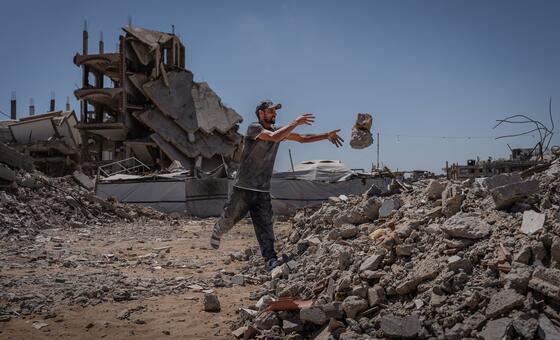
- UN Development Programme said it has cleared half the solid waste mountain at Gaza's Firas Market, removing 250,000 cubic metres of waste and clearing 75 percent of the historic commercial hub's area
Why it matters: Nearly two-thirds of Gaza is now off-limits to civilians while the UN verifies 196 Palestinian deaths near Israeli deployment zones since October, including 43 children. The simultaneous shrinking of civilian space and choking of humanitarian operations leaves most of Gaza's repeatedly displaced population concentrated in shrinking zones, with the humanitarian appeal less than 25 percent funded.