Thailand Denies Using Security Ties as US Tariff Leverage — SkimNews

Get the Geopolitics newsletter
Daily geopolitics — wars, elections, sanctions, the diplomatic moves that move markets. Free.
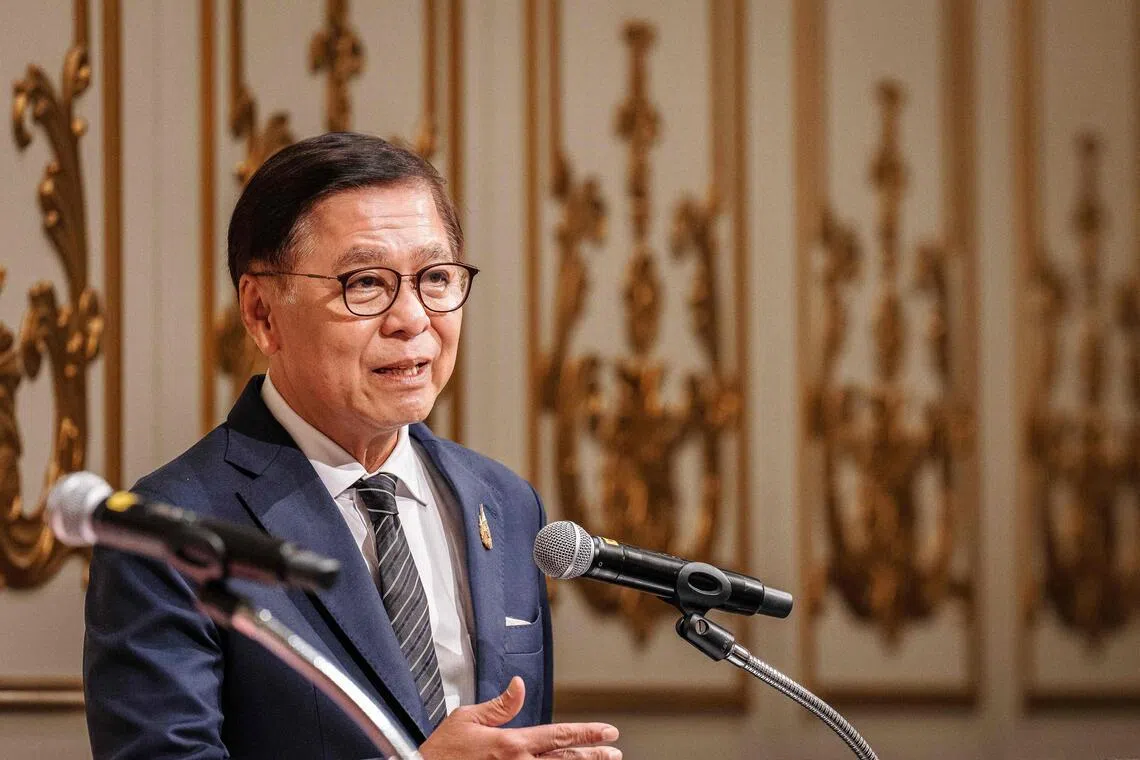
- Rachada Dhanadirek, spokesperson for the Thai government, said on Wednesday that security cooperation would be "quarantined" from ongoing tariff talks and that "the government will not trade one national interest for another," rejecting the Bloomberg reporting.
- Bloomberg reported that Thailand was preparing to warn the Trump administration that steep US tariffs could force it to scale back military cooperation, including the annual Cobra Gold joint exercises that have taken place since 1982 and last involved about 8,000 personnel from 30 countries.
- Thailand's tariff exposure began with Trump's April 2025 "liberation day" announcement at 36%, then dropped to 19% under an October framework that required eliminating tariffs on roughly 99% of US goods, more US energy/agricultural/aircraft purchases, and a reduction of its $71.9 billion goods trade surplus with the US.
- Section 301 complications now dog the talks: the USTR has threatened Thailand with an additional 12.5% tariff over forced labor concerns and is also investigating it for "structural overcapacity" in automotive and parts, machinery, and rubber products.
- Commerce Minister Suphajee Suthumpun told The Nation that Thailand believes its US treaty ally status entitles it to better terms than Southeast Asian peers like Cambodia, Malaysia, and Indonesia that have already closed Trump-era trade deals.
- One observer on X noted that explicitly coupling security to trade would confirm "that the alliance is dead and buried," a risk sharpened by Thailand's drift from Washington since the Cold War and its increasingly close political, economic, and security ties to China.
- Negotiating chaos in Washington has already disrupted the talks: the US Supreme Court struck down the "liberation day" regime in February, prompting Trump to impose a temporary 10% global tariff under Section 122, after which the USTR pivoted to Section 301 authority.
Why it matters: The denial papers over real pressure points: Thailand is simultaneously negotiating the bilateral framework while facing an extra 12.5% Section 301 tariff threat and an industrial-overcapacity investigation in autos, machinery, and rubber, and it is now racing to beat regional peers that have already locked in Trump-era deals. The stakes for Bangkok are a $71.9 billion trade surplus exposed to escalating duties if talks collapse, while for Washington the episode tests whether a treaty ally will be rewarded for cooperation or treated like any other Section 301 target.
Ask SkimNews