The Reflexive Rally Was Not Surprising
Why it matters: Investors risk significant capital losses if they misinterpret reflexive rallies as a fundamental market recovery.
- Lance Roberts via RealInvestmentAdvice.com argues that the recent market rally, including Tuesday's strong performance, was unsurprising but also a potential 'trap' for investors.
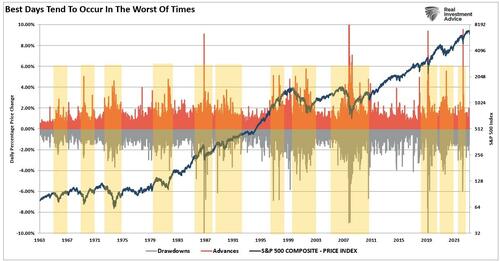
- JPMorgan Asset Management research highlights that seven of the market’s 10 best days in any given 20-year period occur within two weeks of the 10 worst days, suggesting best and worst days cluster.
- Clear Perspective Advisors data indicates that since 1974, the S&P 500 has returned over 24% on average following a market correction, with only 25% of corrections since WWII progressing into full bear markets.
- Goldman's trading desk noted the 'capitulation checklist' is nearly complete, with the S&P below all key moving averages and CTA selling thresholds, conditions that often precede sharp snap-back rallies.
Despite a significant market rally, with Tuesday marking one of the best trading days since 2022, investors should be wary as such gains often cluster with the worst market periods, according to Lance Roberts of RealInvestmentAdvice.com and JPMorgan Asset Management research. While 75% of corrections since WWII haven't become bear markets, Roberts cautions that these 'reflexive rallies' are often a trap, driven by positioning rather than fundamental improvements, and macro headwinds persist.