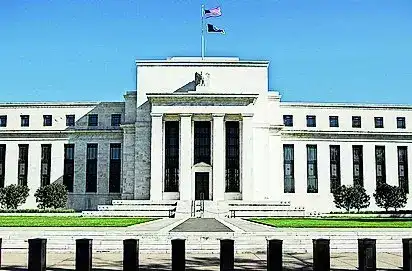
How do Fed rates impact the Indian markets and your money?

Get the Finance newsletter
Daily finance — markets, central banks, M&A, the prints that move money. Free.
- US Federal Reserve held its benchmark rate at 3.50–3.75% on 29 July, keeping holding US dollars and Treasuries attractive and pulling capital away from emerging markets like India.
- Madhavi Arora, chief economist at Emkay Global, said the US cost of funds acts as a proxy for global capital costs — so India must offer a higher risk premium when US bond yields rise to keep foreign investors engaged.
- Kaustubh Gupta, CIO fixed income at Aditya Birla Sun Life AMC, explained that high US rates strengthen the dollar against the rupee, making crude oil and electronics imports costlier and widening India's current account deficit.
- Indian corporates with dollar-denominated debt face immediate higher interest payments, and the RBI has less room to ease rates domestically without worsening currency pressure — pushing up home, auto and business loan costs.
- Abhishek Bisen, head of fixed income at Kotak Mutual Fund, noted bond prices fall as rates rise — but the flip side is that fresh investors can deploy funds at slightly better interest rates than before.
- Gold has decoupled from the traditional rate-rises-bearish script: Arora and Gupta both pointed to structural buying by central banks in India and China, with Bisen noting gold becomes "the de facto currency" during de-dollarization trends.
Why it matters: Indian borrowers and importers carry the cost of the Fed's hold: dollar debt service rises, crude and electronics get pricier in rupee terms, and domestic home and business loans stay elevated. Bond investors gain from higher yields, while gold buyers — buoyed by central bank demand from India and China — hold an asset increasingly insulated from Fed decisions.