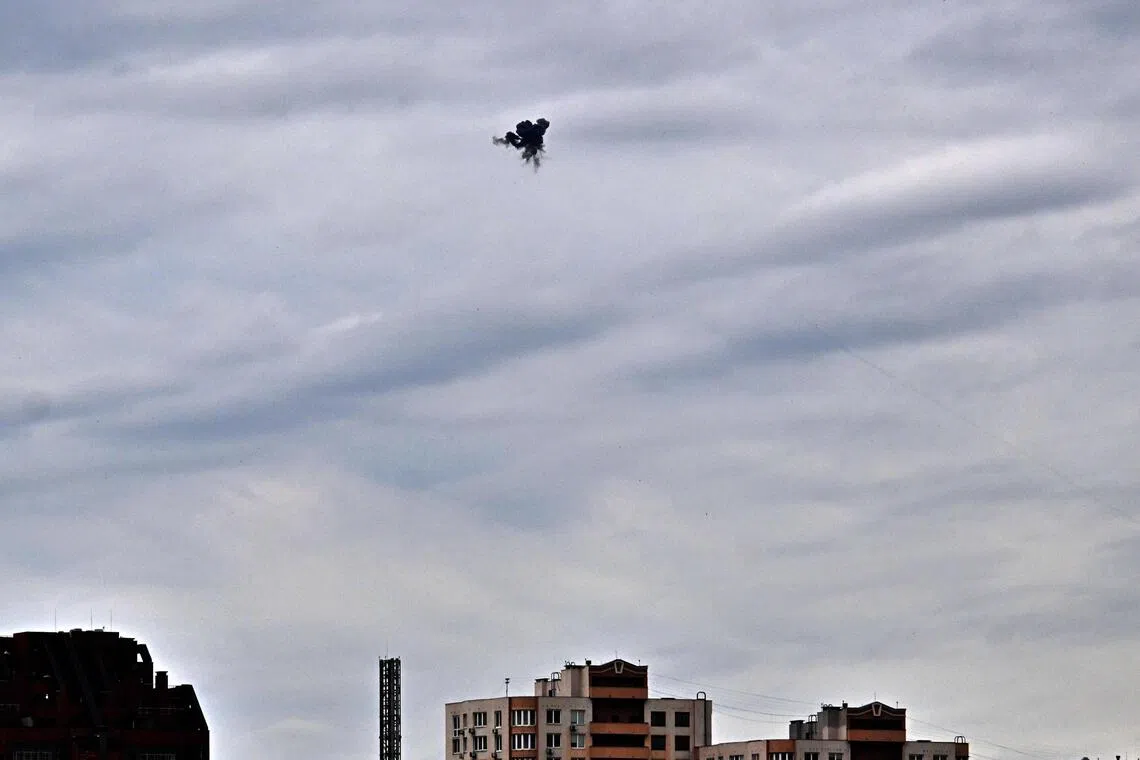
Russia Issues Fake Missile Warning to New Zealand

Get the Geopolitics newsletter
Daily geopolitics — wars, elections, sanctions, the diplomatic moves that move markets. Free.
- Russia's Air Traffic Management Corporation issued NOTAM NZZO B3996/26 on August 18 warning of a missile launch ~1,900 km southwest of New Zealand's South Island, imposing flight restrictions from 58-68 degrees south through August 27 — but vessel tracking by Starboard found no Russian ships in the area.
- New Zealand Foreign Minister Winston Peters said Russia's information was "unclear" and the article argues the warning constitutes an information operation, with New Zealand having previously experienced only space debris landings, never a missile launch, in its territory.
- A U.S. Air Force C-17 from Joint Base Lewis-McChord was turned back from Christchurch on August 18 hours into its journey, disrupting the first flight of the Antarctic season for the 62nd and 446th Airlift Wings supporting McMurdo and South Pole stations.
- President Vladimir Putin, watching the final day of Russian naval exercises in the Kuril Islands, warned that Russia would reciprocate countries seizing Russian vessels "anywhere we consider necessary, including in the Pacific Fleet's area of responsibility" — days after the Italian navy led an EU boarding of a Russian shadow fleet tanker.
- The Ross Sea flight region serves only U.S., New Zealand, and Australian military planes for Antarctic research stations — China, whose two Ross Sea bases lie near South Korea's Jang Bogo Station, is excluded from the logistics pool, which the article attributes to Beijing's military support for Russia's war against Ukraine.
- The Russian Pacific Fleet's 80 warships and submarines (including 6 SSBNs) together with the PLAN's 234 vessels and six SSBNs dwarf the navies of U.S. Indo-Pacific allies, a gap newly exposed by the last U.S. aircraft carrier stationed in the Pacific departing for the Middle East.
Why it matters: Russia's fake missile warning, combined with Putin's explicit threat of retaliatory vessel seizures in the Pacific, shows Moscow probing legal gaps in international waters — while the last U.S. carrier departs the region for the Middle East, leaving New Zealand and Indo-Pacific allies facing a tightening Russia-China naval partnership that includes joint PLAN patrols announced this year.
Ask SkimNews