Kent Beck on TDD, Agile, and Trust in the AI Era — SkimNews
Get the Tech newsletter
Daily tech — startups, AI labs, chips, the launches that shape the next decade. Free.
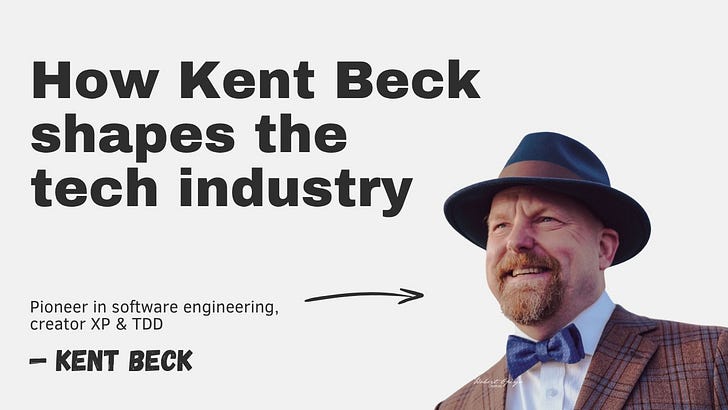
- Kent Beck co-created JUnit, coined Extreme Programming, and co-authored the 2001 Agile Manifesto at Snowbird, Utah, contributing the word "daily" to the line "Business people and developers must work together daily throughout the project."
- Kent Beck was fired by Apple in 1987 after joining to work on Smalltalk; the project died because Apple's customers wanted C and Pascal compilers instead, and Beck says he was let go for being in "punk mode" and refusing to be a team player.
- Kent Beck "rediscovered" TDD by recalling a trick from his father's old payroll-programming book — typing the expected output tape before writing the program — and mapping it onto his SUnit framework, where writing a failing test before the code made his programming anxiety vanish.
- Kent Beck coined "Extreme Programming" while on the Chrysler payroll project, deliberately picking a name he knew would be unpopular with the tech establishment of the day.
- Kent Beck joined Facebook at age 50 and found the company barely did unit testing; after his TDD class got zero signups at a hackathon, he decided to relearn software engineering the Facebook way and stayed seven years.
- Kent Beck's "3X" framework — explore (cheap uncorrelated experiments), expand (overcoming obstacles on what works), extract (repeatable playbook and economies of scale) — gives engineers a model where hiring, coding, and organization differ across each product phase.
- Kent Beck says we are failing to accumulate trust during the AI era at the same high rate as new code is being accumulated, and describes himself as chronically anxious about complex code — a trait that he says fueled his testing and TDD work.
Why it matters: Kent's three-phase 'explore, expand, extract' framework gives engineering leaders a concrete hiring-and-organization model for each stage of a tech shift, while his claim that trust accumulation is lagging new code generation positions human confidence — not raw output volume — as the bottleneck for engineering impact in the AI era.
Ask SkimNews