Nagasaki Marks 81 Years, Warns Nuclear War Risk Rising
Get the Geopolitics newsletter
Daily geopolitics — wars, elections, sanctions, the diplomatic moves that move markets. Free.
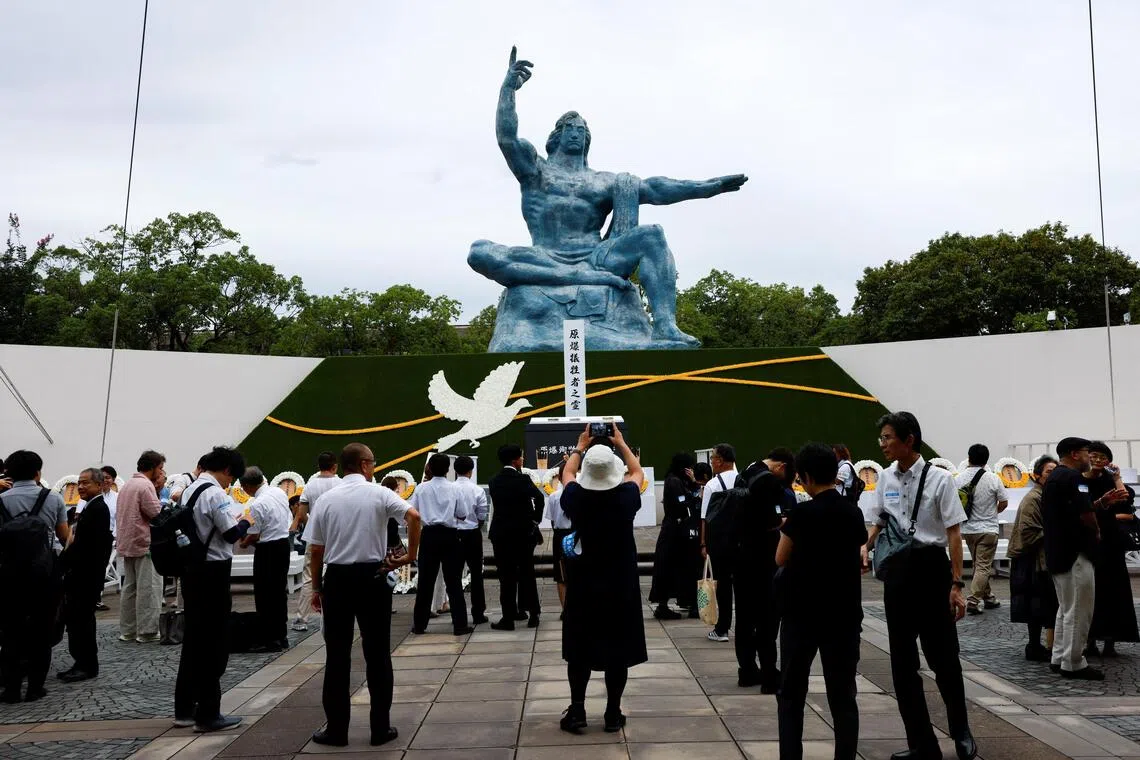
- Mayor Shiro Suzuki warned at Nagasaki's 81st anniversary memorial on August 9 that the risk of nuclear war has increased, noting that more than 12,000 nuclear warheads still exist and pointing to the conflicts in Ukraine and the Middle East — where Russia and the US are involved — as sources of unpredictability.
- In his Peace Declaration, Suzuki declared that "Nuclear weapons are not a 'necessary evil', but an 'absolute evil', and can never coexist with humanity," with a moment of silence observed at 11:02am, the moment the US-dropped Fat Man plutonium bomb detonated over the city in 1945.
- Prime Minister Sanae Takaichi reiterated that Japan "is upholding" its three non-nuclear principles — not producing, possessing, or allowing nuclear weapons — even as debate grows over whether to rethink the longstanding policy.
- The Nuclear Non-Proliferation Treaty (NPT) review conference in May ended for a third consecutive time without a final consensus document after a month of talks in New York, a breakdown Suzuki tied to modernization and expansion of nuclear arsenals fueling "mutual distrust, confrontation and division."
- UN Secretary-General Antonio Guterres stated in a message read at the ceremony that "year by year, the risk of miscalculation, escalation and conflict keeps going up," citing a reversal of the decades-long trend toward nuclear arsenal reductions.
- Suzuki urged the Japanese government to attend the next NPT review conference scheduled for November 2026, calling for the country's peace ethos and three non-nuclear principles to be upheld.
- The August 9, 1945 bombing of Nagasaki killed approximately 74,000 people by the end of that year, and the average age of officially recognized atomic bomb survivors (hibakusha) now exceeds 86, with the memorial framing testimony-passing as a race against time.
Why it matters: With three consecutive NPT review conferences ending without consensus and nuclear arsenals being modernized, the primary non-proliferation framework is stalling as Suzuki and Guterres flagged conflicts involving nuclear-armed states as growing flashpoints — while the hibakusha generation, averaging 86+, races to preserve firsthand testimony before it is lost.
Ask SkimNews