Why Iran's killer Shahed drones have moped-like sound
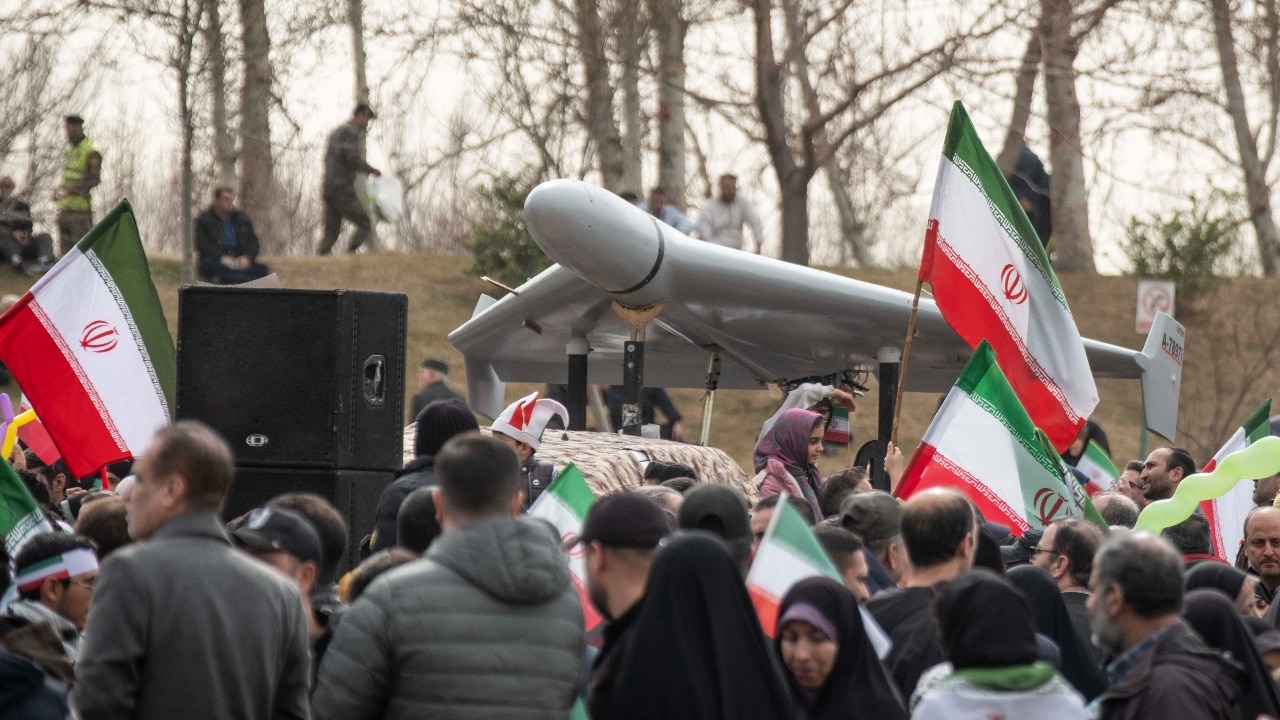
Why it matters: Iran's 'moped' drones are reshaping modern warfare, enabling low-cost, high-impact attacks that challenge advanced defenses.
- Shahed-136 drones, first appearing over a decade ago, are now Iran's weapon of choice in the Middle East, having previously been used by Russia in the Ukraine war.
- Ukrainians initially nicknamed the Shahed-136 a "moped" due to its distinctive buzzing sound, which others compared to a lawnmower or scooter, a term later adopted by Western media.
- Sandeep Unnithan, a senior journalist and defense expert, highlights the irony of the drone's engine technology, tracing its roots to West Germany's Cold War efforts to target Russian missiles, and calls the Shahed-136 the "aerial equivalent of the AK-47."
- Iran deployed thousands of Shahed-136 drones in its opening salvo against Israel and has fired over 2,000 at US bases and Gulf infrastructure in the initial days of the war, using swarms to overwhelm Patriot and THAAD defenses.
- Ukrainian President Volodymyr Zelenskyy claimed on CNN that Russia is now supplying Shaheds back to Iran, indicating a complex, reciprocal arms dynamic.
Iran's Shahed-136 drones, dubbed "mopeds" by Ukrainians for their distinctive buzzing sound, have become Tehran's weapon of choice, shifting from the Ukraine war to raining fire across the Middle East against US, Israeli, and Gulf targets. This low-cost, mass-produced drone, powered by Cold War-era West German engine technology, is now Iran's primary retaliation tool, overwhelming advanced defenses where ballistic missiles fall short.