KOSPI Enters Bear Market After 122% YTD Peak — SkimNews
SkimNews Take
South Korea's flip from world's hottest market to bear territory points to a self-reinforcing unwind, where leverage concerns and foreign outflows compound each other rather than acting as independent headwinds.
Get the Finance newsletter
Daily finance — markets, central banks, M&A, the prints that move money. Free.
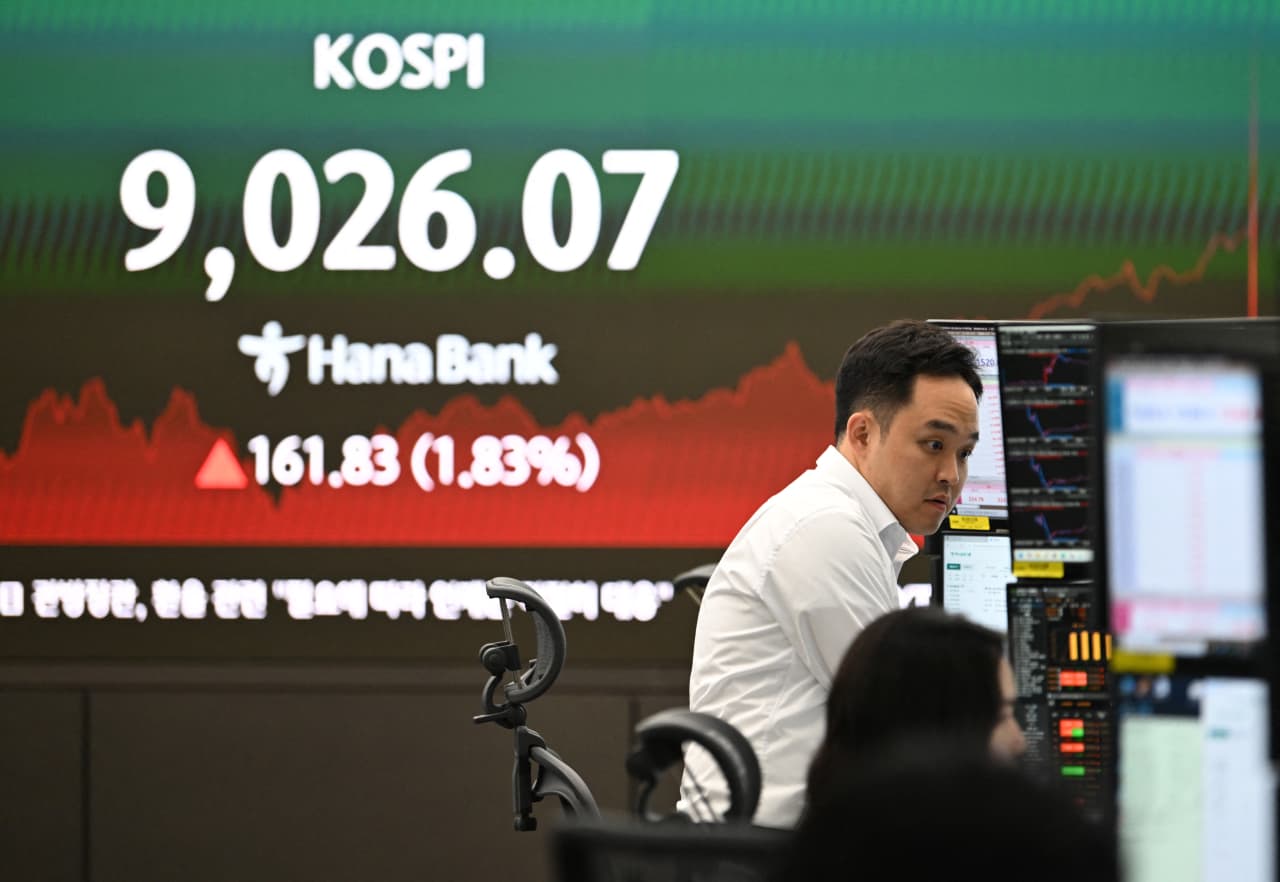
- KOSPI entered technical bear market territory after closing down 5% on July 8, bringing its peak-to-trough decline to 22% from the June 19 high of 9,385, at which point the index was up 122% year-to-date
- Samsung Electronics and SK Hynix together comprise half the KOSPI and contributed the vast majority of its gains; despite stellar earnings, Samsung's strong preliminary results announced Tuesday triggered selling rather than buying
- SK Hynix is issuing up to $29 billion in new equity via a depositary receipt listing on Nasdaq scheduled for Friday, absorbing significant demand
- South Korean regulators recently raised concerns about excessive leverage by retail investors — known as 'ants' — through leveraged ETFs offering multiples of the KOSPI's return
- Samsung Electronics was obliged to offer employees windfall payments to prevent industrial action, adding another headwind
- DeepSeek is developing its own AI chips to reduce reliance on Nvidia amid tight high-bandwidth memory supply, while China's state-backed ChangXin Memory Technologies is gaining attention after Apple began testing its chips
- The Philadelphia Semiconductor Index has dropped 16% from its June high, and the KOSPI now trades at just 7.6x forward earnings versus 12x for emerging markets and 20x for the S&P 500 on December 2026 earnings
Why it matters: The KOSPI's 22% plunge from a 122% year-to-date gain shows how concentrated semiconductor exposure became the index's biggest vulnerability — Samsung and SK Hynix make up half of the benchmark, so chip-cycle doubts and a $29 billion SK Hynix equity issuance hit twice as hard. The collapse comes even as earnings are being upgraded, leaving the KOSPI trading at 7.6x forward earnings — a 62% discount to the S&P 500's 20x — which the article frames as making Korean stocks materially cheaper despite the carnage.
Ask SkimNews


