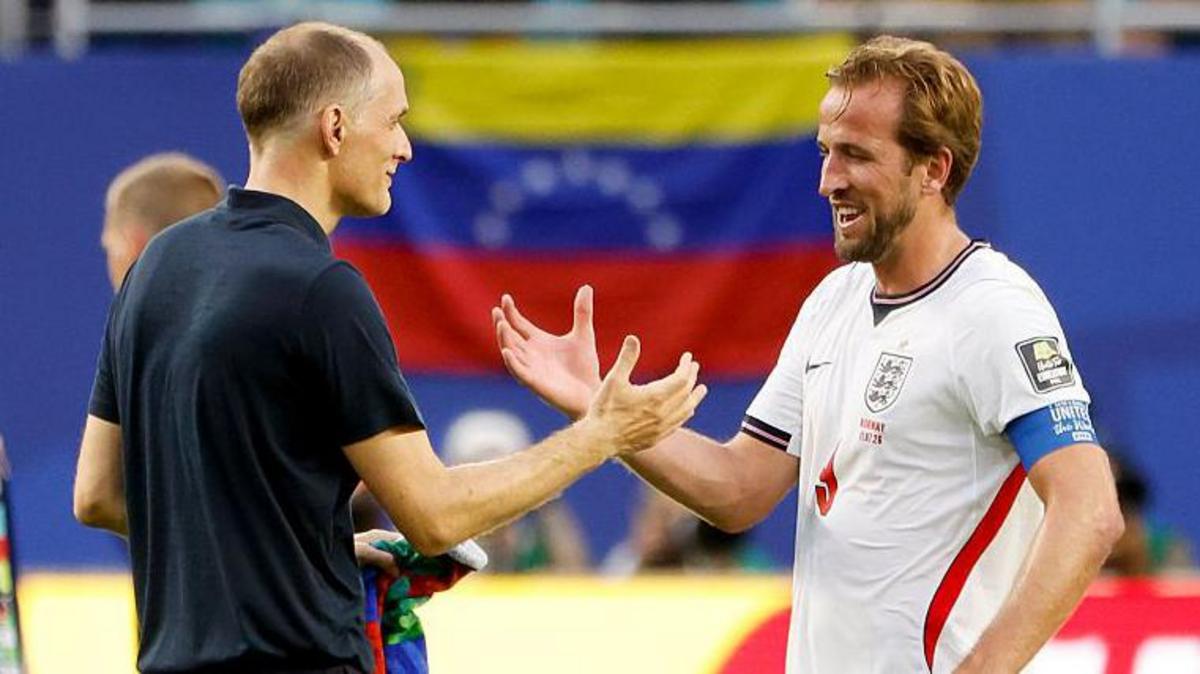
England beat Norway 2-1 as spidercam protest fails — SkimNews

Get the Sports newsletter
Daily sports — scores, transfers, the storylines from the leagues you actually follow. Free.
- England beat Norway 2-1 in a World Cup quarter-final in Miami, with Jude Bellingham's first-half stoppage-time equalizer and a second-half goal overturning Andreas Schjelderup's opener.
- Norway claimed the ball struck a suspended spidercam cable in the build-up to Bellingham's goal, which would have forced a dropped-ball restart; head coach Stale Solbakken said 'many on the bench reacted immediately' and that the ball 'fell straight from heaven.'
- FIFA rejected the protest, saying the connected-ball sensor showed 'no peak in the heartbeat of the ball' and therefore 'no evidence that the ball touched the overhead wire and changed the movement of the ball.'
- Erling Haaland had a second-half header disallowed after VAR penalised him for a shove on Elliot Anderson at a corner; Norway midfielder Sander Berge said 'it's an advantage to be as big and physically strong as Erling, but you get punished if you hold a player.'
- Martin Odegaard said 'margins were not in our favour today with some of the decisions,' while Thomas Tuchel conceded England were 'lucky in decisive moments' though 'not lucky to win.'
- Wayne Rooney, on BBC Sport, said replays showed the ball 'deviate and come down quickly,' backing Norway's visual argument even as the technology overruled it.
- The chip-in-ball technology had already sparked controversy at the tournament when it ruled out a Croatia equalizer in Portugal's 2-1 last-32 win after deeming a teammate offside by a fingertip touch.
Why it matters: Norway's elimination ends the tournament run of Haaland, who finishes with seven goals, and exposes a credibility gap for FIFA's chip-equipped 'connected ball' — designed to settle exactly these micro-contact disputes — when visual evidence and sensor data point in opposite directions.
Ask SkimNews