The ace up Iran's sleeve? What is a dirty bomb and will Tehran use one?
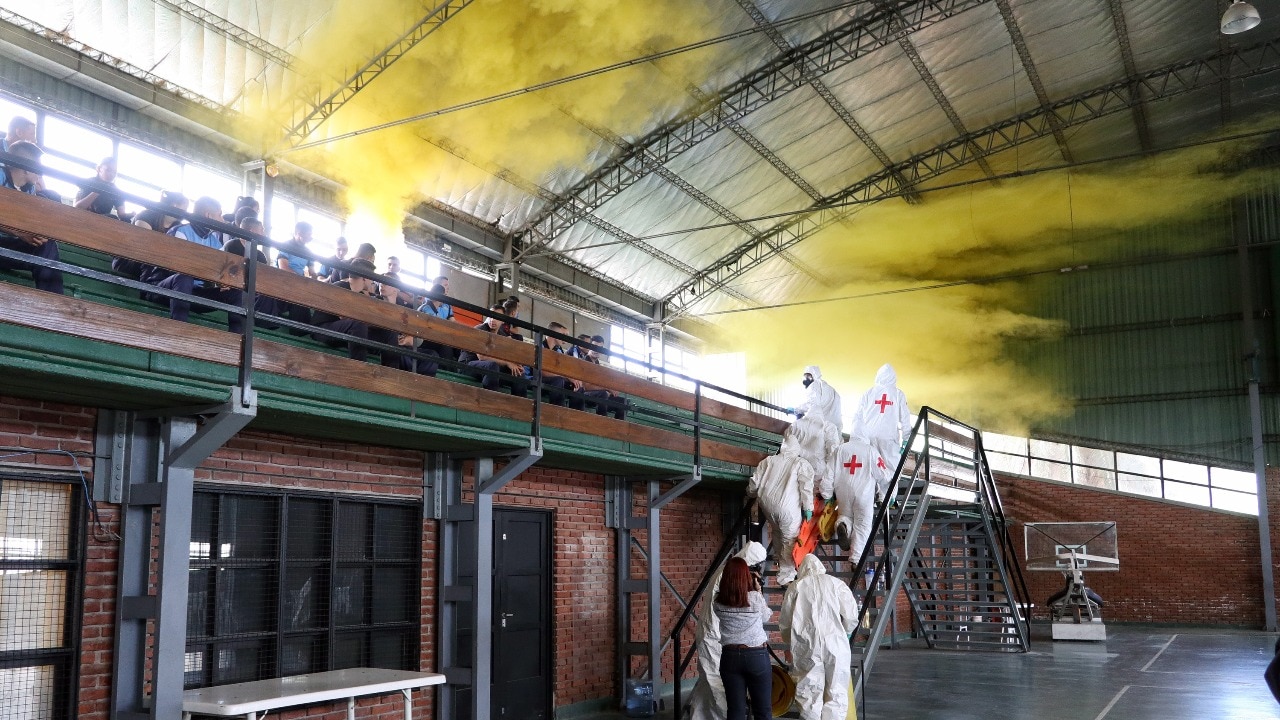
Why it matters: Iran's potential use of a dirty bomb could drastically escalate the Middle East conflict, causing widespread, long-term harm.
- Iran possesses uranium enriched to 60%, enough to create a radiological dispersal device, or 'dirty bomb,' but not a nuclear weapon.
- A dirty bomb uses conventional explosives to scatter radioactive material, causing contamination and long-term health risks, unlike a nuclear weapon's immediate catastrophic blast.
- The US Nuclear Regulatory Commission defines a dirty bomb as a conventional explosive combined with radioactive material, designed to spread contamination.
- Marion Messmer of Chatham House clarifies that a dirty bomb is not a Weapon of Mass Destruction (WMD) due to its lesser immediate impact compared to a nuclear weapon.
- The Centres for Disease Control and Prevention (CDC) indicates the primary danger comes from the explosion itself, with radioactive materials unlikely to cause immediate serious illness except for those very close to the blast.
As the US-Israel-Iran conflict intensifies, Iran's potential use of a 'dirty bomb' emerges as a significant concern. While not a nuclear weapon, this radiological dispersal device could inflict long-term harm through widespread contamination, offering Tehran a way to escalate costs without resorting to full-scale nuclear warfare, despite its current tactical disadvantages.