New 1-Nanometer Pore Membrane Filters Molecules 10x Better — SkimNews
Get the Health newsletter
Daily health & science — research, biotech, public health, the studies worth knowing. Free.
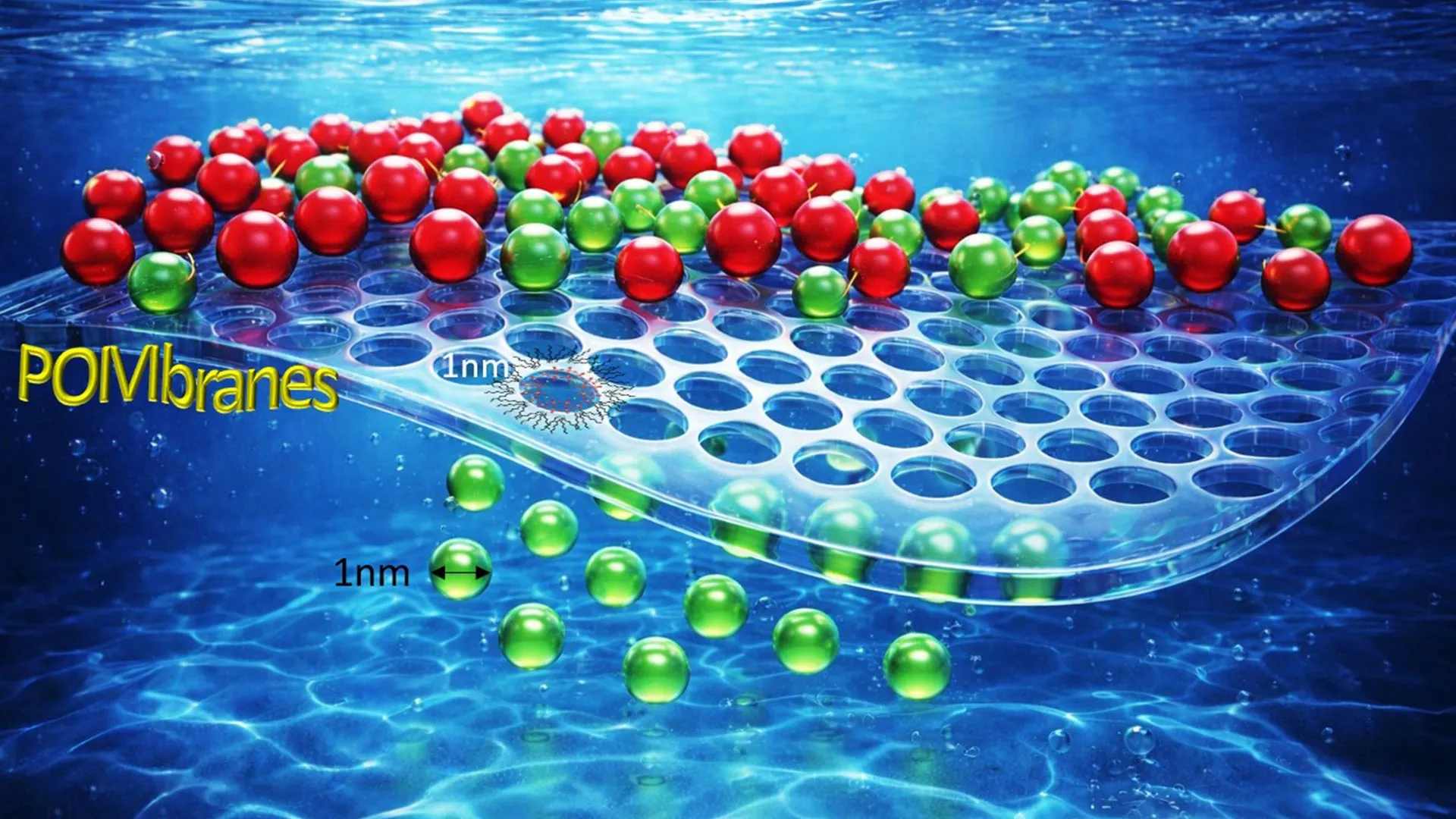
- Researchers from CSIR-CSMCRI, IIT Gandhinagar, NTU Singapore, and S N Bose National Centre developed "POMbranes" — crystalline thin films built from polyoxometalate clusters that contain naturally occurring, permanently stable 1-nanometer-wide openings.
- The team arranged billions of these crown-shaped POM clusters into defect-free ultrathin films by attaching flexible chemical chains, controlling packing density by varying chain length, according to co-first author Priyanka Dobariya and IITGN's Dr. Raghavan Ranganathan.
- Testing showed the membranes can distinguish molecules differing by only 100–200 Daltons, delivering nearly 10 times better separation performance than existing polymer membranes while remaining stable across varied pH ranges and scalable to large sheets, per Dr. Ketan Patel of CSMCRI.
- The study, published in the Journal of the American Chemical Society, targets an industrial pain point: separation processes such as distillation and evaporation account for roughly 40–50% of global industrial energy consumption and significant carbon emissions.
- India's textile sector — contributing over 2.3% of GDP, ~13% of industrial production, and a domestic market valued at $160–225 billion expected to reach $250–350 billion by 2030 — could use the membranes to selectively remove dye molecules and recycle process water.
- Pharmaceutical manufacturing is the other key target, with co-author Vinay Thakur noting that drug purification and solvent recovery are both energy-intensive and quality-sensitive, areas where ultra-selective membranes could lower energy use while meeting strict production standards.
- The researchers position POMbranes as a platform technology, with adjustable structure and chemical durability suited to a broad range of separations from wastewater treatment to advanced chemical manufacturing.
Why it matters: Industrial separation processes consume 40–50% of global manufacturing energy, and India's textile and pharma sectors — its 2.3%-of-GDP textile industry and quality-sensitive drug manufacturing — are exactly the high-volume, water-intensive operations where a membrane that can reliably sieve molecules at 1-nanometer precision offers a direct path to cutting both energy bills and wastewater discharge. If the reported tenfold performance gain holds at scale, it gives factory operators a credible alternative to energy-guzzling distillation.
Ask SkimNews


