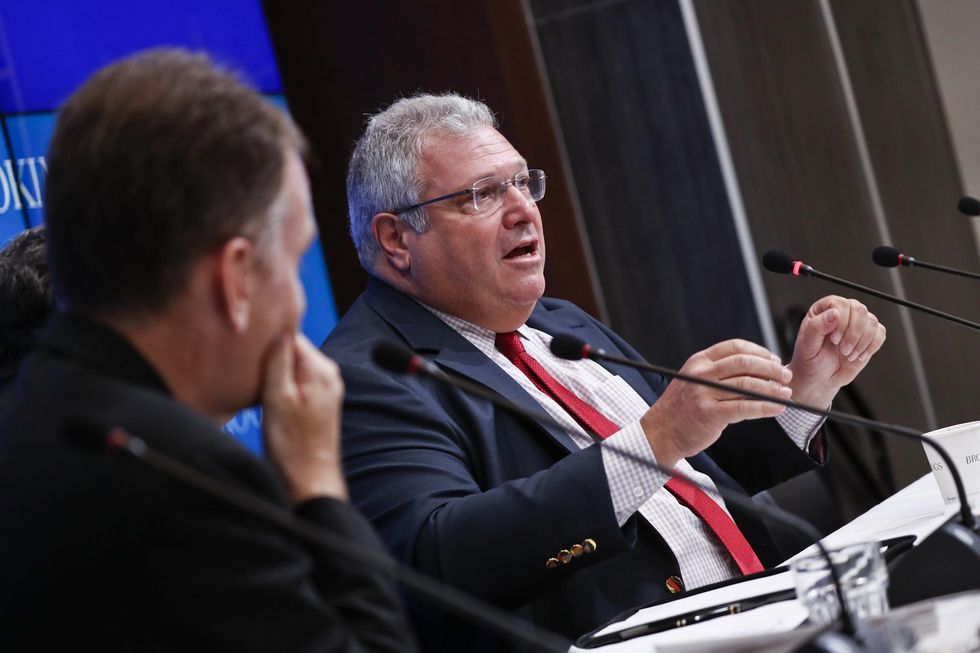
Friedman: Trump's Hawkish Record Backs 2016 Prediction
Get the Geopolitics newsletter
Daily geopolitics — wars, elections, sanctions, the diplomatic moves that move markets. Free.
- Ben Friedman wrote in 2016 that structural forces, hawkish appointees, and an entrenched bureaucracy would push Trump toward conventional interventionism despite his non-interventionist campaign rhetoric.
- Friedman argues both Trump administrations' policies have been hawkish toward Russia, China, and Iran, with Iran policy as the clearest example of continuity with conventional hawkishness.
- Trump has been "more conciliatory than many expected" on China this term, maintaining strategic ambiguity on Taiwan (unlike Biden) and lifting restrictions on semiconductor sales to China.
- Trump's defense posture in East Asia remains intact across both terms, and his recent push to massively increase defense spending — especially in shipbuilding — reflects ongoing hawkishness.
- Trump's first-term Russia record included expanding lethal aid to Ukraine including Javelin anti-tank missiles, a summer 2019 halt that triggered his first impeachment, resumed aid, NATO's expansion to Montenegro, and a net increase in U.S. troops in Europe by term's end.
Why it matters: Friedman's decade-long analysis challenges the popular framing of Trump as a radical departure from hawkish Republican orthodoxy. The specifics he marshals — Javelin missiles, Montenegro's NATO accession, more U.S. troops in Europe at term's end, and a major new shipbuilding push — show that institutional and structural pressures have repeatedly overridden presidential rhetoric, a pattern that should inform how Washington insiders read future foreign policy signals from this administration.
Ask SkimNews