Iran War Exposes Strategic Collapse of Abraham Accords — SkimNews
Get the Geopolitics newsletter
Daily geopolitics — wars, elections, sanctions, the diplomatic moves that move markets. Free.
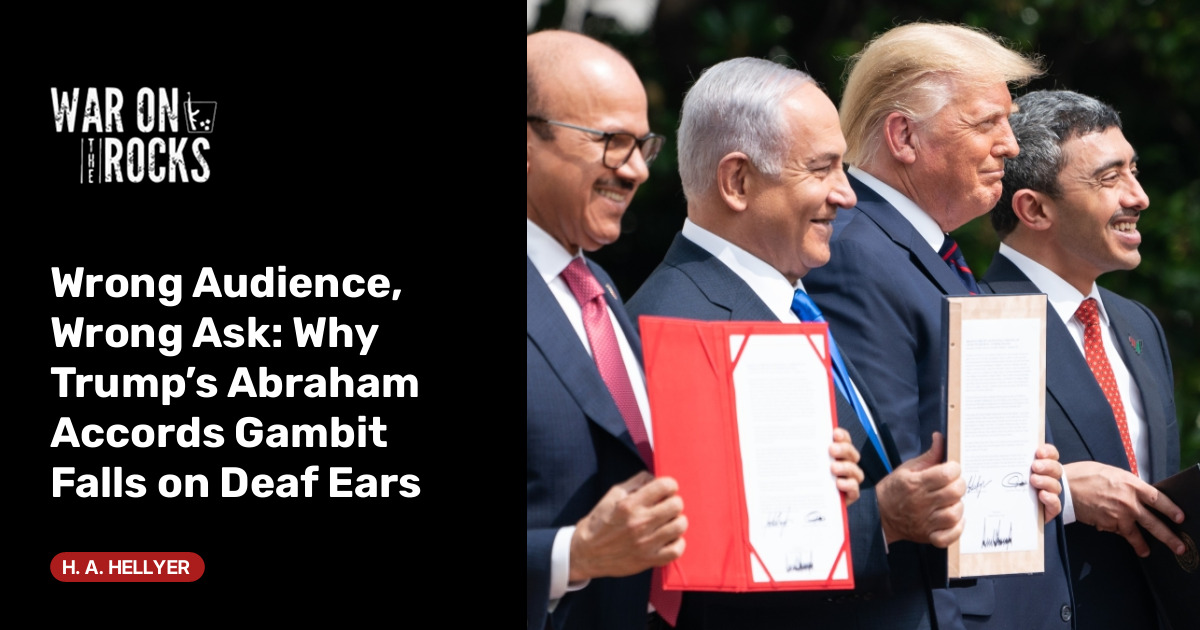
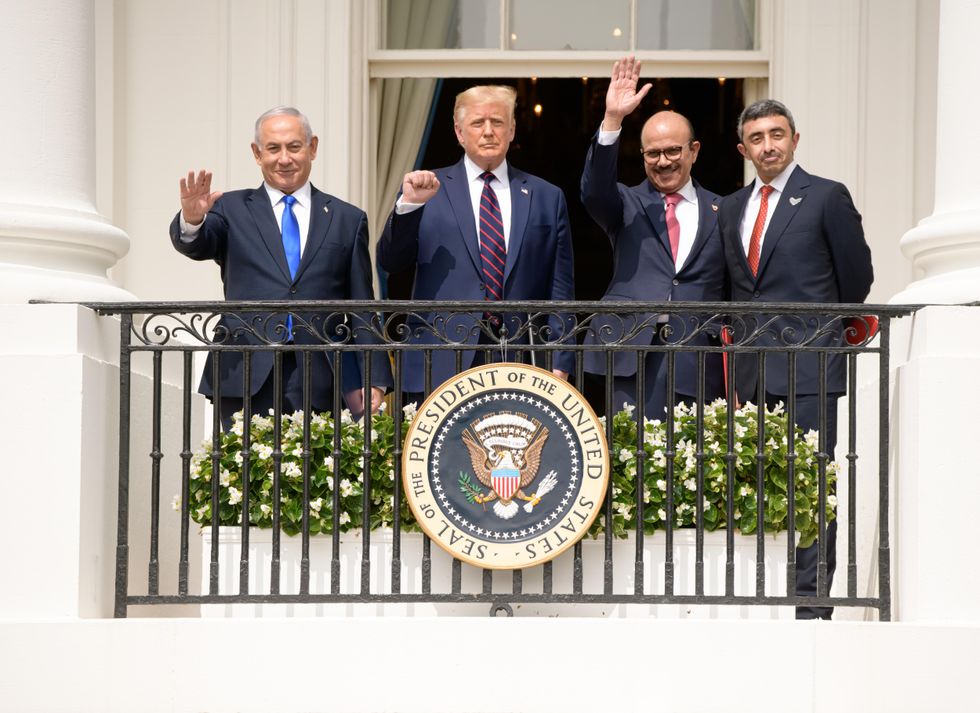
- The Abraham Accords separated Arab-Israeli normalization from the Palestinian issue, discarding the 2002 Arab Peace Initiative's requirement for a Palestinian state on 1967 borders.
- The UAE and Bahrain joined for security guarantees against Iran and military-tech cooperation with Israel; Morocco secured US recognition of Western Sahara sovereignty; Sudan sought removal from the US state sponsors of terror list and an end to financial isolation.
- Saudi Arabia, Qatar, Oman, and Kuwait refused to join — Saudi Arabia holding firm on its Palestinian-state principle, Qatar and Oman to preserve their mediator roles with multiple regional powers, Kuwait citing constitutional commitments.
- Hamas' Oct. 7 attacks are characterized as a violent rejection of the normalization trajectory that sidelined the Palestinian cause, with Gaza bearing the heaviest consequences.
- The 2026 Iran war revealed the accords' central premise — that a US security umbrella alone could stabilize the region — had failed, and demonstrated that Iran cannot be excluded from Persian Gulf security frameworks.
- The author proposes a new framework dubbed the "Sons of Abraham Accords," linking full normalization with Israel to an irreversible pathway toward Palestinian statehood, arguing that any lasting peace must accommodate both peoples.
Why it matters: The analysis reframes the Abraham Accords from a security-driven deal into a structurally flawed arrangement that could not survive contact with either Palestinian resistance or a major regional war — meaning every Gulf state now faces the same binary: accept Palestinian statehood as a non-negotiable pillar of any new architecture, or watch successive normalization frameworks collapse under identical pressures.
Ask SkimNews