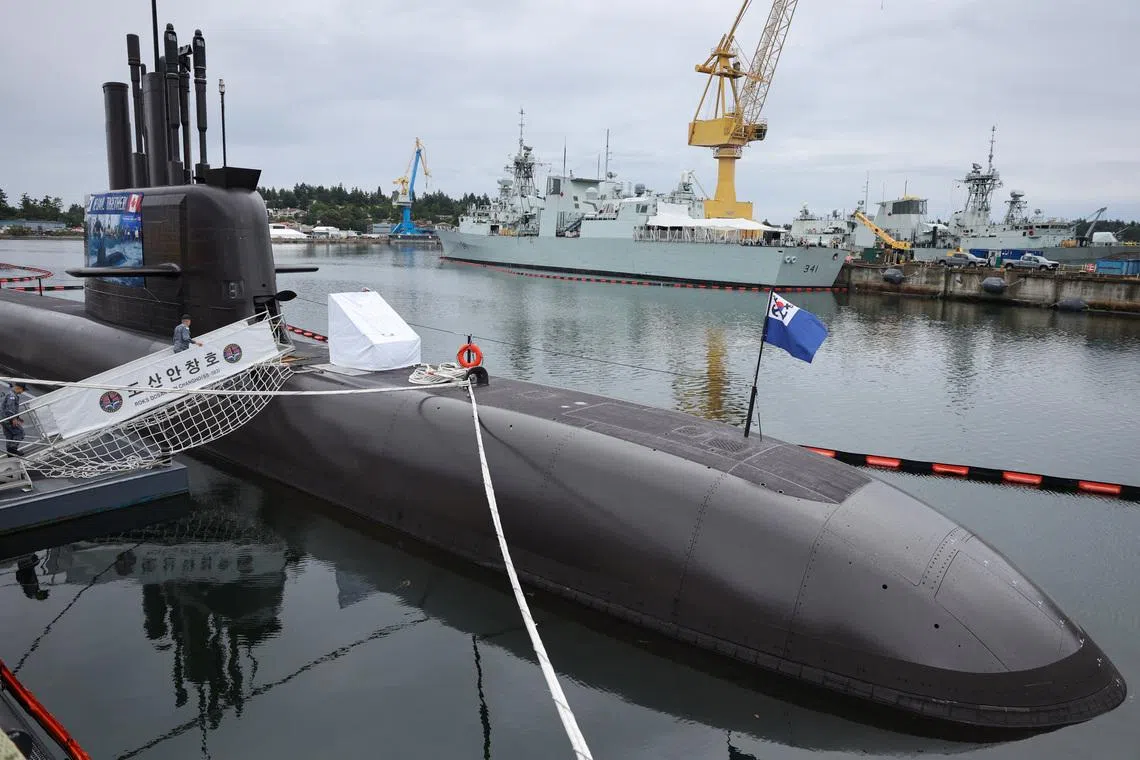
Canada Picks German Subs Over ROK in Indo-Pacific Shift — SkimNews

SkimNews Take
Canada's choice underscores a procurement gap: as Indo-Pacific allies deepen security cooperation, Western submarine acquisition remains anchored to Atlantic shipyards, limiting the rapid capability integration that trans-Pacific deterrence would require.
Get the Geopolitics newsletter
Daily geopolitics — wars, elections, sanctions, the diplomatic moves that move markets. Free.
- Canada chose Germany’s ThyssenKrupp Marine Systems (TKMS) to build 12 Type 212CD diesel-electric submarines in July 2026, replacing its aging Victoria-class fleet.
- ThyssenKrupp Marine Systems will deliver the Type 212CD submarines by 2034, a model optimized for Arctic and Atlantic operations with air-independent propulsion for extended submersion.
- Republic of Korea (ROK) lost the submarine contract despite offering Hanwha Ocean’s KSS-III Batch II submarines, which include vertical launch systems and long-range capabilities suited for the Indo-Pacific.
- Hanwha Ocean saw its stock drop over 20% after losing the Canadian bid and missing out on India’s Project-75I submarine contract, denting its defense export ambitions.
- Operation HORIZON faces diminished submarine support as Canada’s new fleet is ill-suited for timely Pacific deployment, undermining interoperability goals with Indo-Pacific allies.
- ROK aimed to expand defense cooperation through submarine exports, but lacks the NATO-level procurement infrastructure that made Germany the default choice for Canada.
Why it matters: Canada gains Atlantic deterrence capacity and NATO alignment but sacrifices strategic weight in the Indo-Pacific, where its absence weakens collective undersea readiness against China. The ROK loses not just a $630M+ contract but a chance to anchor deeper military integration with Western partners.
Ask SkimNews