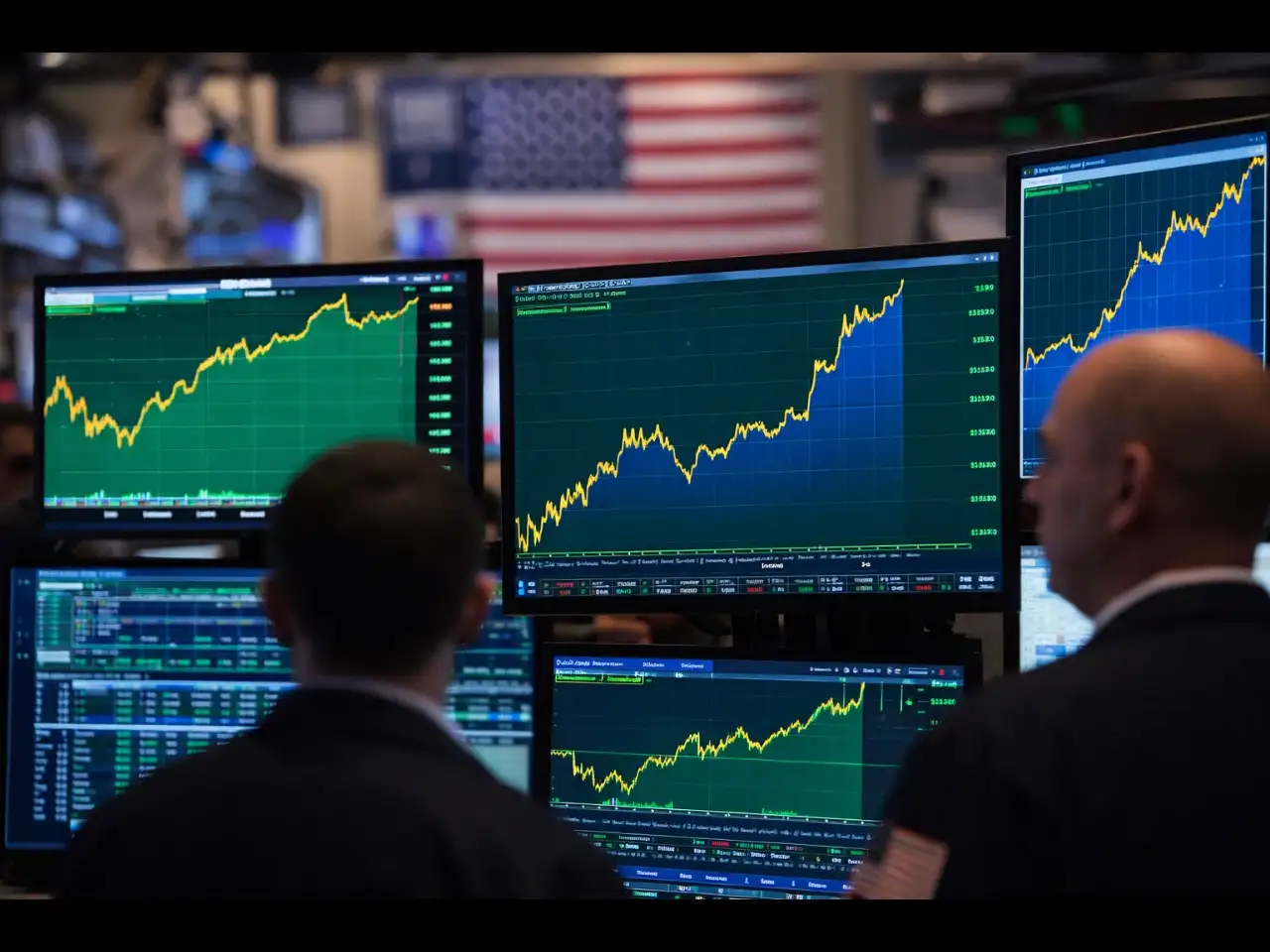
Stocks Near Highs Amid Chaos: Moody's Explains Why

Get the Finance newsletter
Daily finance — markets, central banks, M&A, the prints that move money. Free.
- Moody's identifies a new economic era defined by geopolitical uncertainty, higher government deficits, and economic-security-driven policies, replacing the low-rate, low-inflation post-2008 regime
- Bond markets show rising government yields across advanced economies, with the 30-year U.S. Treasury yield above 5% for the longest stretch since the financial crisis, signaling sustained higher borrowing costs
- Software, auto, and consumer goods stocks have declined this year as inflation pressures reduce consumer spending and AI capital demands reshape investment priorities
- Energy, hardware, and semiconductor sectors are outperforming as investors favor industries benefiting from geopolitical conflict and the physical infrastructure of AI development
- Atsi Sheth, chief credit officer at Moody's Ratings, notes that while the stock market appears calm, underlying shifts reveal a strategic reallocation of capital away from high-growth, low-capital firms
- Investors are relying on the 'TACO trade' — betting that President Trump will ease geopolitical tensions if markets become too volatile, though Moody's warns this outcome is uncertain
Why it matters: The stock market’s surface stability masks a structural shift in investor behavior: capital is moving from pandemic-era favorites like software to sectors tied to physical assets and national security. This reallocation reflects higher risk premiums, with government borrowing and AI spending pushing up costs — a durable change that benefits energy and chip makers while pressuring consumer-facing and high-growth tech firms.
Ask SkimNews