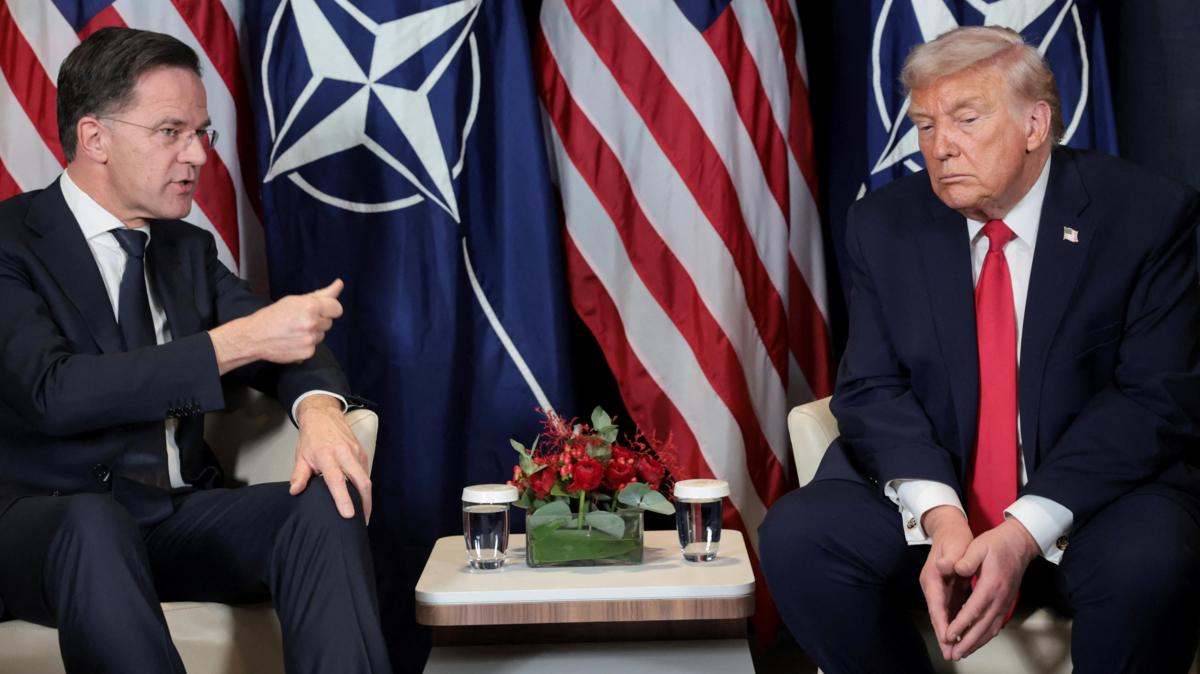
Trump Threatens NATO Exit in Meeting With Rutte
Get the Geopolitics newsletter
Daily geopolitics — wars, elections, sanctions, the diplomatic moves that move markets. Free.
- Trump posted in all caps after the closed-door meeting with NATO Secretary-General Mark Rutte: "NATO WASN'T THERE WHEN WE NEEDED THEM, AND THEY WON'T BE THERE IF WE NEED THEM AGAIN," remaining publicly aggrieved afterward with no further White House readout.
- Trump suggested the U.S. may consider leaving NATO after member countries ignored his calls to help as Iran effectively shut the Strait of Hormuz and sent gas prices soaring, telling allies last week: "Go to the strait and just take it."
- The meeting came hours after the U.S. and Iran struck a two-week ceasefire that includes reopening the Strait of Hormuz, reached after Trump threatened to strike Iran's power plants and bridges, warning "a whole civilization will die tonight."
- A 2023 law bars any U.S. president from withdrawing from NATO without Senate approval — a measure championed by Trump's current Secretary of State Marco Rubio when he was a Florida senator, setting up a likely legal-constitutional fight if Trump pursues an exit.
- Secretary of State Marco Rubio met separately with Rutte at the State Department Wednesday morning, and the State Department said their talks covered the Iran war, U.S. efforts to end the Russia-Ukraine war, and "increasing coordination and burden shifting with NATO allies."
- Sen. Mitch McConnell (R-Kentucky) issued a statement Tuesday night backing NATO, noting that "following the September 11th attacks, NATO allies sent their young servicemembers to fight and die alongside America's own in Afghanistan and Iraq."
- Trump also vented about Greenland — "REMEMBER GREENLAND, THAT BIG, POORLY RUN, PIECE OF ICE!!!" — after NATO members Spain and France forbade or restricted U.S. use of their airspace and military facilities during the Iran war.
Why it matters: Trump's withdrawal threat collides with a 2023 law championed by his own Secretary of State Marco Rubio that requires Senate approval to exit NATO, meaning any pullout bid would trigger a legal-constitutional battle rather than a clean break. With 32 members and a mutual-defense pact activated only once (after 9/11), Trump's compounding grievances — Strait of Hormuz, Greenland, Spain and France's airspace restrictions — put the alliance's stability in the crosshairs of a president who cannot act alone.
Ask SkimNews