SK Hynix Surges 13% in $26.5B Nasdaq Debut — SkimNews
Get the Finance newsletter
Daily finance — markets, central banks, M&A, the prints that move money. Free.
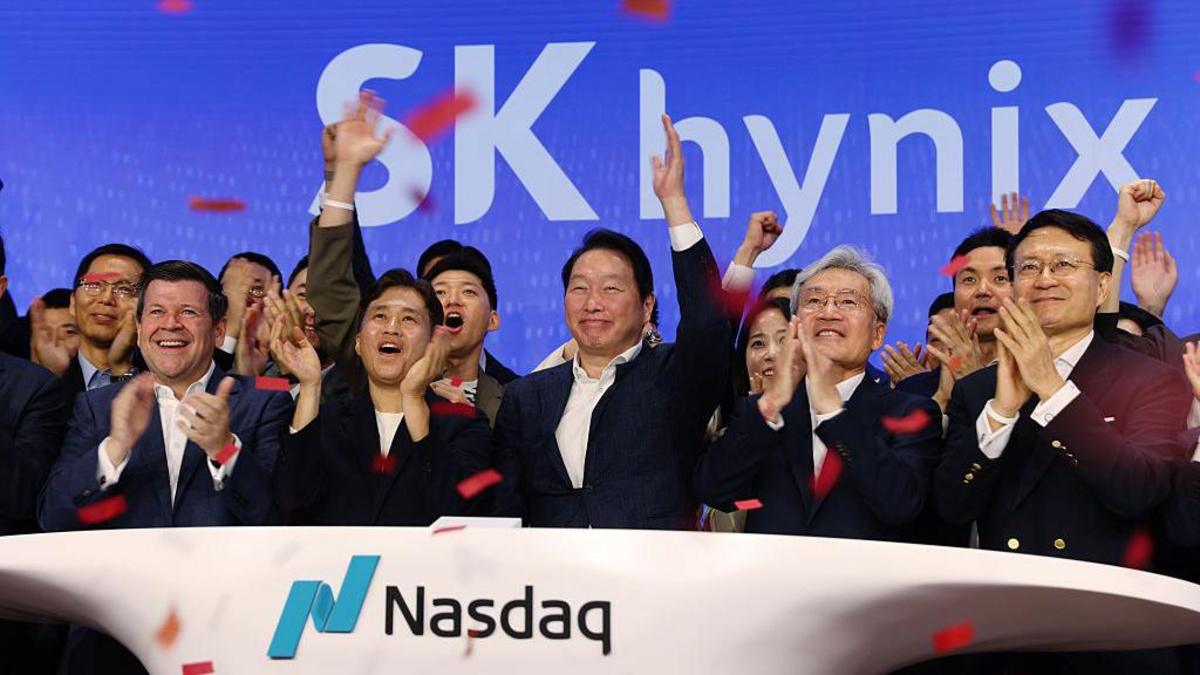
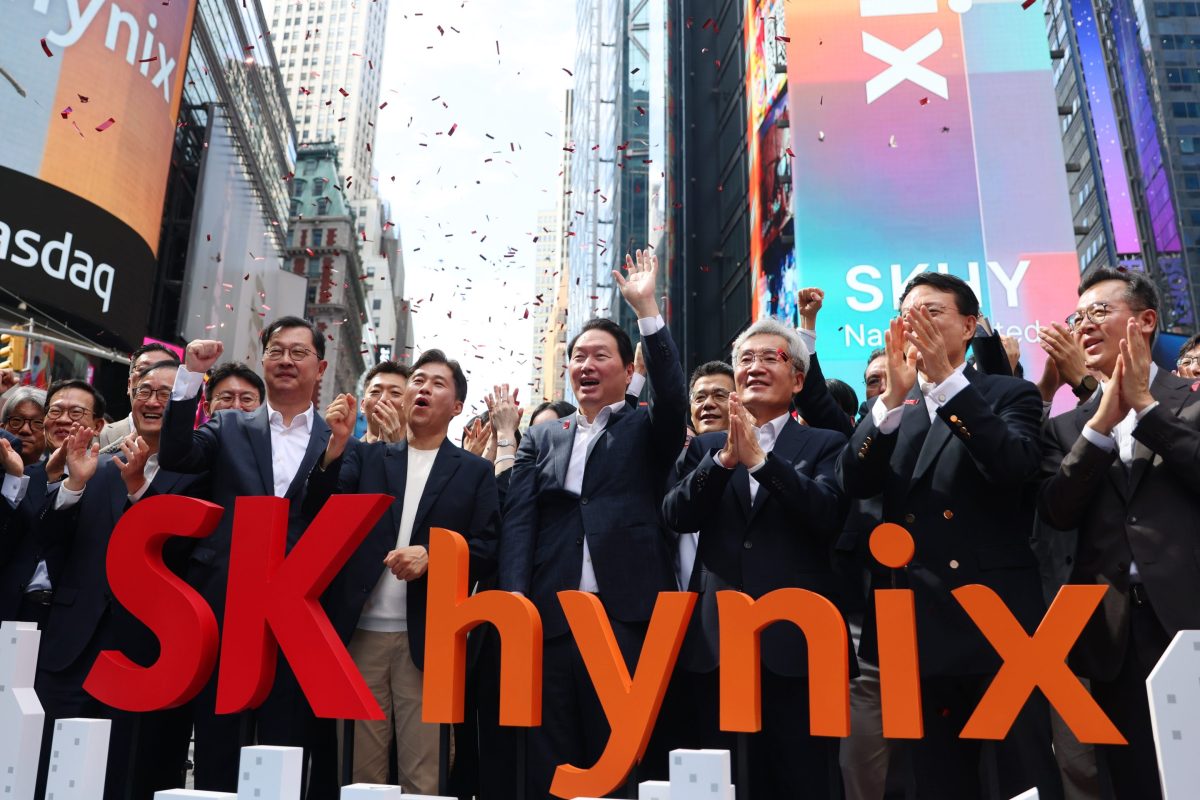
- SK Hynix debuted on Nasdaq on July 10, 2026, raising $26.5 billion—the largest U.S. listing ever by a foreign company and the second-largest share sale in U.S. history, trailing only SpaceX's $86 billion IPO last month, with shares rising 12.8% on day one.
- The chipmaker controls roughly 60% of the global high-bandwidth memory market by revenue, with the specialized chips sitting inside nearly every Nvidia processor; SK Hynix reported 2025 revenue of 97.1 trillion won ($64.1B) and a net profit margin of 44%.
- SK Group Chairman Chey Tae-won told CNBC the company plans to double production capacity within five years, but "every customer says, 'That's still not enough—we need more'"—and wrote in a January book that HBM has shifted "from a peripheral component to a core component" of AI systems.
- The Korea Discount continues to weigh on SK Hynix despite its profitability, with U.S. rival Micron commanding a $1.1 trillion valuation; HSBC estimates the U.S. listing of American depositary receipts could lift SK Hynix's valuation by as much as 20%.
- Shares have surged more than 630% over the past 12 months, pushing SK Hynix past a $1 trillion market cap—the second Korean company to reach that milestone after Samsung Electronics.
- The company traces its history to 1983 as Hyundai Electronics, absorbed LG Semiconductor after the 1997 Asian Financial Crisis, was acquired by SK Group in 2012, and co-developed the first HBM chip with AMD in 2013—building what is now a decade-long lead in the technology fueling AI training.
Why it matters: The listing gives global investors direct access to the supplier behind roughly 60% of the high-bandwidth memory chips inside AI processors, bypassing the long-running "Korea Discount" that left a more profitable SK Hynix valued below less-profitable U.S. peer Micron. With a 44% net profit margin and customers signaling demand will outrun even a planned doubling of capacity, the $26.5 billion raise reframes SK Hynix from a commodity memory producer into a top-tier AI infrastructure bet.
Ask SkimNews