North Korea: Denuclearize US Allies First, Not Us
Get the Geopolitics newsletter
Daily geopolitics — wars, elections, sanctions, the diplomatic moves that move markets. Free.
- North Korea condemned the NATO summit on July 11, accusing the alliance of strengthening military blocs, accelerating arms buildups, and pursuing confrontation at the expense of peace in Europe and the Asia-Pacific.
- Pyongyang reversed the script on denuclearization, arguing that efforts should begin with South Korea and Japan pursuing nuclear capabilities under US protection and with NATO members participating in nuclear-sharing arrangements.
- The NATO summit in Turkey on July 7 produced more than US$50 billion (S$64.6 billion) in military procurement and industrial agreements, with European allies under pressure from President Donald Trump to shoulder a greater share of the alliance's defence burden.
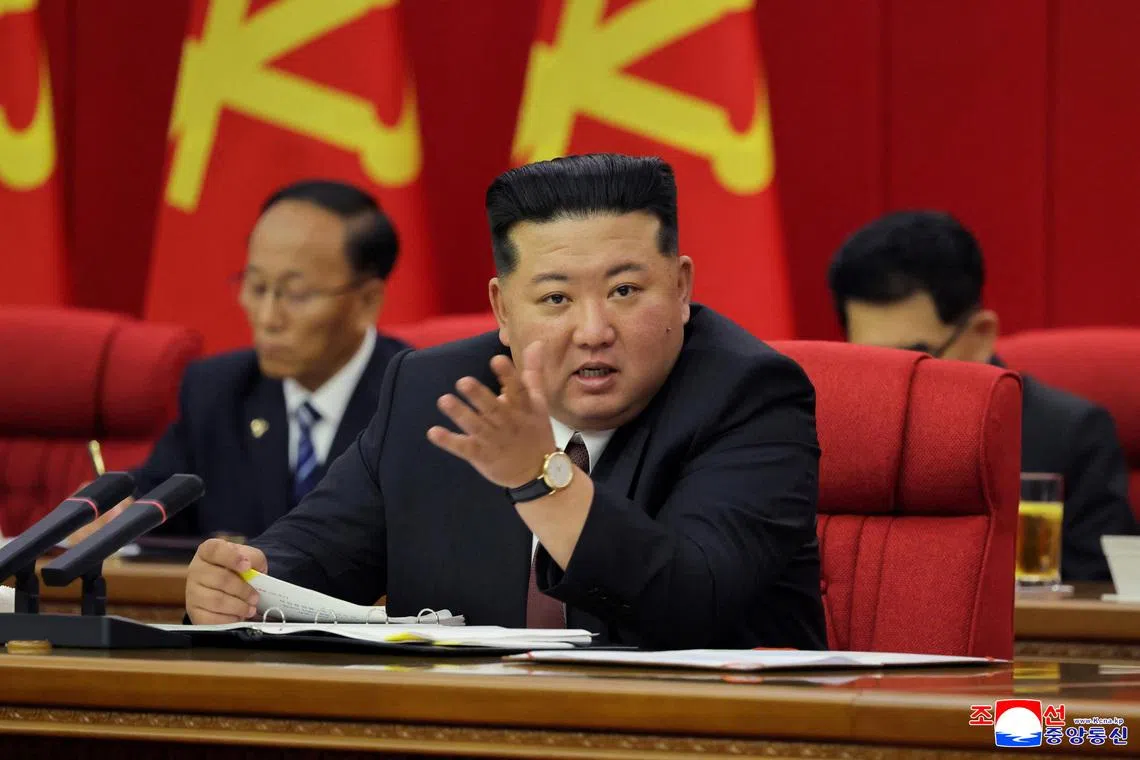
- KCNA reported on July 10 that North Korea had decided to strengthen its nuclear forces "quantitatively and qualitatively" as Kim Jong Un calls for military modernization to safeguard sovereignty and regional security.
- South Korean President Lee Jae Myung, speaking at the summit, said he hoped Seoul would expand cooperation with NATO allies in R&D for cutting-edge technologies and weapons-system production — a move that dovetails with North Korea's complaint about deepening Asia-Pacific military ties.
- North Korea dismissed NATO as "a body geared towards war and confrontation" and said Western demands for it to abandon nuclear weapons have been "irreversibly terminated."
Why it matters: By demanding the US dismantle nuclear protections for South Korea and Japan before discussing its own arsenal, Pyongyang has publicly equated allied deterrence with proliferation — a stance that directly complicates Lee Jae Myung's new push for NATO-ROK defense cooperation. The $50 billion in NATO procurement commitments gives Kim Jong Un fresh ammunition to justify the nuclear buildup he announced on July 10.