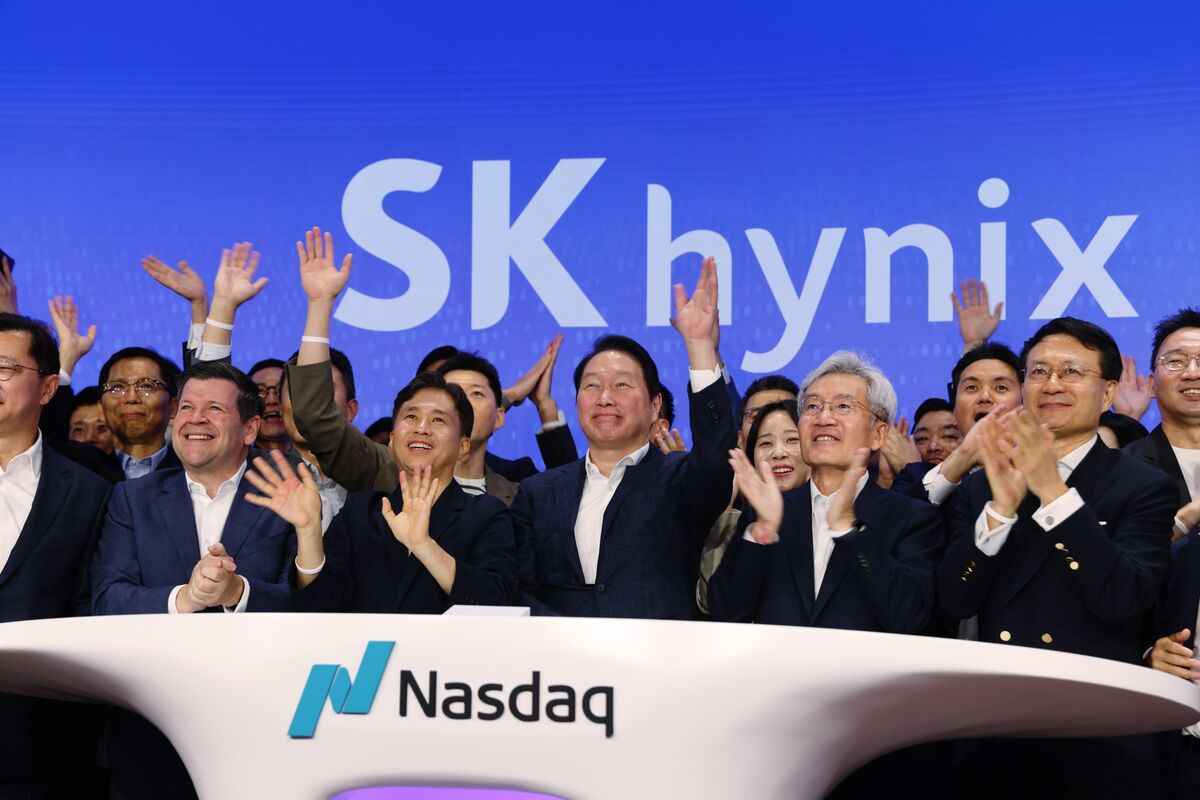
SK Hynix Falls Record 15.4% After Strong Nasdaq Debut

SkimNews Take
After SK Hynix's sharp Nasdaq pop, Seoul investors faced a dual-listing pricing paradox — reconciling a now-richer American valuation against domestic positioning, mechanically producing record profit-taking even absent fresh fundamental news.
Get the Finance newsletter
Daily finance — markets, central banks, M&A, the prints that move money. Free.
- SK Hynix shares closed 15.4% lower in Seoul on Monday, the largest single-day fall in the company's history according to LSEG data, as investors unwound positions after a strong US debut
- The sell-off followed a 13% surge in the chipmaker's Friday Nasdaq debut, which reflected robust US appetite for AI-linked semiconductor stocks
- Daniel Yoo, global strategist at Yuanta Securities, told CNBC that investors are "really confused" about memory demand and fair pricing, noting the ADR debut created a new valuation benchmark for the stock
- Yoo compared SK Hynix's dual listing to TSMC, whose US ADRs trade at a 13-14% premium to domestic shares, while SK Hynix's listings now show a discount of more than 20% — and attributed part of the sell-off to "additional share issuance" increasing supply
- Phillip Wool, chief research officer at Rayliant Global Advisors, framed the pullback as "mostly risk management" — portfolio rebalancing after outsized gains — rather than any deterioration in AI hardware's outlook
- Both analysts said structural AI demand continues to outpace supply and that shares are likely to move "in the right direction" over the next six to twelve months despite near-term volatility
Why it matters: SK Hynix shareholders absorbed a record 15.4% one-day wipeout because the new Nasdaq listing created a competing valuation benchmark — the US shares now trade at a 20%+ discount to Korean shares, an inversion of the 13-14% premium that TSMC's dual listing commands. The mechanics of the offering itself added float and triggered profit-taking, but analysts stress the sell-off reflects supply expansion and rebalancing rather than any cooling in AI memory demand.