India, Japan Sign First Defence Co-Development Deal — SkimNews

Get the Geopolitics newsletter
Daily geopolitics — wars, elections, sanctions, the diplomatic moves that move markets. Free.
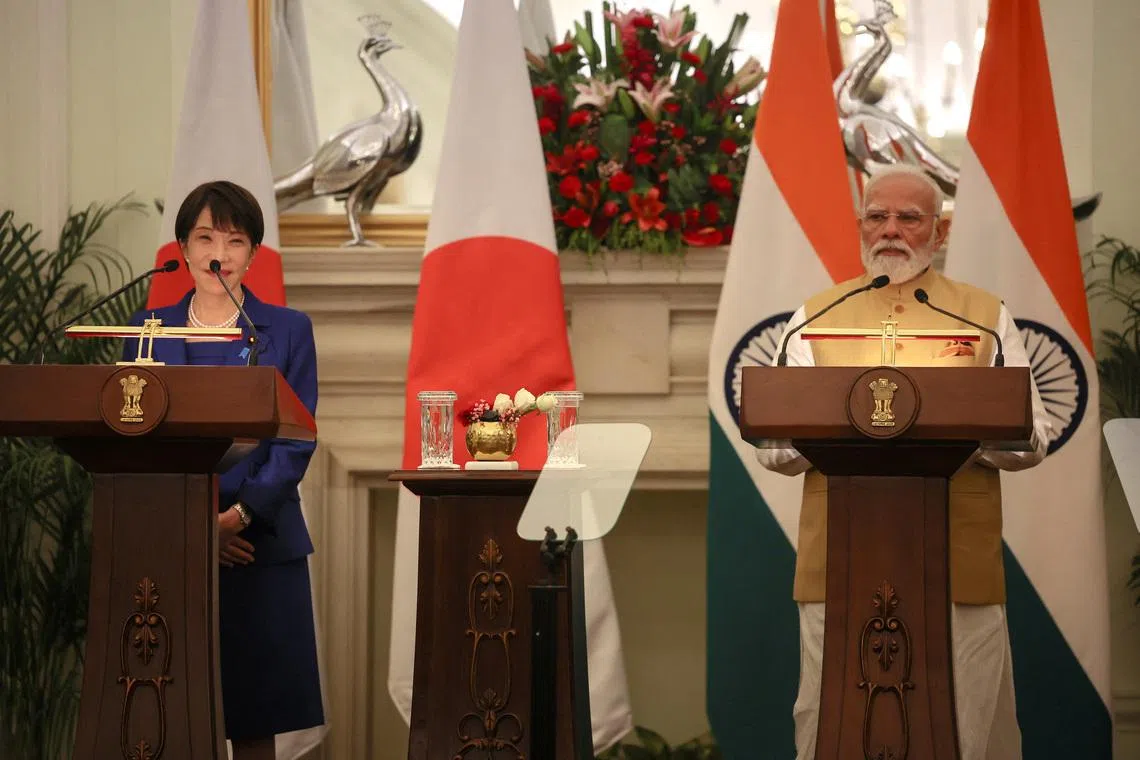
- India and Japan signed a co-development agreement for a naval radio antenna based on Japan's UNICORN system during PM Takaichi's visit to India, with PM Modi calling it "the first-ever co-development project between India and Japan" at a joint press briefing.
- The deal is among the most tangible outcomes of India-Japan defence cooperation, which until now had been limited to joint exercises; the earlier Shinmaywa US-2 seaplane procurement was discussed for years before being shelved.
- UNICORN integrates eight antenna types — ES-R, ES-C, WiFi band, LINK-16, UHF, IFF, U/VHF, and TACAN — into a single mast for improved stealth, and was jointly developed by NEC, Sampa Kogyo, and Yokohama Rubber for Japan's Mogami-class frigates.
- The Indian Navy is likely to equip its next-generation warships with the UNICORN derivative, while Indian shipyard MDL indicated preliminary discussions in 2025 toward a common India-Japan destroyer design.
- India and Japan were in talks on UNICORN as early as 2022; in 2024, the foreign and defence ministers of both nations appreciated progress on the transfer of UNICORN and related technologies and the early signing of related arrangements.
- India's Indigenous Integrated Mast (IIM) project, showcased by the Navy's Directorate of Electrical Engineering with BEL at DefExpo 2022 with an 11m Phase-I mast design, is likely to be progressed or merged with the localized adaptation of UNICORN.
Why it matters: The Indian Navy is positioned to outfit its next-generation warships with the UNICORN derivative, shifting India-Japan defence cooperation from joint exercises to co-produced hardware. UNICORN, built by NEC, Sampa Kogyo, and Yokohama Rubber for JMSDF's Mogami-class frigates, gains a second customer, while India's Indigenous Integrated Mast with BEL is likely to be merged into the adaptation.
Ask SkimNews