Low-cost loans for solar panels could save households hundreds on bills – thinktanks

Get the Energy newsletter
Daily energy & climate — solar, EVs, oil, the policy fights and tech bets shaping the transition. Free.
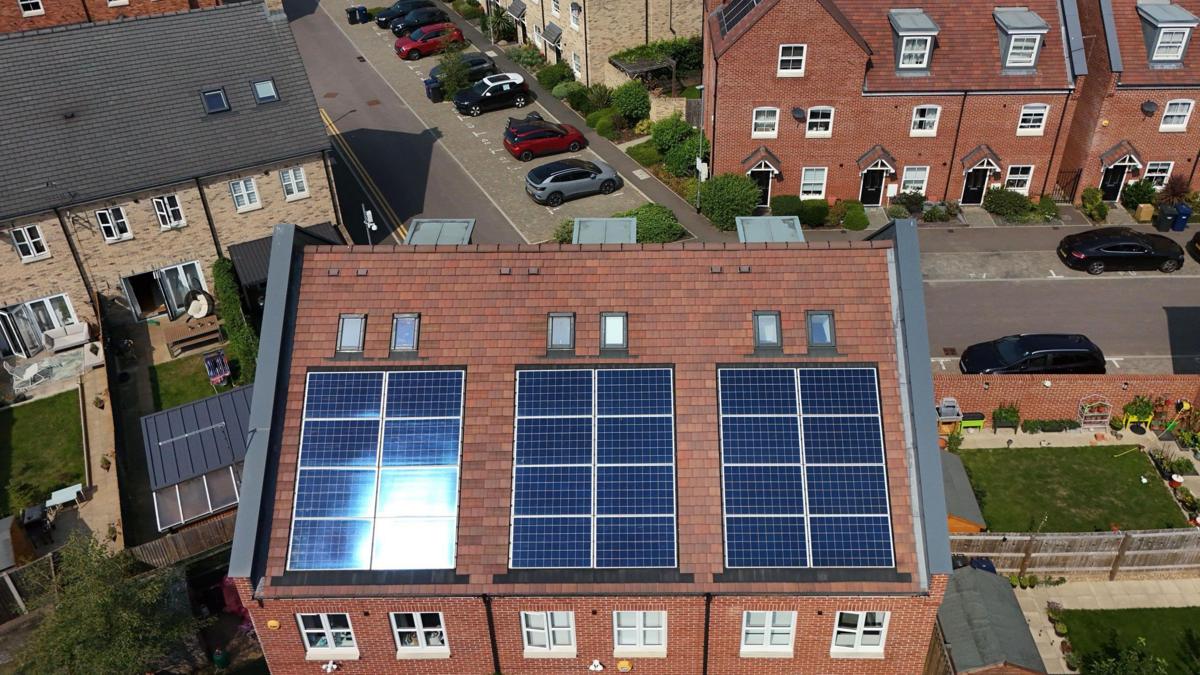
- New Economics Foundation and the Finance Innovation Lab propose that the Bank of England offer commercial banks access to funds at low or no interest, which would be passed to households as ~2% loans for rooftop solar — potentially fitting panels on ~8 million UK homes at no direct cost to government.
- Households would save ~£250 a year on average, with loan repayments of ~£45 a month offset by bill savings of ~£66, according to the thinktanks; the upfront cost of solar panels with batteries is currently ~£6,000.
- The Warm Homes Plan's ~£15bn budget is under threat because prospective prime minister Andy Burnham seeks to expand defence spending, and Finance Innovation Lab chief Jesse Griffiths said the Bank of England scheme could free up that cash for other priorities.
- Ed Miliband said a new rooftop solar panel is installed every two minutes in 2025, with ~125,000 installations so far this year and 258,000 fitted last year — pushing total UK installations past 2 million.
- Solar Energy UK chief Chris Hewett said installation prices are nearly the lowest on record while grid power costs remain "stratospheric," and called on the government to "go further and faster."
- Previous schemes such as the coalition's scrapped "green deal" failed because they carried a direct cost to the government, which Griffiths said the new proposal would avoid — pointing to similar successful models in Japan and China.
- MCS data shows March saw 25,000 small-scale solar installations registered, the most in a single month for 11 years, contrasting with 2016–2021 when only ~50,000 installations were completed per year.
Why it matters: The scheme would let roughly 8 million UK households save ~£250 a year on bills without direct government spending — potentially shielding the £15bn Warm Homes Plan budget that prospective PM Andy Burnham's defence-spending push currently threatens.