Security Council: Russia and China veto resolution on Strait of Hormuz
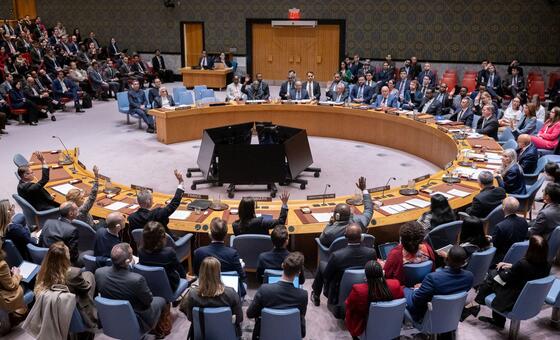
Why it matters: The veto leaves the Strait of Hormuz, a critical shipping corridor for global trade and humanitarian aid, without enhanced UN Security Council protection.
- Russia and China vetoed a UN Security Council resolution to boost security in the Strait of Hormuz, with Russia's Ambassador Vassily Nebenzia stating it unfairly blamed Iran while ignoring U.S. and Israeli actions, and China's Ambassador Fu Cong adding it 'failed to capture the root causes' of the conflict.
- Bahrain's Foreign Minister Abdullatif bin Rashid Al Zayani, representing the six Gulf States that submitted the draft, expressed regret, stating the Council 'failed to shoulder its responsibility' and sent 'the wrong signal' by not adopting decisive action.
- United States Ambassador Mike Waltz accused Iran of 'taking the Strait of Hormuz hostage' and attempting to 'take the world's economy hostage,' emphasizing the strait's vital importance and calling the veto a 'moment of reckoning.'
- Iran's Ambassador Amir Saeid Iravani contended the draft sought 'to punish the victim for defending its sovereignty and vital national interests.'
Russia and China vetoed a UN Security Council resolution aimed at securing the Strait of Hormuz, preventing international efforts to ensure safe passage through the critical shipping corridor amid ongoing regional conflict. While Bahrain and the U.S. condemned the veto as sending the 'wrong signal' and allowing Iran to 'take the world's economy hostage,' Russia and China argued the resolution was unbalanced, failing to address the broader causes of regional tensions or acknowledge actions by the U.S. and Israel.