China, Russia navies complete joint Northeast Asia patrol

Get the Geopolitics newsletter
Daily geopolitics — wars, elections, sanctions, the diplomatic moves that move markets. Free.
- China and Russia completed a joint naval patrol lasting more than two weeks, with the task force arriving in Vladivostok in Russia's Far East on Wednesday (July 29), according to Xinhua.
- The task force departed Qingdao on July 13, transiting the Miyako Strait, Vries Strait (known as Etorofu Strait in Japan), and La Perouse Strait (Soya Strait) — strategic maritime routes closely monitored by the United States and Japan.
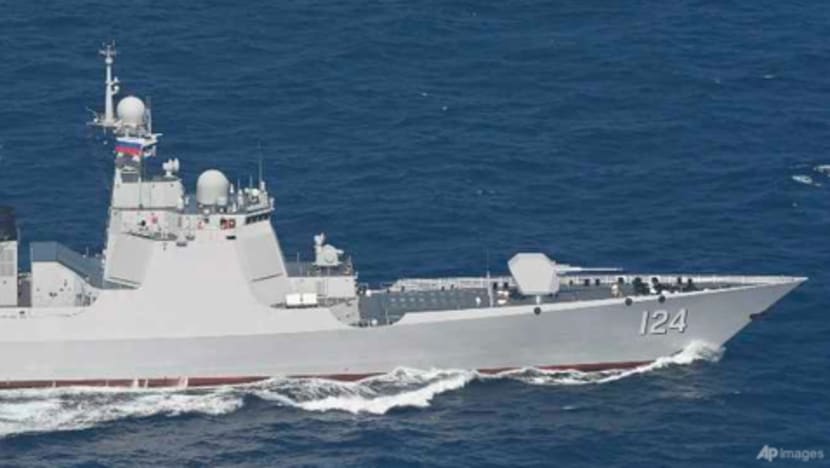
- Patrols were conducted in the western Pacific, Sea of Okhotsk and Sea of Japan, with the Chinese contingent consisting of guided-missile destroyers Kaifeng and Anshan plus supply ship Kekexilihu, alongside Russia's frigate Rezky Corvette.
- Chinese and Russian forces conducted helicopter cross-deck landings, joint counter-terrorism exercises, humanitarian rescue missions and visit-board-search-and-seizure (VBSS) operations during the mission.
- Chinese warships additionally carried out combat-oriented exercises based on real-time maritime and air conditions, beyond the planned cooperation activities.
- The patrol was part of the annual China-Russia military cooperation plan and was "not related to the current international and regional situation," Xinhua stated.
- Chinese Foreign Minister Wang Yi told Russian counterpart Sergei Lavrov last week that China and Russia should strengthen strategic coordination and "never allow Japan to rearm."
Why it matters: Xinhua's insistence that the patrol is "not related to the current international and regional situation" sits uneasily alongside Wang Yi's same-week directive that Beijing and Moscow must "never allow Japan to rearm." The straits transited — Miyako, Etorofu and Soya — are precisely the chokepoints Japan monitors for external naval activity, so the operational signaling and the anti-Japan rhetoric converge even as the diplomatic language denies a connection.