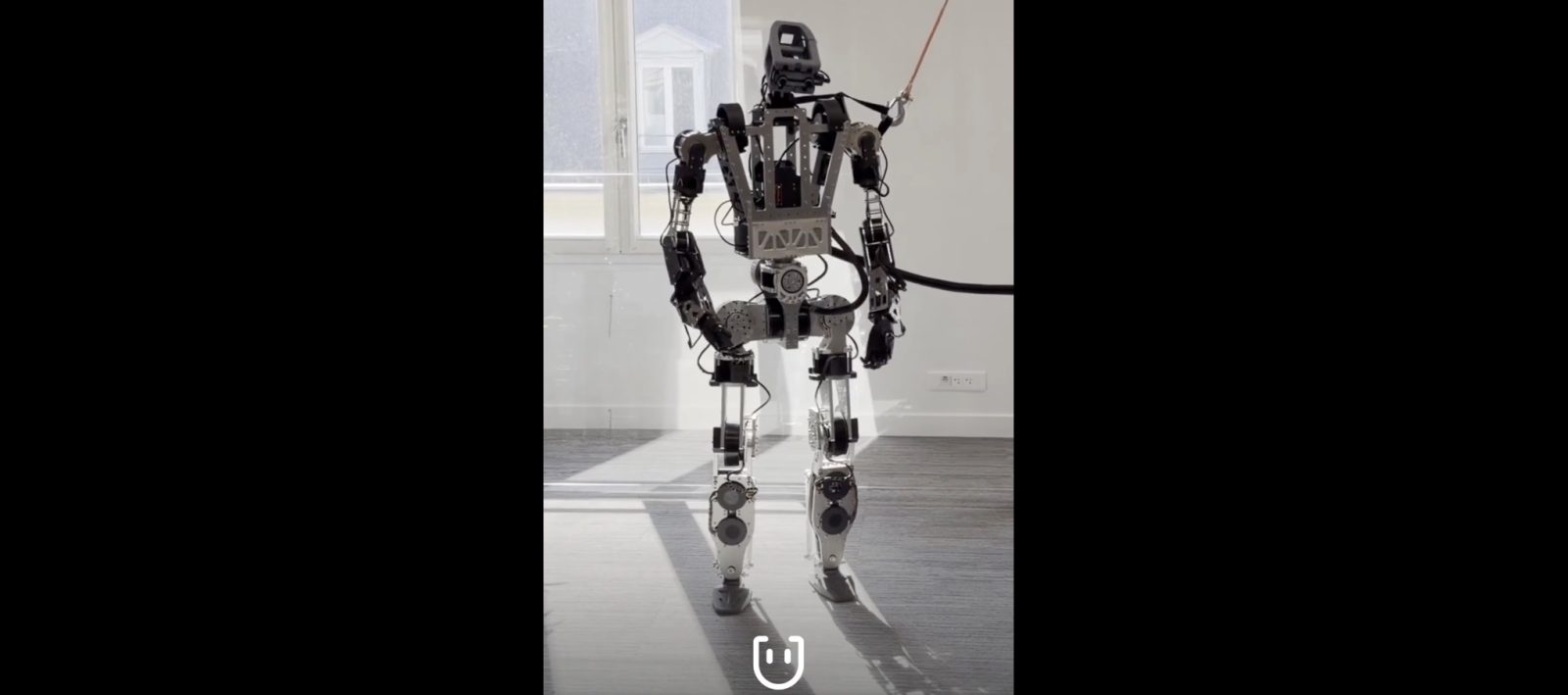
Genesis AI's Eno: a humanoid robot that isn't — SkimNews

Get the Tech newsletter
Daily tech — startups, AI labs, chips, the launches that shape the next decade. Free.
- Genesis AI, a French startup backed by former Google CEO Eric Schmidt, unveiled a robot called Eno designed "around human capability" rather than human appearance.
- Eno may lack a head or legs and could sit on a wheeled base that folds like a deck chair, though its hands are designed to "exactly match the form and function of human hands" so it can use existing tools.
- Genesis positions Eno as a fully "general-purpose" robot, contrasting it with single-task machines built for one job like folding laundry.
- Genesis plans to begin production and targeted customer deployments of Eno by the end of 2026.
- Initial deployment sectors include manufacturing, laboratories, and logistics, with hospitals, hotels, and consumers slated to follow.
- Genesis says "additional embodiments" beyond Eno are in development.
Why it matters: Genesis is betting robot buyers care more about function than form: Eno rolls out into manufacturing, labs, and logistics by end of 2026, putting a capability-first design against an industry that has largely chased human appearance — and a Schmidt-backed startup arriving that fast could pressure rivals to match the timeline or rethink the brief.
Ask SkimNews