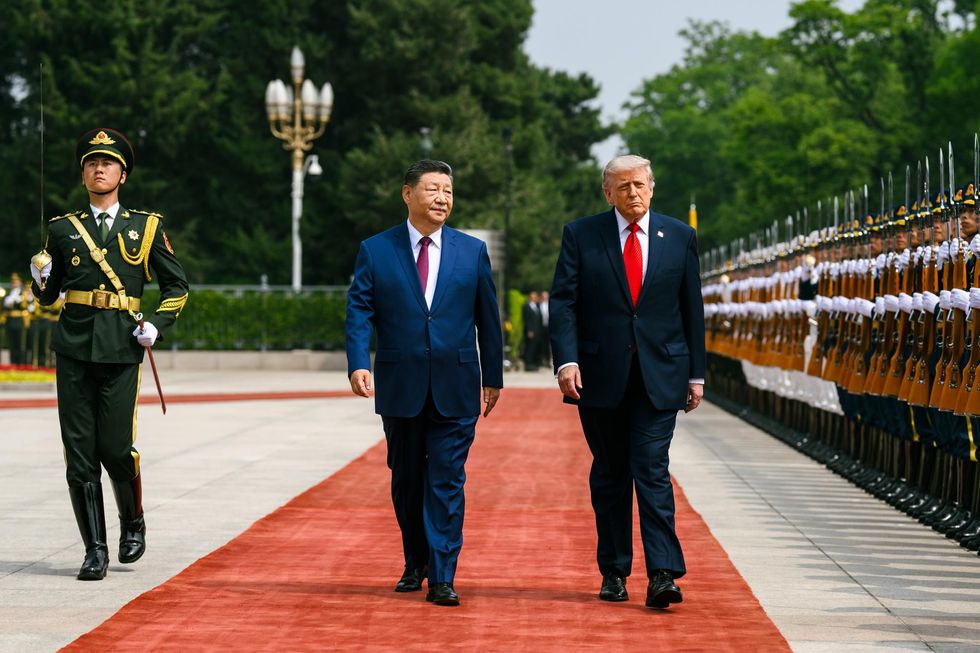
Trump-Xi Summit Yields Modest Trade Wins, No Taiwan Shift

SkimNews Take
The summit’s polite framing and lack of substantive shifts suggest both leaders prioritize domestic stability and economic growth over immediate geopolitical confrontation.
Get the Geopolitics newsletter
Daily geopolitics — wars, elections, sanctions, the diplomatic moves that move markets. Free.
- Xi Jinping called Taiwan the "most important issue in China-US relations" on the summit's first day, warning that mishandling could lead to "clashes and even conflicts," though the US 2025 National Security Strategy already opposes unilateral action by either party.
- Beijing agreed to buy 200 Boeing aircraft — down from the 500 figure earlier reported in media — alongside continued Nvidia chip purchases by Chinese companies, and both sides established a Board of Trade and Board of Investment to create a trade pathway forward.
- Trump mentioned arms deals to Taiwan at the summit without altering the status quo, consistent with Reagan-era declaratory policy that bars Beijing from discussing US weapons sales to the island.
- Xi has set a PLA benchmark of being capable of invading Taiwan by 2027, but Bennett argues China is "nowhere near able to do so," citing a lack of blue-water navy, limited landing beaches, and Taiwan's Ukraine-informed effort to become "indigestable."
- Secretary of Defense Pete Hegseth attended the summit in a move described as "highly unusual," signaling Washington's push to open military-to-military communications that have been largely absent since the Cold War.
- China has been quietly telling Iran to stop bombing Gulf countries, and its stockpile of Iranian oil will only last "a few more weeks" before rising oil prices hit China's economy, per Bennett.
Why it matters: The summit delivered rhetoric but no structural change: Taiwan policy is unchanged, trade wins were modest (200 vs. 500 Boeing planes), and the real signal is the new Board of Trade plus Hegseth's unusual presence opening military channels. Beijing's shrinking Iranian oil stockpile gives China a quiet incentive to push for Middle East de-escalation.
Ask SkimNews